


AI is moving from “future tech” to a standard feature in everyday apps. From chatbots and shopping helpers to health trackers and security checks, AI now sits in the core of many digital products. As this happens, users are asking a simple question: “Can I trust this app?”
That question is not only about speed or features. It is also about how the app treats people, their data, and their choices. When AI is added without care, it can be unfair, unclear, or even unsafe. It can lock people out, share too much data, or make choices that no one can explain.
This is why ethical AI matters. It means building AI that is fair, clear, and safe by design. It means thinking about people first, not only about code or profit. For software teams and product leaders, this is now part of real, daily work, not just a theory topic.
This blog looks at the main challenges, risks, and best ways to bring ethics into AI app development, using simple language and clear steps you can apply today.
What Is Ethical AI in App Development?
Before you can build it, you need to define it.
In simple terms, ethical AI in apps means AI that:
- Treats users fairly
- Respects their privacy and choices
- Is clear enough to explain
- Can be checked, tested, and improved over time
In practice, this means you design and code AI so it does not harm users, treat groups unfairly, or hide how it works. It also means you think about real people and real impact at every stage, from idea to launch and beyond.
Why Ethics Matter for AI-Powered Apps
Ethics in AI is not only about “doing the right thing.” It also has a direct effect on business:
- Users stay with brands they trust.
- Investors now ask how teams manage AI risks.
- Laws on data and AI are getting stronger in many regions.
If your app makes a wrong or unfair choice, the damage spreads fast. Screenshots and stories go online. Ratings drop. News sites may pick up the story. On the other hand, when you show users that you care about their data, safety, and rights, they are far more likely to try to keep using your app.
So, building ethical AI is also building long-term value.
Common Challenges in Building Ethical AI Apps
Creating an AI feature is hard. Creating an AI feature that is also fair and safe adds new layers of work. Here are key challenges.
1. Bias and Unfair Results
AI learns from data. If that data is narrow or skewed, the AI can treat people unfairly. For example:
- A loan app might approve more people from one group than another.
- A hiring app might “prefer” resumes that look like old hires.
Often, no one in the team means to be unfair. But without checks, bias slips in through the training data or design choices.
2. Data Privacy and Consent
AI works best with lots of data. But “more data” is not always better if you collect it in the wrong way.
Key issues include:
- Taking more data than you really need
- Not being clear about how data is used
- Keeping data for too long
You must align AI features with privacy laws and user expectations, not just with what is technically possible.
3. “Black Box” Models
Some AI models are hard to explain, even for experts. When an app cannot answer “why did it decide this?”, users and regulators worry.
For sensitive use cases (credit, health, safety, work), not being able to explain a decision is a major problem.
4. Over-Reliance on AI
Another risk is letting AI make calls that should include human review. For example:
- A content filter that bans users without a human check
- A fraud system that flags accounts without an easy appeal
AI should support people, not silently replace them in every case.
Main Risks for Users and Businesses
If these challenges are ignored, both users and teams face real risks.
For users
- Harm and unfairness – being wrongly blocked, denied service, or labeled.
- Loss of control – not knowing what data is used or why decisions were made.
- Safety issues – for example, bad advice in health or finance apps.
For businesses
- Legal trouble – breaking data or AI rules can lead to fines or orders to stop.
- Reputation damage – one scandal can undo years of work on your brand.
- Security gaps – weak AI design can open doors for attacks or misuse.
For a deeper view on AI and mobile app security, including threat detection and biometrics, you can refer to this blog.
Best Practices for Ethical AI in App Development
The good news: you do not need a huge ethics team to start. You can add simple, steady steps into your normal product and engineering process.
1. Start With Clear Values and Use Cases
Before choosing a model, write down:
- Who this feature is for
- What problems must it never cause
- Which groups could be most at risk
This gives your team a shared “north star” when making trade-offs later.
2. Design for Humans First
Keep humans in the loop, especially for high-impact choices.
- Let users override or appeal important AI decisions.
- Offer easy ways to contact support when AI gets things wrong.
- Make AI help people, not replace every human touch.
3. Reduce Bias Through Data and Testing
Bias will not fix itself. You need to look for it.
- Use diverse, up-to-date data where possible.
- Test how the model behaves across age, gender, region, and other groups, when allowed by law.
- Add tests for fairness to your normal test suite, not as a one-time task.
When you find bias, improve both the data and the model, and test again.
4. Be Open and Explain What You Can
You do not need to publish source code, but you should be open with users.
- Tell users when they are talking to AI, not a human.
- Explain, in plain language, what data is used and why.
- For key choices, give a short reason in the UI where possible.
Even simple phrases like “We suggested this because you liked A and B” build more trust.
5. Respect Privacy by Design
Treat user data like something you borrow, not own.
- Collect only what you really need for the feature.
- Give clear, simple privacy settings and consent screens.
- Protect data with strong security and clear access rules.
Also, review data flows often. Old logs, backups, and test sets can hold more risk than value if kept for too long.
6. Monitor AI After Launch
AI systems change over time as users and the world change. So your checks cannot stop on release day.
- Track error rates, user complaints, and odd patterns.
- Set alerts for sudden changes in who the model helps or harms.
- Plan updates, retraining, or even shutdown if a feature is no longer safe.
To turn ethical AI into daily practice, treat it like performance or security: a constant, shared duty, not a one-off task.
How to Start Bringing Ethical AI Into Your Next App
If you are just starting, keep it small and real:
- Pick one current or planned AI feature.
- Run a short “risk and ethics” workshop with product, design, and tech leads.
- List the top 3 user risks and one way to reduce each.
- Add those steps to your backlog with real owners and deadlines.
By doing this on one feature at a time, you build a habit without slowing the whole roadmap.

Conclusion
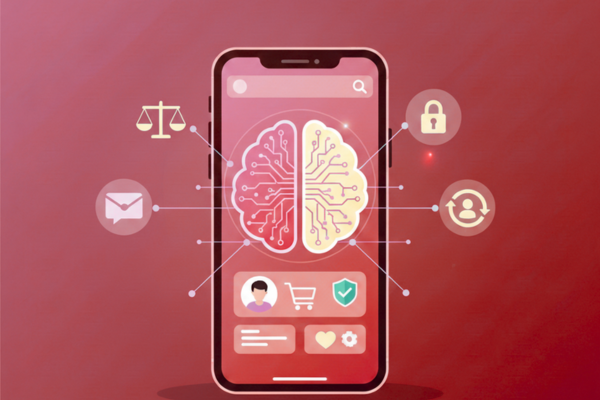
AI in apps is no longer rare or special. It now shapes what people see, how they move, what they buy, and in some cases, the chances they get in life. With this power comes a clear duty to act with care.
Ignoring ethics is risky. It can lead to unfair outcomes, legal trouble, and a loss of trust that is hard to win back. But treating ethics as a daily part of app development brings real benefits. You gain users who feel respected, a brand that stands out for the right reasons, and products that can stand up to questions from customers, partners, and regulators.
Bringing ethical AI into your team’s work does not require perfect answers from day one. It asks for honest questions, clear values, and steady action. Start by knowing your use cases, your users, and your data. Then, build in checks for fairness, privacy, and clarity at each stage: design, build, test, and launch.
Most of all, remember that every AI feature touches a real person on the other side of the screen. When you use that as your guide, “good AI” and “good business” start to line up. Apps that are smart, safe, and fair will be the ones that last. The sooner your team makes ethics part of its core skills, the better placed you will be to build the next wave of AI-powered products with confidence.
FAQs
1. What does ethical AI mean in simple words?
It means using AI in ways that are fair, clear, and safe for users.
2. Why should small app teams care about ethical AI?
Even small apps can harm users or break rules, so trust and safety still matter.
3. How can we reduce bias in AI features?
Use better, more varied data and test how results differ across user groups.
4. Should users know when AI is used in an app?
Yes. Always tell users when AI takes part in a decision or a reply.
5. Is ethical AI only about data privacy?
No. Privacy is key, but ethics also covers fairness, safety, and clear choices.