
Picking a database is one of the most important choices you make when building an app. It affects the speed of your system, how it handles growth, how safe your data is, and how much you spend over time. Yet most teams still struggle with this step. They either choose a database because it is “popular,” because the team already knows it, or because they used it in a past project. But choosing a database should never be based on a guess. It should be based on clear needs, data patterns, future plans, and the real behavior of your app. That is why we created this Database selection guide—to help you make a clear and confident choice.
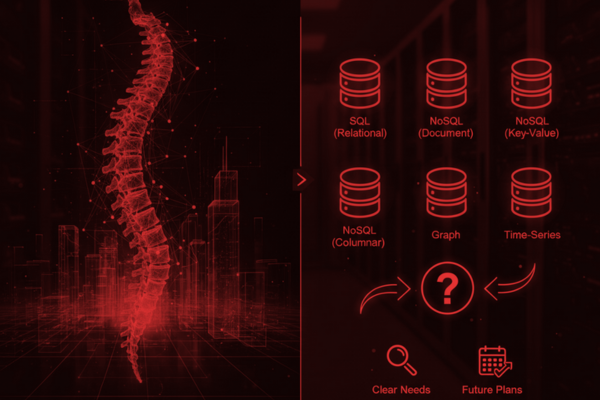
Think of your database as the “backbone” of your app. If it is strong and aligned with your needs, your app will run smoothly. If it is not, you may face slow features, long load times, or even system failure. In this blog, we will break down the simple steps to pick the right database, explain when to use SQL or NoSQL, and share lessons from real projects we delivered. We will also link a case study where we built a growing platform from scratch to show how database choices affect long-term success.
1. Why the Right Database Choice Matters
Many app failures begin with a poor database choice. A weak database structure leads to slow response time, higher cloud cost, and a poor user experience. A strong setup helps your app stay stable even when your users and data grow fast.
We often guide teams through this process, and we use our Database selection guide to help them compare options based on real usage—not assumptions. Good database planning saves time, money, and future rework.
2. SQL vs NoSQL — Simple Breakdown
SQL Databases
SQL databases store data in tables. They are structured, reliable, and great when your data follows clear rules. Apps that need strong accuracy—like banking, ecommerce payments, or booking systems—use SQL.
Common SQL databases include:
- MySQL
- PostgreSQL
- SQL Server
Choose SQL when you need:
- Clear data rules
- Safe transactions
- Easy reporting
We used SQL in one of our past projects where the client needed strong accuracy and detailed reports. You can read the case study here.
NoSQL Databases
NoSQL databases are flexible. They handle unstructured or fast-changing data. They work well for apps with huge traffic or apps that store many items without strict rules.
Common NoSQL databases include:
- MongoDB
- Firebase
- Cassandra
Choose NoSQL when you need:
- Fast reads and writes
- Flexible structure
- Horizontal scaling
- Real-time updates
If your app stores user posts, chats, or logs, NoSQL fits well.
3. Key Factors to Consider Before Choosing a Database
1. Data Structure
Ask yourself: Does your data follow rules or does it change often?
For rule-based apps → SQL
For changing or unstructured data → NoSQL
2. Read & Write Load
If your app receives many write requests (logging, chats) → choose a NoSQL database.
If it needs heavy reports and joins → SQL fits well.
3. Growth Plans
If your app may grow fast, your database must handle new users and new data without slowing down.
Our Database selection guide recommends thinking 2–3 years ahead.
4. Cloud and Hosting Cost
Different databases have different cost patterns.
- SQL cost grows with storage and CPU
- NoSQL cost grows with usage requests
5. Security & Backup
Choose a database that supports easy backups, user roles, encryption, and disaster recovery.
4. When to Use SQL: Real App Examples
SQL is a strong choice when:
- Your app handles money
- You need strict accuracy
- You need detailed reports
- Your workflows do not change often
Example:
We built a booking system for a client where users needed correct time slots and real-time availability. We used PostgreSQL because it ensured accuracy and handled large queries smoothly.
5. When to Use NoSQL: Real App Examples
NoSQL works well when:
- You store a lot of user-created content
- Data grows fast
- Structure keeps changing
- You need real-time sync
Example:
We built a real-time social feed where users posted content every second. MongoDB handled the load very well because of its flexible structure.
6. How to Pick the Best Database in Simple Steps
This simple flow will help:
- Start with your data – structured or flexible?
- Check your load – heavy reads, heavy writes, or both?
- Think about future growth – 2×, 5×, or 10× users?
- Choose based on usage pattern – not popularity
- Plan backups and data safety early
- Test with sample data before you finalize
Our Database selection guide always suggests testing real scenarios, not example data.
7. Popular Database Options
MySQL
Great for simple transactional systems. Works well for small to mid-size apps.
PostgreSQL
Good for apps that need accuracy plus advanced queries. Very stable for long-term apps.
MongoDB
Great for flexible apps with fast writes and changing structure.
Firebase
Best for real-time mobile apps or chat apps.
Cassandra
Ideal for very large data with high speed. Used by large-scale platforms.
8. Mistakes to Avoid While Choosing a Database
- Picking a database only because your team is used to it
- Using NoSQL when you actually need strong accuracy
- Ignoring backup needs
- Forgetting growth planning
- Not testing real data first
These mistakes cause cost overruns and slowdowns. Use a clear framework like the Database selection guide to stay on track.
Conclusion
Choosing the right database is a long-term decision. It affects your app’s speed, cost, security, and ability to grow. That is why the database decision is not just a technical step—it is a core business choice.
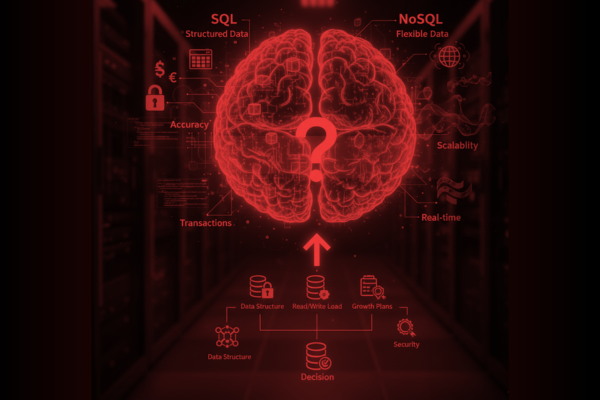
When you understand your data shape, traffic pattern, and future plans, the decision becomes clear. SQL databases work well when your data follows rules, and you need accurate records. NoSQL databases are useful when your structure changes often, or you expect huge traffic. Every database has a purpose, but the right one depends on your app’s real behavior.
We always guide teams through this process because most apps need more than just a working database—they need a future-proof plan. In many past projects, we have seen how the right choice helped apps grow smoothly. We have also seen how the wrong choice caused sudden slowdowns and major rebuilds. This is why using a simple, clear decision tool like the Database selection guide makes the entire process easier and safer.
The case study linked above is a good example of how backend and database choices shape the success of a digital product. It shows how planning the right storage layer can prevent future issues and support stable growth.
In the end, your database is more than a storage system. It is the foundation of your app’s success. Make the choice carefully, test early, and plan for the future. A well-selected database will support your app as it grows, adapts, and welcomes new users.
FAQs
- Which database is best for mobile apps?
SQL for structured apps, NoSQL for flexible or real-time apps. - What is the first step in choosing a database?
Understand your data structure and traffic. - Can I change my database later?
Yes, but it can be costly. Choose carefully at the start. - Is NoSQL faster than SQL?
Not always. It depends on usage patterns.