

OPTA – Zero-Emission Bus Data Trust Dashboard
Canadian Software Agency partnered with CUTRIC to build OPTA, a secure cloud-based data trust and analytics platform designed for Canada’s growing zero-emission transit ecosystem. The platform enables transit agencies to securely collect, standardize, manage, and analyze operational data generated by zero-emission buses (ZEBs) and supporting infrastructure such as charging stations, hydrogen meters, fuel dispensers, and electrolyzers.
Industry
Transportation & Clean Energy Technology
Platform
Cloud-Based Web Application
Launch
November 2025
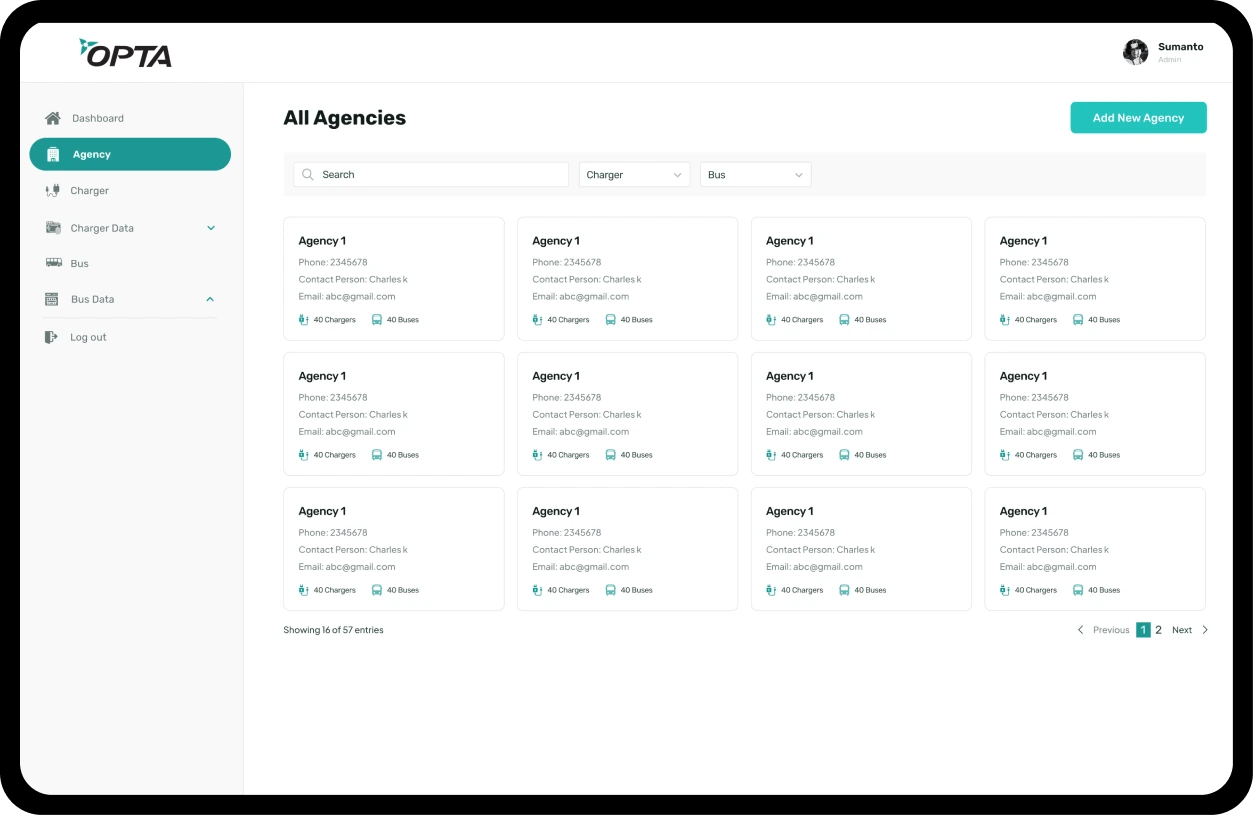
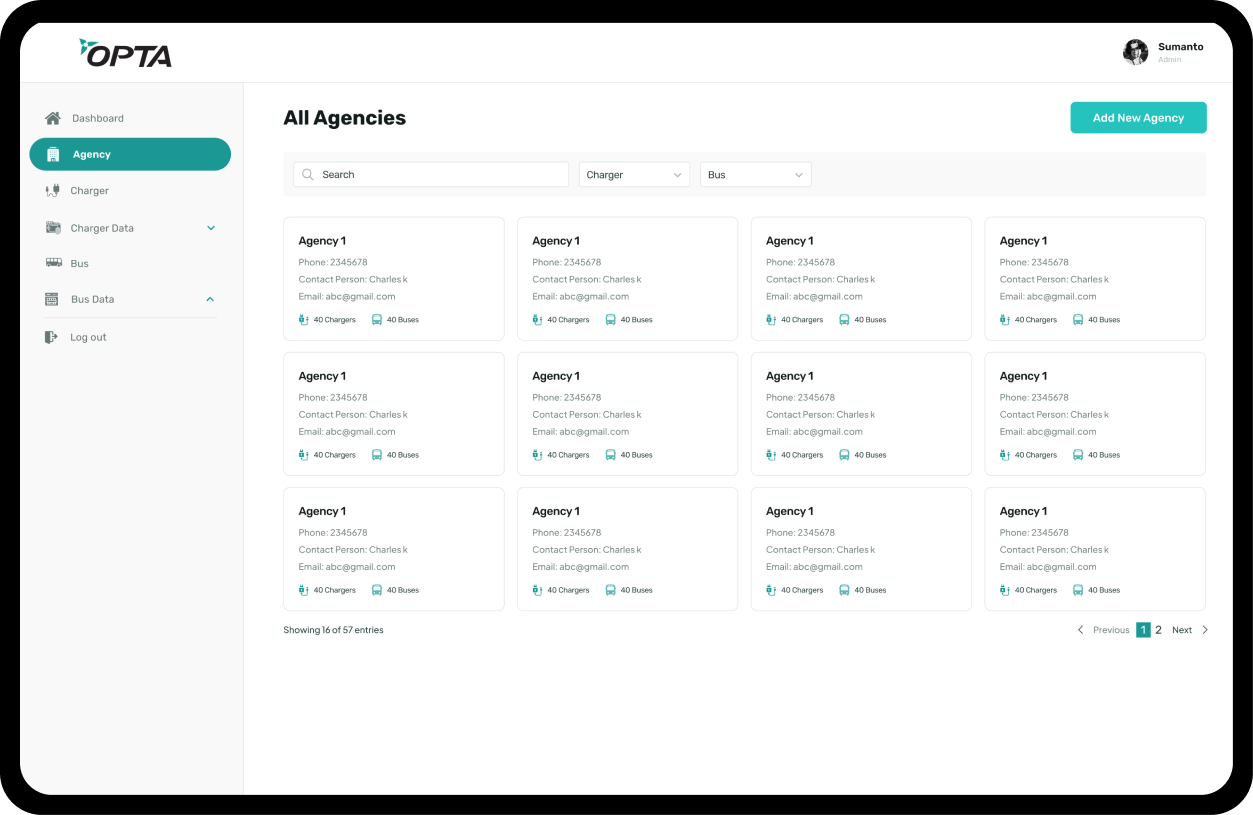
About the OPTA
Built with cybersecurity, scalability, and data privacy at its core, OPTA provides participating transit agencies with a centralized dashboard to monitor fleet performance, energy efficiency, infrastructure reliability, and operational KPIs in real time. The platform currently supports pilot deployments for the City of Brampton, Town of Newmarket, and TransLink, while serving as the technological foundation for CUTRIC’s future National CloudTransit™ Dashboard and Data Trust.
Timeline
Approximately 8 Months
Total Development Effort
2,000+ Development Hours
Team Size
6 specialists
Key Deliverables
Data Logger Integration
Cloud-Based Data Trust Platform
CSV Import & Export Module
The Challenge
Transit agencies operating zero-emission bus fleets rely on multiple independent systems to monitor vehicles and supporting infrastructure. Operational data is generated from vehicle telematics, charging stations, hydrogen equipment, and monitoring devices, often stored in different formats and disconnected platforms.
CUTRIC needed a secure, centralized solution capable of bringing this fragmented data together while maintaining strict confidentiality for participating agencies. The platform had to automatically collect information from multiple sources, cleanse and standardize incoming datasets, and present meaningful insights through an intuitive interface suitable for both technical and non-technical users.
The solution also needed to support multiple transit agencies with isolated access to their own operational data while providing the scalability required for a future nationwide transportation analytics platform.
The Solution
Canadian Software Agency designed and developed OPTA as a secure cloud-native data trust platform that transforms complex operational datasets into actionable insights for zero-emission transit agencies.
The platform securely ingests data from buses, charging infrastructure, hydrogen fueling systems, and external monitoring platforms before validating, cleansing, and storing it within a cybersecure cloud environment aligned with CUTRIC’s legal and cybersecurity framework.
Through an intuitive web dashboard, agencies can monitor operational performance, compare historical trends, visualize key performance indicators, and export analytical reports. Flexible integration options—including Siemens APIs, data logger connectivity, and CSV uploads—allow agencies at different stages of digital maturity to participate without disrupting existing workflows.
The platform’s scalable architecture positions OPTA as the pilot implementation for the future CUTRIC National CloudTransit™ Dashboard and Data Trust, supporting Canada’s long-term transition toward sustainable public transportation.
Core Platform Features
OPTA offers a comprehensive feature set that simplifies secure data collection, operational analysis, and fleet performance monitoring for zero-emission transit agencies.
Secure Data Trust Framework
The platform securely collects, validates, and stores operational data from zero-emission buses and supporting infrastructure within a protected cloud environment built around CUTRIC’s legal and cybersecurity framework.

Interactive Analytics Dashboard
Users can monitor fleet performance through dynamic dashboards featuring customizable filters, historical trends, charts, and operational insights across vehicles and infrastructure assets.

Fleet Performance KPI Monitoring
OPTA tracks critical operational metrics, including:
- Distance travelled
- Energy consumption
- Energy efficiency
- Relative energy cost
- Fleet availability
- Average distance between failures
- Charging power levels
- Vehicle range

Siemens API Integration
The platform integrates directly with Siemens charging infrastructure, enabling automated data collection and reducing manual reporting while improving operational accuracy.

Data Logger Connectivity
External data logger platforms can securely stream operational information into OPTA, creating a continuous flow of real-time fleet and infrastructure data.

CSV Import & Export
Organizations without automated integrations can upload operational datasets using CSV files, while processed reports and analytics can be exported for offline analysis and regulatory reporting.

Multi-Agency Access Control
The platform supports multiple transit agencies within a single environment, providing role-based permissions and secure agency-specific workspaces for Brampton, Newmarket, and TransLink.

Remote Fleet & Infrastructure Management
Authorized users can securely access dashboards, review operational performance, and monitor infrastructure health from anywhere through the cloud-based platform.

The Modern Stack Behind the Software.
A modern, production-ready stack was selected to support real-time interactions, cross-platform mobile delivery, and scalable deployment.
Core Technologies
React.js
Node.js
MongoDB
Supporting Infrastructure & Services
Siemens API Integration
Secure Cloud Infrastructure
Data Logger Connectivity
Role-Based Access Control (RBAC)
CSV Data Processing
Cybersecurity Framework Compliance
Scalable Cloud Architecture
See OPTA in Action
OPTA is currently deployed as a pilot platform for participating Canadian transit agencies and serves as the foundation for CUTRIC’s future National CloudTransit™ Dashboard and Data Trust. Public access is not currently available.
Project Timeline
- March 2025

Discovery & Platform Architecture
Canadian Software Agency collaborated with CUTRIC to define the platform architecture, cybersecurity requirements, KPI framework, and secure data trust model that would support participating transit agencies.
- April – June 2025
Data Collection & Integration Development
The development team implemented secure data ingestion pipelines, Siemens API integration, external data logger connectivity, and CSV processing workflows to consolidate information from multiple operational systems.
- July – August 2025
Dashboard Development
Interactive dashboards were developed to visualize fleet performance, energy usage, charging efficiency, infrastructure reliability, and historical trends using configurable reporting tools.
- September – October 2025
Multi-Agency Deployment & Testing
The platform was configured for pilot agencies, with secure role-based access, comprehensive quality assurance testing, and validation of reporting accuracy across different data sources.
- November 2025

Production Launch
OPTA was successfully deployed as a pilot data trust platform for the City of Brampton, Town of Newmarket, and TransLink, establishing the foundation for CUTRIC’s future National CloudTransit™ Dashboard.
- Results
Building the Foundation for Canada's Next Generation of Transit Analytics
Canadian Software Agency successfully delivered a secure cloud platform that enables transit agencies to consolidate operational data, improve reporting accuracy, and make better-informed decisions regarding fleet performance and infrastructure utilization.
By replacing fragmented data management with a centralized analytics platform, OPTA provides participating agencies with greater visibility into operational efficiency while maintaining strict confidentiality and cybersecurity standards.
The project also establishes a scalable technology foundation capable of supporting additional transit agencies and expanded analytics as Canada’s zero-emission transportation network continues to grow.
Key Outcomes
transit agencies
0
core operational KPIs
0
Enables API, data logger, and CSV-based data collection
0
%
Centralized reporting through interactive dashboards
0
%
Integrated with Siemens charging infrastructure
0
%
Related Case Studies

Cloud 9
Cloud9 is a platform designed for music playlist management and collaboration. It allows users to create, organize, and share playlists across various music streaming services. Cloud9 aims to simplify playlist curation and facilitate collaborative listening experiences. We collaborated with them to develop the MERN Stack-based website that provides tools for managing large music libraries.
Dropship Academy
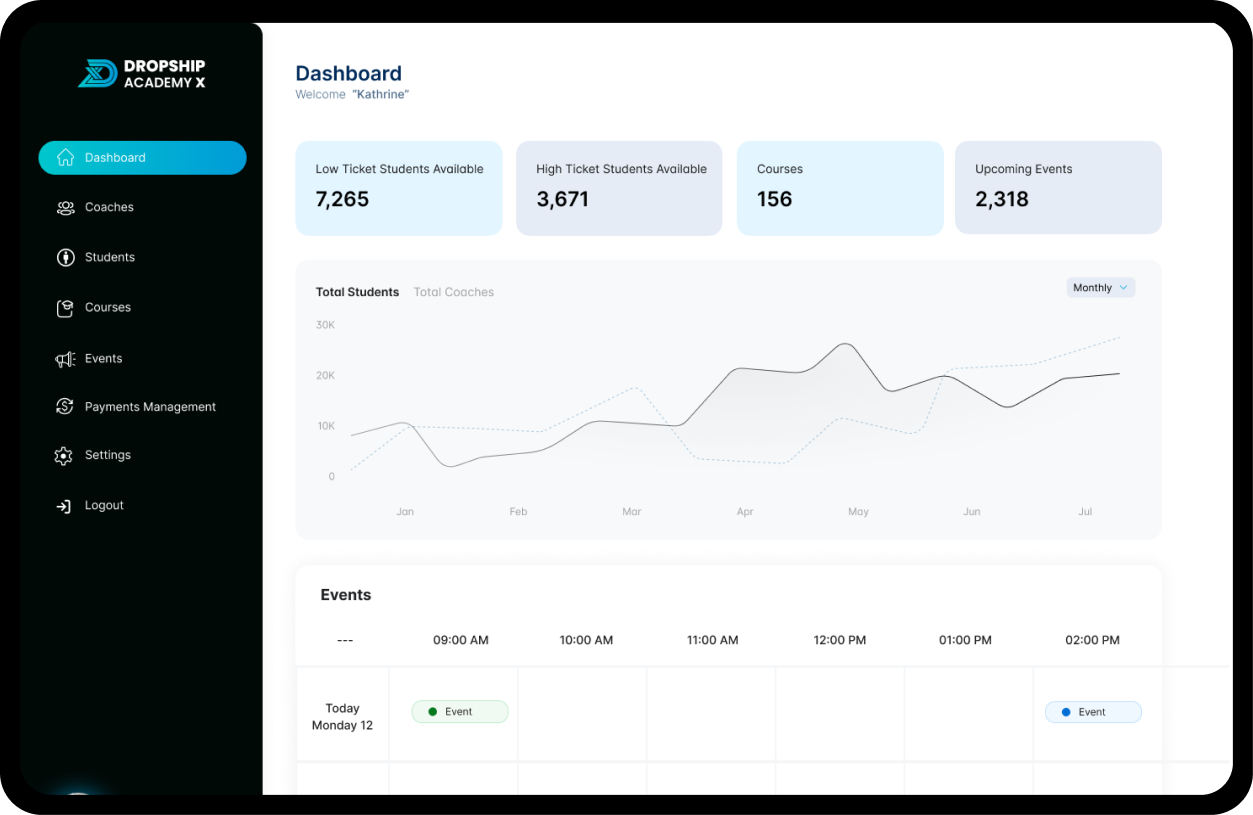
Dropship Academy is an advanced online learning platform designed to streamline e-commerce education. Built with the MERN Stack, it offers intuitive dashboards for admins, coaches, and students, including course and management, event scheduling, and real-time performance tracking. With secure role-based access and automated payment logs, it empowers both coaches and students to thrive in a dynamic, digital environment.
CDP
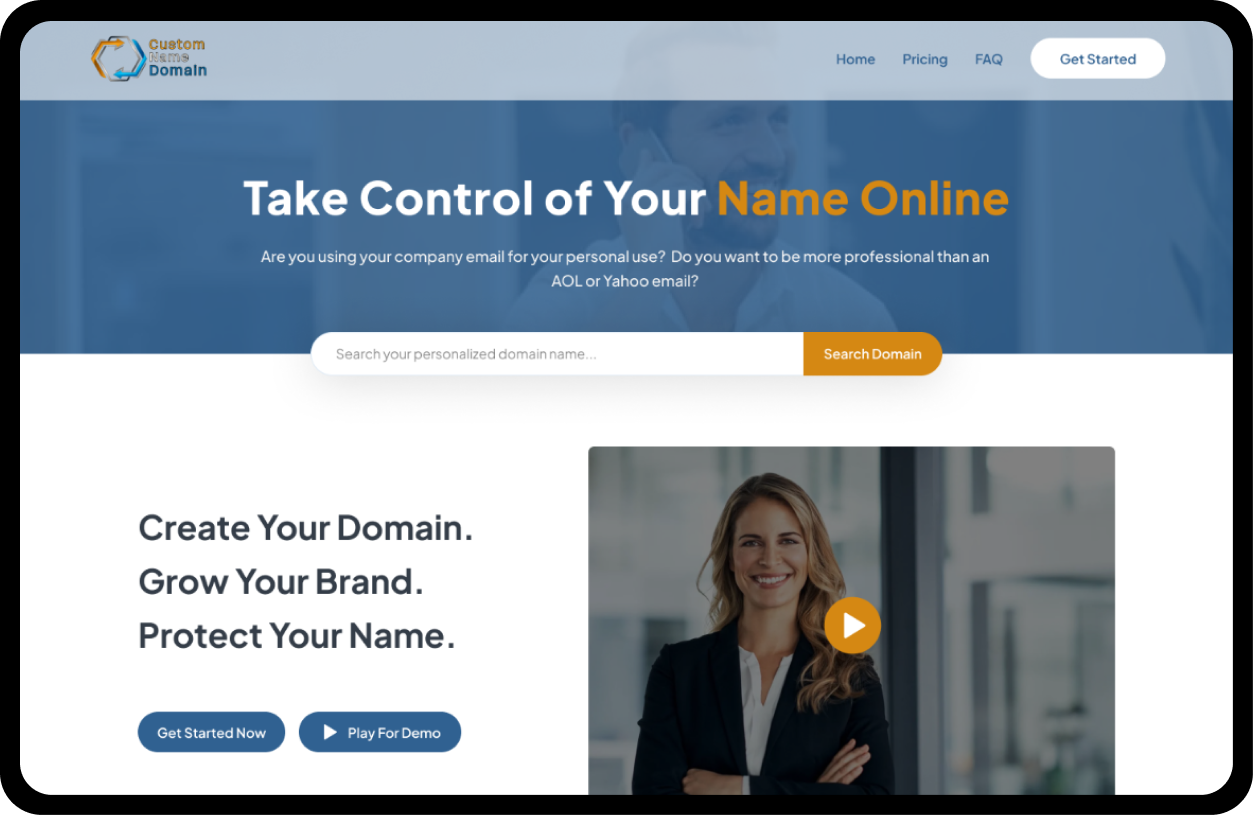
Custom Name Domain is a modern web platform designed to simplify how individuals and professionals establish a credible online identity. The platform allows users to easily secure personalized domain names and create custom email addresses—helping them move beyond generic email providers and build a stronger personal or professional brand. With an intuitive domain search, effortless email setup (including 5GB storage per inbox), and a centralized dashboard, users can manage everything from one place. The pricing is transparent, featuring a $99 startup fee with monthly or annual subscription options, and includes a free first domain to help users get started quickly.
Frequently Asked Questions
How much does mobile app development cost in Canada?
The cost of mobile app development in Canada typically ranges from $10,000 to $150,000+, depending on the complexity, features, and platforms involved. A basic MVP app may cost between $10,000–$25,000, while more advanced applications with integrations, real-time features, or AI capabilities can exceed $100,000.
Factors affecting cost include UI/UX design, backend infrastructure, APIs, scalability requirements, and whether the app is built natively or cross-platform
How long does it take to build a mobile app?
The timeline for mobile app development usually ranges from 8 weeks to 6 months. A simple MVP can be completed in 6–10 weeks, while complex applications with advanced features, integrations, or AI components may take 4–6 months or longer.
Proper planning, clear requirements, and an experienced development team significantly reduce timelines.
What is the difference between native and cross-platform app development?
Native apps are built specifically for iOS (Swift) or Android (Kotlin), offering maximum performance and full access to device features. Cross-platform apps (React Native, Flutter) allow faster development and lower costs by using a shared codebase.
The choice depends on your budget, performance needs, and time-to-market requirements.
What industries benefit the most from AI development?
AI development is widely used across industries including:
- Healthcare (diagnostics, patient management)
- Fintech (fraud detection, analytics)
- E-commerce (recommendation engines)
- Logistics (route optimization)
- Education (adaptive learning)
Businesses that rely on data, automation, or personalization benefit the most from AI integration.
What is an AI agent and how does it work?
An AI agent is a system that can perform tasks autonomously using artificial intelligence. It can analyze data, make decisions, and execute actions without constant human input.
Examples include chatbots, workflow automation tools, and AI assistants integrated into business systems.
What is RAG (Retrieval-Augmented Generation) in AI?
RAG (Retrieval-Augmented Generation) is an AI approach that combines large language models with real-time data retrieval. It allows AI systems to generate more accurate and context-aware responses using external knowledge sources.
It is commonly used in chatbots, enterprise search systems, and AI assistants.
Do you build SaaS platforms?
Yes, we specialize in SaaS (Software as a Service) development, building scalable cloud-based platforms for startups and enterprises. Our SaaS solutions include subscription systems, dashboards, user management, and integrations.
What technologies do you use for development?
We use modern technologies including:
- React, Next.js (frontend)
- Nodejs, Python (backend)
- MongoDB, PostgreSQL (databases)
- AWS, Azure (cloud)
- React Native, Flutter (mobile)
Do you offer post-launch support and maintenance?
Yes, we provide ongoing support, maintenance, and scaling services. This includes bug fixes, performance optimization, feature updates, and infrastructure management.
Can you scale an existing application?
Yes, we specialize in scaling existing applications by improving performance, optimizing architecture, and adding new features to support growth.
What is the cost of custom software development in Canada?
Custom software development typically ranges from $20,000 to $200,000+, depending on the complexity, integrations, and scalability requirements.
Do you work with startups or only enterprises?
We work with both startups and enterprises. For startups, we focus on MVP development and rapid deployment. For enterprises, we build scalable, secure, and integrated systems.
What is the best tech stack for mobile app development?
The best tech stack depends on your goals. Native development (Swift/Kotlin) offers performance, while React Native and Flutter offer faster development and cost efficiency.
Do you provide UI/UX design services?
Yes, we provide full UI/UX design services including wireframes, prototypes, and user experience optimization.
What is included in your AI development services?
Our AI services include AI agents, LLM integration, RAG systems, chatbots, predictive analytics, and automation solutions.
How do you ensure security in software development?
We follow best practices including encryption, secure authentication, compliance standards, and regular security audits.
Do you develop enterprise software?
Yes, we build enterprise-grade applications including CRM, ERP, dashboards, and workflow automation systems.
What is your development process?
Our process includes discovery, design, development, testing, deployment, and ongoing support.
Can you integrate third-party APIs?
Yes, we integrate APIs including payment gateways, CRMs, AI services, and more.
What is AI automation?
AI automation uses artificial intelligence to automate repetitive tasks, improve workflows, and reduce manual effort.
Do you build e-commerce platforms?
Yes, we build scalable e-commerce platforms with payment integrations, inventory systems, and AI-driven personalization.
What makes your company different from competitors?
We combine AI expertise, mobile app development, and custom software capabilities under one roof, allowing us to deliver complete digital solutions.
Do you provide cloud deployment services?
Yes, we deploy applications on AWS, Azure, and other cloud platforms for scalability and reliability.
Can you modernize legacy systems?
Yes, we help businesses modernize outdated systems by upgrading technology and improving performance.
How do I get started with your development services?
You can contact us through our website to schedule a consultation where we discuss your project requirements and provide a tailored solution.

-

- Posted by Canadian Agency Web Development Team

September 29, 2026
17 min read
Webflow Website Development: How to Build a Website That Drives Real Results

-
- Posted by Canadian Agency Web Development Team
September 23, 2026
15 min read
AI in Ecommerce: 10 Powerful Ways It's Transforming Online Stores

Ready to work together?
Let's get in touch