

AI is no longer just a future idea. It is now a real business tool. For startups, SaaS companies, and large businesses, AI Development can help teams work faster, cut manual work, and make better decisions. One area getting a lot of attention is AI agents. These systems can do tasks, reply to users, and support workflows with less human effort. But many business leaders still ask the same question: what are AI agents, and how do they fit into a real business plan?
This guide explains it in simple words. You will learn what AI agents are, how they are different from basic bots, where they create value, and what it takes to use them well. We will also cover risks, ROI, setup steps, and when to invest in custom solutions. If you are exploring practical AI solutions for your business, explore our AI development services.
What Are AI Agents?
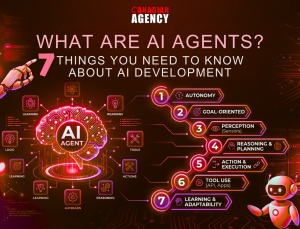
AI agents are software systems that can look at information, make choices, and take actions to finish tasks with limited human input.
Unlike simple rule-based tools, AI agents can often:
- Understand what a user wants
- Use context from data
- Pick the next step
- Trigger actions across tools
- Improve output over time
This is why many companies now include AI agents in bigger AI Development plans. They can support customer service, onboarding, reporting, sales tasks, and internal knowledge access.
AI Agents vs Traditional Automation
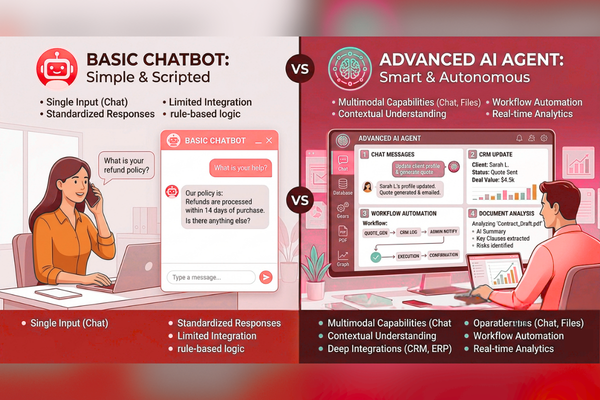
Traditional automation follows fixed rules.
AI agents are more flexible. They can respond to changing inputs and handle more complex tasks.
For example:
- A fixed workflow sends an invoice after a form is completed
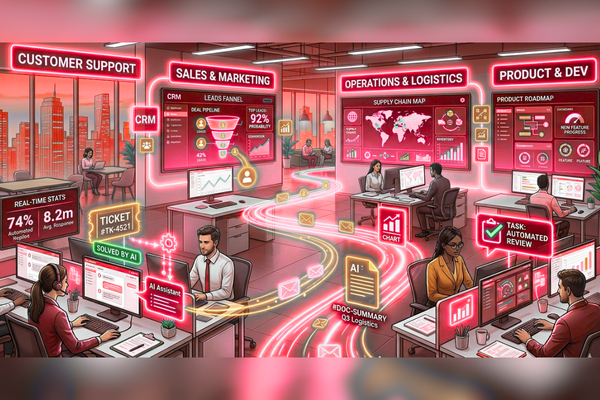
- An AI agent can review customer data, answer questions, create a proposal, and send the lead to the right team
That difference matters when businesses need smarter AI automation instead of simple scripts.
1. AI Agents Are a Core Part of Modern AI Development
Many leaders think of AI agents as just advanced chatbots. That is too limited. In reality, they are becoming a key part of AI Development because they connect intelligence with action.
A useful AI system does more than create text. It helps complete work.
That may include:
- Answering customer questions
- Searching internal documents
- Updating CRM records
- Summarizing calls
- Creating reports
- Escalating support tickets
- Managing repeat tasks
This is why AI Development is moving from one-off tests to workflow-based business tools.
What Is AI Development?
AI Development is the process of planning, building, connecting, and improving AI-powered systems that solve real business problems.
It can include:
- AI chatbot development
- Generative AI development
- Machine learning development
- AI integration services
- Custom AI solutions
- Enterprise AI solutions
For decision-makers, the goal of AI Development is not novelty. It is real business value.
To see where this fits in a service model, explore our AI development services.
2. AI Agents Create Value Through Business Process Automation
The main reason companies invest in AI Development is efficiency. Teams spend too much time on repetitive work. AI agents can reduce that burden.
They are a good fit for business process automation because they can combine language understanding with task execution.
Common use cases include:
- Customer support triage
- Lead qualification
- Employee help desks
- Document summaries
- Meeting notes and follow-up tasks
- Contract review support
- Workflow routing
- Internal search across knowledge bases
Practical ROI Areas
When done well, AI Development can improve:
- Cost per interaction
- Resolution time
- Team productivity
- Customer satisfaction
- Accuracy in routine work
- Time to launch new services
This is why many firms now invest in enterprise AI solutions that go beyond small tests.
If you want to align AI with operations, Learn more about our AI automation services.
3. Not All AI Agents Are the Same
Business leaders should not treat all AI tools as the same. The value of AI Development depends on choosing the right type of agent for the right task.
Common Types of AI Agents
Conversational agents
These are used in support, sales, onboarding, and internal help desks. They are common in AI chatbot development.
Task execution agents
These agents do things after receiving an instruction. They can update systems, file requests, or start workflows.
Research and analysis agents
These agents gather information, summarize content, and help teams make decisions faster.
Industry-specific agents
These are built for healthcare, finance, SaaS, logistics, retail, or enterprise support use cases.
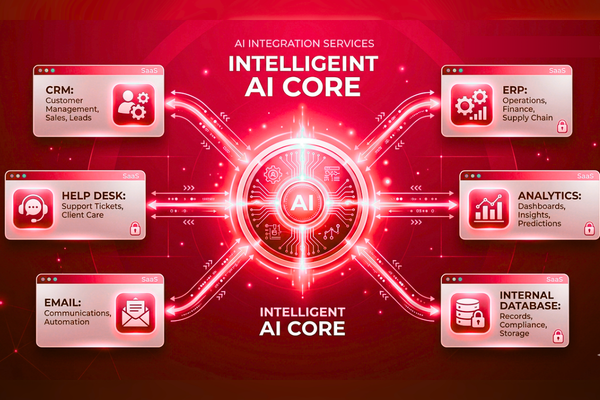
A startup may begin with a support chatbot. A large business may need multi-system agents tied to CRM, ERP, and internal data sources. That is where custom AI solutions often become more useful than off-the-shelf tools.
What Is AI Automation?
AI automation is the use of AI systems to finish tasks, make decisions, or run workflows with less manual effort and more flexibility than traditional automation.
Strong AI Development often combines automation with context, memory, and integrations.
4. AI Development Works Best When Integrated With Existing Systems
AI agents create the most value when they can use the tools your teams already work with. Standalone demos may look good, but they rarely create lasting business results.
That is why AI integration services are important.
Useful integrations may include:
- CRM platforms
- Ticketing systems
- ERP tools
- Internal databases
- Knowledge bases
- Slack or Teams
- Product analytics systems
- Email and calendar tools
Without integration, an AI agent may answer questions but fail to complete tasks. With strong AI Development, it can act inside a workflow, not outside it.
Why Integration Matters for ROI
Integration helps businesses:
- Avoid duplicate work
- Keep data in sync
- Reduce switching between tools
- Create smoother user experiences
- Improve adoption across teams
For many companies, this is the difference between an interesting assistant and a reliable business tool.
To connect AI with your stack, discover our AI integration services.
5. Generative AI Development Is Powerful, but Guardrails Matter
A lot of today’s growth in AI Development comes from large language models and generative AI development. These models can draft emails, summarize documents, answer questions, and quickly create content.
But business use needs structure.
Without guardrails, generative systems can:
- Give wrong answers
- Miss policy requirements
- Use old information
- Produce uneven results
This is why strong AI Development includes testing, permissions, fallback logic, and quality checks.
What Good Guardrails Look Like
Good business guardrails often include:
- Role-based access
- Approved knowledge sources
- Human review for sensitive actions
- Logging and monitoring
- Prompt controls
- Escalation paths
- Compliance checks
If your business works in regulated or high-trust areas, these controls matter even more.
For current research and guidance, see OpenAI and Google AI.
6. Machine Learning Development and AI Agents Can Work Together
Some leaders think AI agents replace traditional models. In practice, they often work together.
Machine learning development can support AI agents by improving predictions, recommendations, or classifications.
Examples:
- A machine learning model scores churn risk
- An AI agent explains the risk and suggests the next steps
- A model detects fraud patterns
- An AI agent helps the operations team review cases faster
- A model forecasts demand
- An AI agent creates a planning summary for managers
This layered approach makes AI Development more useful in real business settings.
What Are Enterprise AI Solutions?
Enterprise AI solutions are AI systems built to support large-scale business operations with security, compliance, integrations, and measurable results.
For enterprises, AI Development must work across teams, systems, and governance needs. That usually requires more than a simple chatbot.
7. Successful AI Development Starts With a Clear Business Case
Many AI projects fail for a simple reason. The company starts with the technology, not the problem.
The best AI Development projects begin with a clear business case.
Ask:
- What process is slow today?
- Where is manual effort highest?
- Which customer interactions repeat most often?
- What tasks create cost without strategic value?
- Where does service quality vary too much?
Good First Projects for AI Agents
The best starting points are usually:
- High-volume
- Repetitive
- Time-sensitive
- Easy to measure
- Low risk to test
Examples include:
- Support ticket triage
- Internal IT help desk
- Sales lead qualification
- Document search
- Meeting summaries
- Customer onboarding guidance
This is where AI consulting services can help. A good partner can find use cases, estimate impact, and define a rollout path.
How to Evaluate ROI Before You Invest
Decision-makers need numbers, not just ideas. Before launching AI Development, define what success looks like.
Track metrics such as:
- Time saved per task
- Cost reduction
- Ticket deflection rate
- Average handling time
- Conversion improvement
- Employee productivity gain
- Customer satisfaction
- Error reduction
A Simple ROI Framework
Use this basic model:
- Identify a workflow with high manual effort
- Measure current time and cost
- Estimate AI performance in a pilot
- Compare savings against build, integration, and maintenance costs
- Expand only if the results are clear
This helps keep AI Development tied to business outcomes.
Common Risks and How to Reduce Them
Every technology shift carries risk. Smart leaders plan for it early.
Common AI Development risks include:
- Poor data quality
- Weak integration
- Low user trust
- Security concerns
- Incorrect outputs
- Unclear ownership
- No success metrics
- Trying to automate too much too soon
How to Reduce Risk
Use these practical steps:
- Start with one use case
- Define clear rules and limits
- Add human review where needed
- Use approved data sources
- Test with real workflows
- Monitor usage and outcomes
- Improve in phases
The goal is steady value, not fast hype. Strong AI Development is built step by step.
Build vs Buy: When Custom AI Solutions Make Sense
Off-the-shelf platforms can be useful for quick wins. But they often fall short when companies need unique workflows, deeper integration, or stronger control.
That is when custom AI solutions become the better option.
Build Custom When You Need
- Specific business logic
- Multi-system workflows
- Strong brand experience
- Data privacy control
- Industry-specific requirements
- Internal process support
- Long-term product differentiation
For SaaS companies, AI Development can also become part of the product itself. That can improve retention, increase value, and create new revenue opportunities. For example, see how we helped build a scalable digital product experience in the GreenTag project
Signs You Need a Strategic Partner
You may need help if:
- Your team lacks in-house AI skills
- You need faster delivery
- You need integration across systems
- Governance and security matter
- You want to move from pilot to production
This is where experienced AI consulting services and delivery support can reduce risk and speed up results.
Partner With CSA for Practical AI Development
If you are exploring AI agents, the biggest challenge is not interest. It is execution. You need a partner that understands business workflows, integrations, user experience, and measurable ROI.
Canadian Software Agency helps companies plan, build, and launch practical AI systems that solve real problems.
CSA can support:
- AI chatbot development
- AI automation
- Enterprise AI solutions
- Custom AI solutions
- AI integration services
- Generative AI development
- Machine learning development
- AI consulting services
Whether you are a startup founder testing a new idea or an enterprise leader improving operations, CSA can help you move from concept to value.
Explore our AI development services to see how we help businesses deploy AI with clarity and purpose.
Conclusion
AI agents are becoming a practical way to improve service, reduce manual work, and scale operations. But results do not come from tools alone. They come from smart planning, strong integration, clear metrics, and the right use cases. That is why AI Development should be treated as a business initiative, not just a technical project.
For startups, SaaS teams, and enterprise leaders, the opportunity is real. The key is to start with a problem worth solving and build from there. With the right approach, AI Development can deliver better efficiency, stronger customer experiences, and long-term business value.
FAQs
What are AI agents?
AI tools that can make decisions and do tasks.
How are they different from chatbots?
Chatbots talk. AI agents can also take action.
Why is AI Development useful?
It saves time, cuts manual work, and improves efficiency.
What is a good first AI use case?
Support, lead qualification, or internal help desks.
Do I need a custom AI solution?
Only if you need special workflows or deep integrations.