












Modern healthcare depends on speed, visibility, accuracy, and trust. Whether you need a predictive clinical diagnostic tool, a conversational AI patient assistant, a centralized AI-driven reporting dashboard, or custom machine learning models that connect fragmented data and legacy records, our team builds healthcare AI software that helps organizations operate more efficiently while improving patient outcomes and the overall care experience.
Talk to Our Healthcare AI Team
Healthcare organizations are under constant pressure to deliver better outcomes with limited time, limited resources, and rising operational complexity. Patients expect faster, more personalized digital access. Clinical staff need intelligent decision support to reduce burnout and administrative overhead. Administrators need better resource forecasting. Leadership teams need predictive visibility into performance, utilization bottlenecks, and risk. At the same time, healthcare AI systems must protect sensitive patient data, maintain strict regulatory compliance, and work seamlessly across a wide range of legacy electronic medical record (EMR/EHR) and third-party platforms.
That combination makes healthcare AI development one of the most demanding and specialized environments for modern digital engineering.
At Canadian Software Agency, we help healthcare organizations move from disconnected tools and manual processes to modern, scalable AI-powered platforms built for real-world clinical and operational environments. We create custom healthcare AI solutions that bring together people, data, machine learning models, and clinical workflows into one reliable ecosystem. Instead of forcing your organization to adapt to rigid, generic off-the-shelf software, we design AI systems around your model of care, your operational processes, your data maturity, and your long-term growth plans.

Off-the-shelf AI tools can be useful for standard text generation, but many healthcare organizations quickly discover their limitations. Generic AI products often fail to understand clinical contexts, create integration problems with legacy databases, lack proper data governance, and make customization expensive or insecure. As organizations grow, launch new clinical programs, support more stakeholders, or try to leverage their proprietary health data, those limitations become even more apparent.
Custom healthcare AI development solves that problem by aligning intelligent technology with how your organization actually operates.
Custom healthcare AI solutions help organizations:
For many healthcare teams, the real cost is not the price of custom AI development. The real cost is continuing to operate with fragmented systems, delayed reporting, administrative fatigue, and unnecessary manual work. When your AI platform becomes a strategic asset instead of a daily obstacle, organizations gain more than efficiency. They gain better clinical coordination, stronger adoption, and the ability to make data-driven decisions faster.

Many healthcare organizations rely on a mix of spreadsheets, unsecured portals, legacy EMR systems, manual email-based processes, and third-party tools that do not communicate effectively with each other. This creates data silos, inconsistent reporting, and operational blind spots that hinder effective machine learning implementation.
Clinical and administrative staff spend hours on manual documentation, data entry, and scheduling. Legacy software often forces teams into cumbersome workflows, causing delays, extra administrative burden, and staff burnout.
If appointment booking is confusing, post-care follow-up is inconsistent, or medical inquiries go unanswered, patients feel the friction immediately. Digital and conversational AI experiences now matter immensely in healthcare to ensure patients receive prompt, accurate guidance.
Without centralized AI-driven dashboards and reliable data structures, leadership teams struggle to forecast patient surges, equipment utilization, or department bottlenecks. Strong AI architecture should surface predictive insights in real time.
Healthcare organizations often need AI models that interact with existing record systems, scheduling tools, billing systems, or external APIs. Integration with legacy health tech is one of the biggest technical challenges in AI development, and it must be planned carefully from inception.
Healthcare data is exceptionally sensitive. AI systems must be designed with privacy, role-based access control, auditability, data encryption, bias mitigation, and safe infrastructure practices in mind. Security and ethics are never final-stage add-ons; they must be built into the core AI architecture.
As an organization expands to more staff, more patients, more locations, or more clinical services, basic AI scripts often become slow, brittle, and expensive to maintain. Scalable cloud-native AI architecture is critical for long-term success.
We build custom machine learning models and predictive analytics tools that help clinical teams forecast patient risks, identify early warning signs, optimize treatment pathways, and make more informed decisions faster.
We design and develop secure, context-aware AI chatbots and virtual assistants for patient portals that handle appointment scheduling, intake Q&A, post-discharge check-ins, and preliminary triage.
Unstructured clinical notes, PDF intake forms, and medical records contain valuable data. We build custom NLP pipelines to extract, classify, and summarize medical documents automatically, eliminating manual data entry.
We develop intelligent automation workflows that analyze incoming patient queries, lab results, or referral forms, automatically routing them to the appropriate department or clinician based on priority and specialization.
For specialized healthcare providers, we develop custom computer vision models to assist with medical imaging analysis, diagnostic support, and visual data processing under strict clinical supervision.
If you already have a healthcare software platform but want to integrate AI capabilities, optimize data flows, or upgrade legacy algorithms, we can help modernize your tech stack safely and efficiently.
Data is only useful if people can trust it and act on it. We build custom AI-enhanced dashboards that centralize operational, financial, and clinical data into intuitive predictive reporting environments.
Every healthcare AI platform is different, but some capabilities appear repeatedly because they solve real operational problems. These may include:
What matters most is not just having a list of AI features. It is making sure those features are designed around the real day-to-day needs of healthcare providers and patients.
A doctor, clinic manager, data administrator, intake coordinator, patient, and executive leader all interact with healthcare technology differently. Strong product design accounts for those differences and ensures AI acts as a helpful assistant rather than a black-box disruption.
That is why we place strong emphasis on discovery, data auditing, UX planning, and workflow mapping before AI development begins.
We can support a wide range of healthcare-related organizations and service models, including:
We help clinics automate scheduling, intake summarization, and patient communication using practical AI tools that save time for staff.
Large health networks often need predictive bed utilization dashboards, automated resource allocation models, and secure enterprise-wide AI integrations.
For healthtech founders, building scalable, secure AI architecture from day one is vital for securing investment and regulatory trust. We help startups build and scale AI-driven MVPs.
Public-facing healthcare initiatives often require secure data management, epidemiological trend prediction, and robust multi-stakeholder workflows.
Healthcare AI software must be designed with privacy, ethics, and security in mind from day one. Canadian healthcare organizations must carefully navigate data access, storage, model training data governance, and auditability. In Ontario, healthcare information practices are shaped by PHIPA, while broader private-sector data handling considerations in Canada also intersect with PIPEDA depending on the organization and use case. Our development approach emphasizes security-conscious architecture and implementation practices such as:
We also design around operational security and governance. A secure healthcare AI platform should not only protect sensitive data; it should empower organizations to operate more safely, transparently, and confidently.


Healthcare AI systems cannot operate in isolation. To deliver real value, AI models must connect directly with existing EMR/EHR systems, scheduling software, communication tools, and databases. That is why integration planning is a core part of our AI development lifecycle. We build AI middleware and APIs that connect seamlessly with third-party medical software, legacy databases, and internal workflows. Whether the right strategy is embedding AI directly into an existing web app or centralizing insights into a new reporting dashboard, we ensure smooth data interoperability. Integration work often determines whether an AI project succeeds or stalls. If data remains siloed or clinicians have to copy-paste information between screens, the AI tool will face resistance. That is why we carefully evaluate:
The goal is not AI for the sake of buzzwords, but a cleaner, smarter operational model.
There are many software companies that can plug into an off-the-shelf AI API. Far fewer can architect custom, secure, and clinically grounded AI systems that integrate with real organizational workflows, respect strict Canadian privacy laws, and create genuine operational clarity.
Our approach is different because we do not start with code or hype. We start with data structure and operational reality.
We begin by understanding:
From there, we shape the AI product around usability, secure architecture, data governance, and long-term maintainability. We bring a platform mindset to every project, ensuring your healthcare organization gets a robust, scalable AI foundation.

We follow a structured development process to ensure every AI project is delivered successfully, ethically, and securely.
We begin by understanding the clinical problem, stakeholders, existing data maturity, workflows, business goals, and regulatory constraints. This stage is critical to determine whether AI is truly the right solution and how it should be scoped.
We audit existing data sources, clean structured and unstructured datasets, establish data pipelines, and design the overarching technical architecture for model training and deployment.
We design the user experience for each stakeholder group, ensuring human-in-the-loop oversight, clear visualization of AI confidence scores, and minimal cognitive friction for busy clinicians.
Our team trains, fine-tunes, or integrates state-of-the-art machine learning models and LLMs, building secure backend APIs, database structures, and integration layers.
We rigorously test model accuracy, edge cases, data drift, security vulnerabilities, and potential biases before deployment. Reliability and ethical AI are non-negotiable in healthcare.
Once deployed to secure cloud environments, we continuously monitor model performance, user adoption, and feedback, refining the AI models over time to ensure ongoing accuracy.
The goal is not simply to use AI. It is to build secure, scalable, enterprise-grade AI systems that solve real government challenges while remaining reliable, explainable, and maintainable.
For Generative AI, conversational assistants, intelligent automation, summarization, and natural language understanding.
For enterprise-grade AI deployments with security, compliance, and Microsoft cloud integration.
For enterprise conversational AI, reasoning, document analysis, and knowledge assistants.
For multimodal AI capabilities, reasoning, and enterprise AI applications.
For open-source Large Language Model deployments and customizable AI applications.
For AI development, machine learning, automation, and data processing.
For building AI workflows, orchestration, and Retrieval-Augmented Generation (RAG) applications.
For semantic search, knowledge retrieval, and Retrieval-Augmented Generation (RAG).
For deep learning model development and AI research.
For machine learning, predictive analytics, and production AI systems.
For NLP models, LLM deployment, text processing, and AI inference.
For high-performance AI APIs and backend services.
For containerized AI deployments and environment consistency.
For orchestration, scaling, and high-availability AI infrastructure.
For cloud infrastructure, AI workloads, storage, and enterprise scalability.
For enterprise cloud services, AI infrastructure, and secure government deployments.
For AI infrastructure, machine learning services, and scalable cloud computing.
For structured application and operational data.
For flexible document storage and AI application data.
For caching, session management, and AI performance optimization.
For version control and collaborative AI development.
For source code management, collaboration, and CI/CD workflows.
Choosing the right healthcare AI development partner is not just about technical coding skills. It is about whether your partner understands clinical complexity, data ethics, operational reality, and how to build systems that staff and patients will trust and actually use. Clients choose us because we combine deep engineering capability, practical AI expertise, and a strategic business understanding. We are not focused on building gimmicks; we are focused on helping healthcare organizations build intelligent software that solves real problems. Why teams work with us:
For healthcare organizations, clinics, hospitals, and healthtech startups across Halifax and Canada, that means having a development partner capable of building AI software that performs today and scales intelligently as your organization grows.

Uniquely Canadian.
Explore how we solved complex technical challenges for industry leaders.
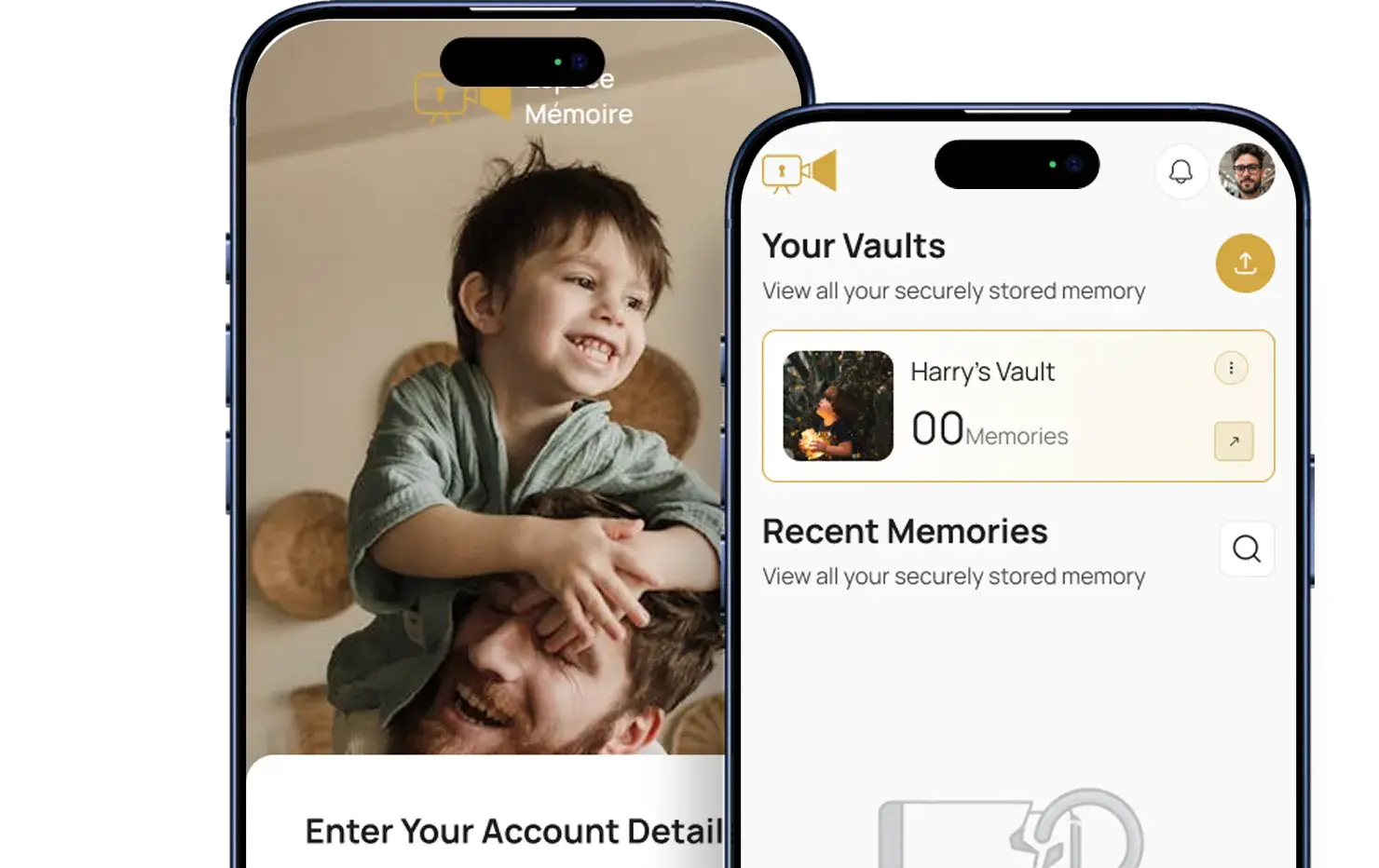
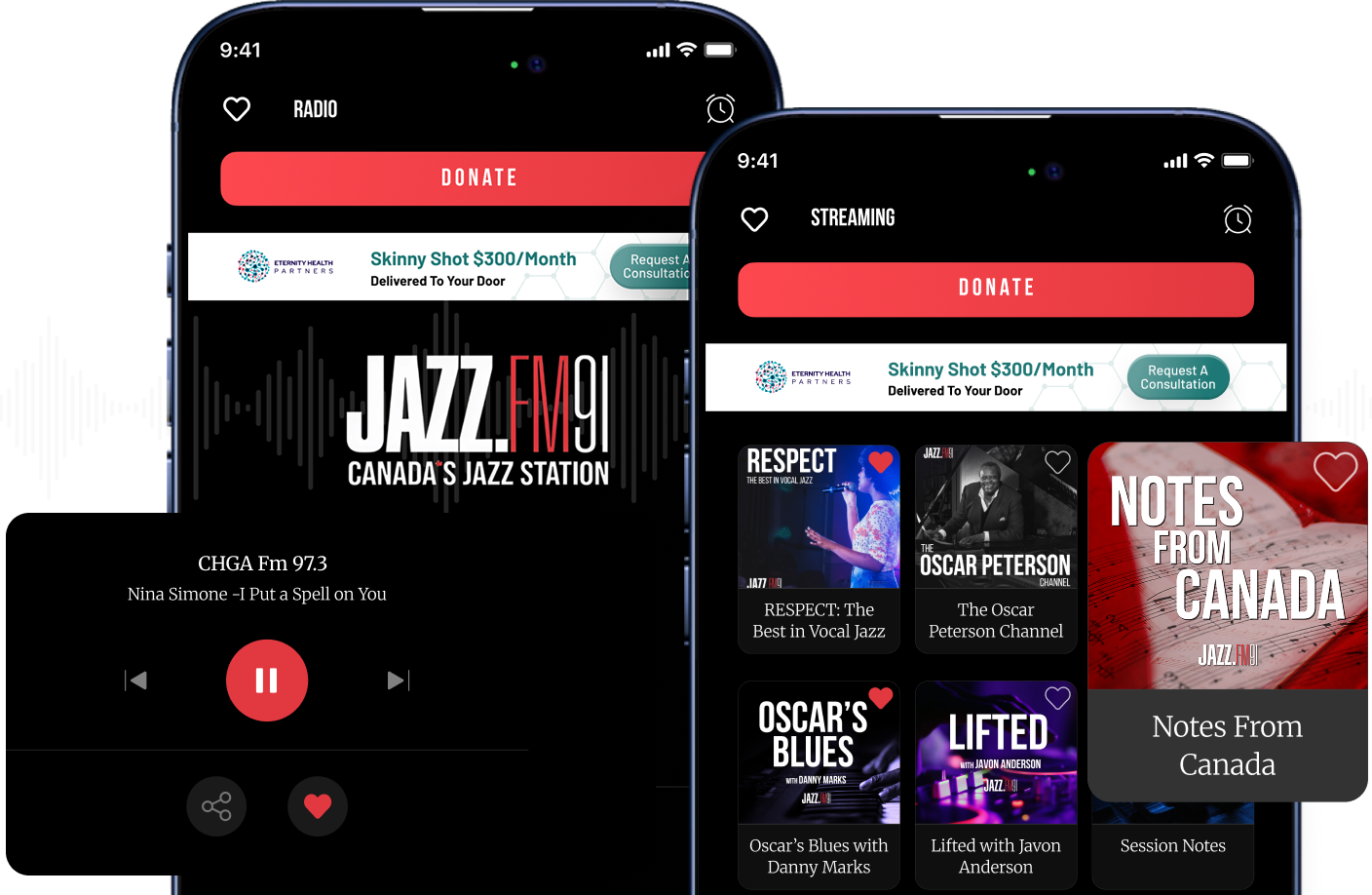
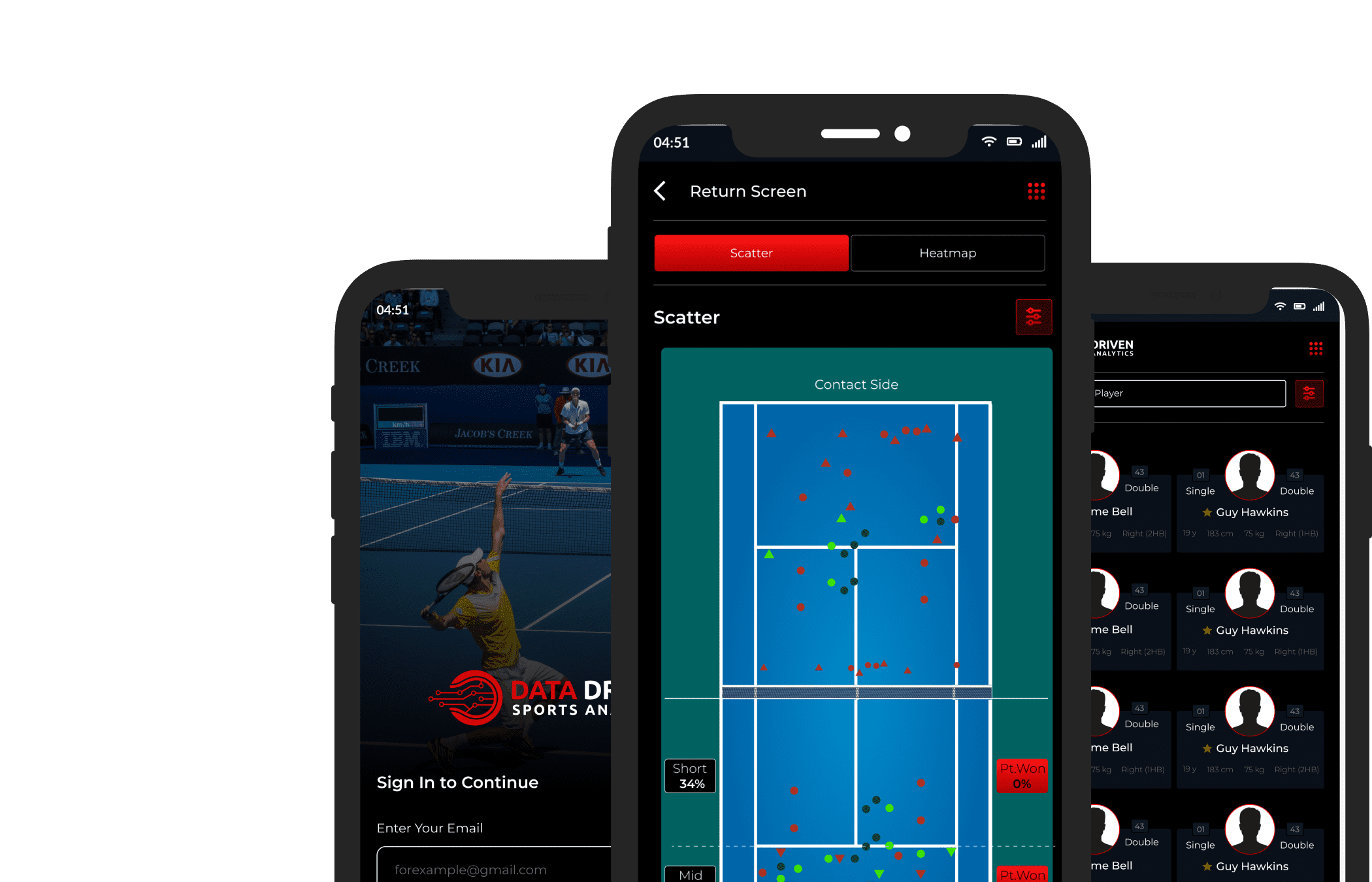
Businesses looking for AI solution development services often also require additional digital solutions to scale their platforms. Canadian Software Agency also provides:
Custom web platforms and scalable applications.
Native and cross-platform mobile apps for startups and enterprises.
Interactive gaming solutions for mobile and web platforms.
Custom ecommerce platforms and WooCommerce solutions.
We build predictive clinical analytics tools, conversational AI patient assistants, automated medical document extraction (NLP) pipelines, intelligent workflow routing systems, custom decision-support dashboards, and secure AI-driven web applications.
Yes. We support medical clinics, enterprise hospital networks, digital health startups, wellness providers, and public health organizations looking to integrate custom AI capabilities.
We implement strict data de-identification, role-based access control, encrypted data transport, secure cloud environments (AWS/Azure), and comprehensive audit trails to ensure compliance with Canadian health privacy regulations.
Yes. Integration planning is core to our process. We build secure APIs and middleware to connect our AI models directly with your existing EMR, EHR, CRM, and database systems.
Yes. We build secure, context-aware conversational AI assistants that can handle appointment scheduling, intake Q&A, and patient guidance while adhering to strict safety guardrails.
Timelines depend on data readiness, model complexity, and integration requirements. Focused MVPs can be developed relatively quickly, while enterprise-grade clinical AI platforms require phased planning, model training, and rigorous validation.
Cost varies based on project scope, data complexity, integration requirements, security needs, and whether you are building a new AI platform or enhancing an existing system. Most projects begin with a discovery phase to scope accurately.
A Canadian partner offers vital alignment on healthcare market context, regional privacy legislation (PHIPA and PIPEDA), communication clarity, and operational standards, resulting in a smoother, more strategic development process.




“They were proactive in addressing our needs and promptly responded to any concerns or inquiries we had. With Canadian Software Agency’s help, we increased online visibility, web traffic, and qualified leads.”
Debra Cafaro,
Chairman & CEO, Vintas

“They met expectations, and we’ve seen an increase in downloads and monthly users. Our business doubled from this new product line. Canadian Software Agency was ahead of schedule with deliverables — turnaround time was about 48 hours. They were passionate and efficient about their work and transformed the client’s vision into a viable product. ”
“They met expectations, and we’ve seen an increase in downloads and monthly users. Our business doubled from this new product line. Canadian Software Agency was ahead of schedule with deliverables — turnaround time was about 48 hours. ”
VP of Marketing, OSI Affiliate

“Canadian Software Agency was an excellent partner in bringing our vision to life! They managed to strike the right balance between aesthetics and functionality, ensuring that the end product was not only visually appealing but also practical and usable.”
Director – Nutrition for Lifestyle

Luke Schubert,
Head of Product, Open Forest Protocol

Director of Business Dev, LEFTY PRODUCTION CO.
“They met expectations, and we’ve seen an increase in downloads and monthly users. Our business doubled from this new product line. Canadian Software Agency was ahead of schedule with deliverables — turnaround time was about 48 hours. ”
Tariehk,
VP of Marketing, OSI Affiliate
“They were proactive in addressing our needs and promptly responded to any concerns or inquiries we had. With Canadian Software Agency’s help, we increased online visibility, web traffic, and qualified leads.”
Debra Cafaro,
Chairman & CEO, Vintas
Luke Schubert,
Head of Product, Open Forest Protocol
Director of Business Dev, LEFTY PRODUCTION CO.
“Canadian Software Agency was an excellent partner in bringing our vision to life! They managed to strike the right balance between aesthetics and functionality, ensuring that the end product was not only visually appealing but also practical and usable.”
Director – Nutrition for Lifestyle
Whether you are launching a new AI-driven health product, automating clinical workflows, building predictive analytics, or modernizing an existing healthcare system, we can help you design and build intelligent software that is secure, scalable, and aligned with your organizational goals.
Book a Consultation
Canadian Software Agency provides development services across major Canadian cities including Toronto, Vancouver, Ottawa, Montreal, Calgary, and Edmonton.
