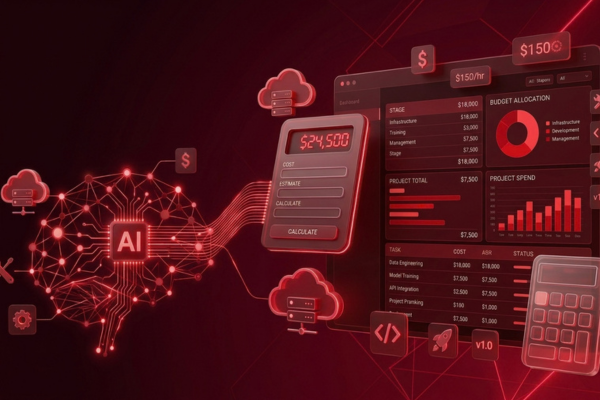
Every business leader wants to use artificial intelligence. But the first question is always about money. Understanding your AI Project Cost is the most important step before you start building anything. Without a clear budget, projects stall, teams lose focus, and money gets wasted fast.
The truth is, AI Project Cost can range from a few thousand dollars to several million. It depends on what you want to build, how complex the system is, and who builds it for you. A simple chatbot costs far less than a full enterprise AI platform with custom models.
In this guide, we will break down every factor that affects your budget. You will learn how to estimate costs, avoid hidden fees, and plan for real success. Whether you run a startup or a large company, this blog will help you make smart financial decisions. Let us explore the real numbers behind AI development and show you how to get the best return on your investment.
What Is AI Project Cost and Why Does It Matter?
AI Project Cost refers to the total amount of money you spend to plan, build, test, and launch an AI solution. This includes developer salaries, cloud hosting, data collection, and ongoing maintenance.
Many companies make the mistake of only looking at the upfront price. They forget about long-term expenses like model training, updates, and scaling. This leads to budget overruns and failed projects.
Knowing your full cost early helps you:
- Set realistic expectations with stakeholders
- Choose the right technology stack
- Avoid surprise expenses down the road
- Measure your return on investment clearly
According to Google AI, businesses that plan their AI budgets carefully see 30% faster deployment times. Proper planning saves both time and money.
Key Factors That Drive Your AI Project Cost
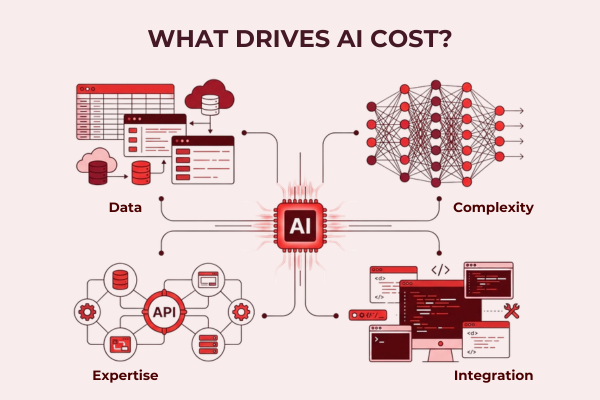
Several elements shape the final price tag of any AI initiative. Understanding these factors helps you build a more accurate budget from day one.
Data Requirements
AI models need data to learn. The more data you need, the higher the cost. Collecting, cleaning, and labeling data can take up to 40% of your total budget. If your data is messy or incomplete, expect to pay more.
Model Complexity
A basic recommendation engine costs less than a deep learning model for medical imaging. Complex models need more computing power, more training time, and more skilled developers. Each layer of complexity adds to your AI Project Cost.
Team Expertise
Hiring senior AI engineers costs more than hiring junior developers. However, experienced teams finish projects faster and make fewer mistakes. In the long run, investing in talent often reduces your overall spend.
Integration Needs
Connecting AI to your existing systems takes time and effort. Legacy software, outdated databases, and custom APIs all add to the workload. The more systems you need to connect, the higher the price.
AI Project Cost by Development Type
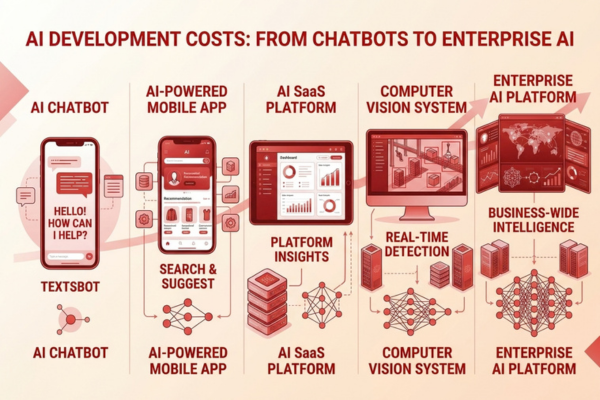
Not all AI projects are the same. The type of solution you build has the biggest impact on your budget. Here is a quick breakdown to help you compare options.
| AI Development Type | Estimated Cost | Timeline |
| AI Chatbot | $10,000 – $50,000 | 2 – 4 months |
| AI-Powered Mobile App | $30,000 – $100,000 | 3 – 6 months |
| AI SaaS Platform | $50,000 – $200,000 | 6 – 12 months |
| Computer Vision System | $40,000 – $150,000 | 4 – 8 months |
| Enterprise AI Solution | $100,000 – $500,000+ | 9 – 18 months |
These numbers are estimates. Your actual AI Project Cost will depend on your specific needs, location, and team. For a more precise figure, it helps to get a detailed project estimate from an experienced development team.
How to Plan Your Machine Learning Project Budget
Planning a machine learning project budget requires a clear roadmap. You cannot estimate costs if you do not know what you are building.
Define Your Business Goals First
Start with the problem you want to solve. Do you want to automate customer support? Predict sales trends? Detect fraud? Clear goals help you choose the right AI approach and avoid unnecessary features.
Choose Between Pre-Built and Custom Models
Pre-built models from providers like OpenAI are cheaper and faster to deploy. Custom models cost more but offer better accuracy for niche use cases. Your choice here directly affects your budget.
Break the Project into Phases
Split your project into smaller milestones. Start with a proof of concept, then move to a minimum viable product, and finally scale up. This phased approach keeps costs under control and reduces risk.
Hidden Costs in AI Software Development
Many businesses are surprised by expenses they did not plan for. These hidden costs can inflate your budget by 20% to 50% if you are not careful.
Common hidden costs include:
- Cloud computing fees: Training AI models uses a lot of processing power. Cloud bills can spike quickly during the training phase.
- Data storage: Storing large datasets securely costs money every month.
- Model retraining: AI models lose accuracy over time. You will need to retrain them regularly.
- Compliance and security: Meeting data privacy laws like GDPR adds legal and technical costs.
- User testing: Real-world testing with actual users takes time and resources.
Being aware of these costs early helps you build a more realistic budget. It also prevents unpleasant surprises after launch.
AI Implementation Cost: Build vs. Buy
One of the biggest decisions you will face is whether to build a custom solution or buy an off-the-shelf product. Both options have pros and cons.
| Feature | Build Custom AI | Buy Off-the-Shelf AI |
| Upfront Cost | High | Low to Medium |
| Customization | Full Control | Limited |
| Time to Market | 6 – 18 months | 1 – 3 months |
| Long-Term Cost | Lower Over Time | Higher Over Time |
| Scalability | Highly Scalable | Depends on Vendor |
| Data Privacy | Full Ownership | Shared with Vendor |
Building custom AI gives you full control and better long-term value. Buying a ready-made tool is faster and cheaper upfront. The right choice depends on your business size, goals, and timeline.
For companies exploring custom AI solutions tailored to their unique workflows, building from scratch often delivers the strongest results.
Real-World Examples of AI App Development
Looking at real projects helps you understand what drives costs up or down. Here are a few examples from our portfolio.
GreenTag is a sustainability-focused platform that uses AI to classify and tag products automatically. The project required custom computer vision models and large training datasets. You can explore the GreenTag case study to see how AI automation reduced manual tagging time by over 70%.
Espace Mémoire is a digital heritage platform that uses AI to organize and search historical archives. The project involved natural language processing and image recognition. Check out the Espace Mémoire project to understand how AI can transform data-heavy industries.
Player Dex is a sports analytics app that leverages machine learning to predict player performance. This project shows how AI-powered mobile apps can deliver real-time insights to end users at a reasonable cost.
These examples prove that AI works across industries. The key is matching the right technology to the right problem.
How to Reduce Your AI Integration Cost
You do not have to overspend to get great AI results. Here are practical ways to keep your budget in check.
- Start small: Launch a pilot project before committing to a full-scale build. This lets you test ideas cheaply.
- Use open-source tools: Frameworks like TensorFlow and PyTorch are free and powerful. They reduce licensing costs significantly.
- Leverage cloud AI services: Platforms like Google Cloud AI and Azure ML offer pay-as-you-go pricing. You only pay for what you use.
- Reuse existing data: If your company already collects customer data, use it. Collecting new data from scratch is expensive.
- Automate testing: Manual testing slows projects down and costs more. Automated testing speeds up delivery and catches bugs early.
- Hire a dedicated team: Outsourcing to a focused AI team is often cheaper than building an in-house department from zero.
Small changes in your approach can lead to big savings over the life of your project.
AI Project Planning: A Step-by-Step Guide
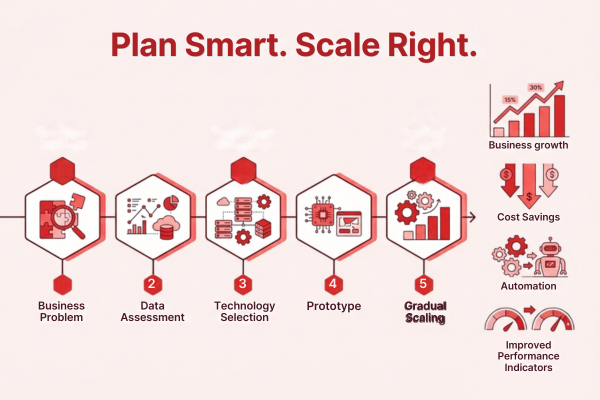
Good planning is the foundation of every successful AI project. Follow these steps to stay on track and on budget.
Step 1: Identify the Problem
Write down the exact business problem you want AI to solve. Be specific. Vague goals lead to vague budgets.
Step 2: Assess Your Data
Check what data you already have. Evaluate its quality, volume, and relevance. Poor data means higher cleanup costs.
Step 3: Choose Your Tech Stack
Decide whether you need machine learning, deep learning, or natural language processing. Each has different cost implications.
Step 4: Build a Prototype
Create a simple version of your AI solution. Test it with real users. Gather feedback before investing more money.
Step 5: Scale Gradually
Once your prototype works, add features slowly. Scale your infrastructure only when demand grows. This keeps your AI Project Cost manageable at every stage.
The Business Value of AI Technology Investment
Spending money on AI is not just a cost. It is an investment that pays off in measurable ways. Companies that adopt AI early gain a strong competitive edge.
Benefits of AI automation include:
- Reduced operational costs: AI handles repetitive tasks faster and cheaper than humans.
- Faster workflows: Automated processes cut turnaround times by up to 60%.
- Improved accuracy: AI models make fewer errors than manual data entry or analysis.
- Better customer experiences: Chatbots and recommendation engines keep users engaged around the clock.
- Smarter decision-making: Predictive analytics help leaders make data-driven choices with confidence.
A recent report from McKinsey shows that AI can add up to $4.4 trillion in value to the global economy each year. The question is not whether you can afford AI. The question is whether you can afford to ignore it.
Start Your AI Development Project
If your company is exploring AI solutions, our team at Canadian Software Agency can help you design and build scalable AI platforms. From intelligent chatbots to enterprise-grade machine learning systems, we deliver results that drive real business growth. Talk to our AI experts today and get a clear, transparent estimate for your next project. Let us turn your AI vision into a working product that saves you time, cuts costs, and keeps you ahead of the competition.
Conclusion
Estimating your AI Project Cost does not have to be overwhelming. The key is to understand the factors that drive pricing, plan your project in clear phases, and account for hidden expenses before they surprise you. From data collection and model complexity to team expertise and integration needs, every decision you make shapes your final budget.
Start by defining your business goals clearly. Choose the right development approach based on your timeline and resources. Whether you build a custom solution or use pre-built tools, make sure your choice aligns with your long-term strategy. Remember that the cheapest option is not always the best one. A well-planned investment in AI delivers returns that far outweigh the initial spend.
We also encourage you to look at real-world examples before committing. Studying successful projects in your industry gives you a realistic picture of what to expect. It helps you avoid common pitfalls and set achievable milestones. Keep your project lean, test early, and scale only when the data supports it.
At the end of the day, your AI Project Cost is an investment in the future of your business. Companies that embrace AI today will lead their industries tomorrow. The tools are available, the technology is mature, and the ROI is proven. All you need is a clear plan and the right development partner to bring your vision to life.
FAQs About AI Project Cost
1. How much does a typical AI project cost?
A simple AI project like a chatbot starts around $10,000. Complex enterprise solutions can exceed $500,000. The final price depends on scope, data needs, and team size.
2. What is the biggest cost driver in AI development?
Data preparation is usually the most expensive part. Collecting, cleaning, and labeling data can consume up to 40% of your total budget.
3. Can I reduce my AI project cost by using pre-built models?
Yes. Pre-built models from providers like OpenAI are cheaper and faster to deploy. However, they may not fit highly specialized use cases.
4. How long does it take to see a return on AI investment?
Most businesses see measurable results within 6 to 12 months. Simple automation projects can deliver ROI in as little as 3 months.
5. Do I need a large team to build an AI solution?
Not always. A small team of 3 to 5 skilled developers can build powerful AI tools. The key is hiring the right talent, not the most people.