
Modern apps are no longer just “mobile.” They are personal, predictive, and always learning. The reason is LLMs. These systems can read and write human-like text, summarize long documents, answer questions, and even generate code. For a mobile app development company, LLMs are not a trend to watch. They are a tool to ship better features faster and to create new products that were not practical before.
In this guide, you will learn what LLMs are, the LLM meaning, and why they matter for business. You will also see examples of LLM applications, how teams use models like GPT and Gemini in real work, and what this shift means for product strategy. Most importantly, you will understand where the business value is: automation, speed, quality, and new revenue streams.
Featured Snippet: Definition (AI models explained)
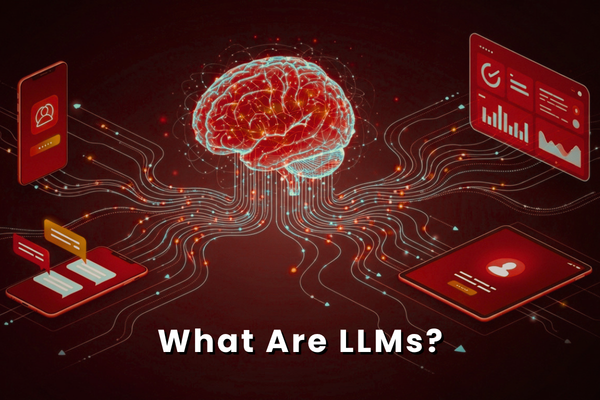
What are LLMs?
LLMs (Large Language Models) are advanced AI systems trained on large datasets to understand and generate human-like text, enabling tasks like writing, coding, summarization, and chat-based interactions.
LLM meaning (simple):
A system that learns patterns in language so it can “predict” the next best words, then produce useful text, code, or summaries.
1) LLMs Explained Simply: Why Businesses Are Adopting Them
You can think of LLMs as a language engine. They can work inside apps, websites, and internal tools. They can handle tasks that used to require people to read, write, and decide. That is why they are central to many AI technology trends.
Why LLMs matter to business teams:
- They scale support without scaling headcount
- They reduce the time spent on repetitive writing and research
- They improve user experiences through smart assistants
- They help teams build faster with coding support and automation
In mobile products, AI language models like LLMs can improve onboarding, in-app guidance, search, and accessibility. When done well, users stay longer and convert more.
2) LLMs vs Traditional AI
Large Language Models are a type of AI built for language. Traditional AI often needs clean data and fixed rules. AI language models can work with messy text and natural questions.
Key differences (plain language)
- Traditional AI: predicts numbers or categories (fraud / not fraud)
- LLMs: generate language (answers, drafts, summaries, plans)
Why does that change product design
With LLMs, you can build features based on conversation and intent. Users do not need to learn complex menus. They can ask for what they want.
If you are comparing assistants, it also helps to understand the difference between tools built for conversations versus tools built to take actions. Learn more in our detailed guide on AI agents vs chatbots.
3) How Do LLMs Work?
Teams often ask: How do LLMs work in real life? You do not need deep theory to make good product decisions.
A simple view of how LLMs work
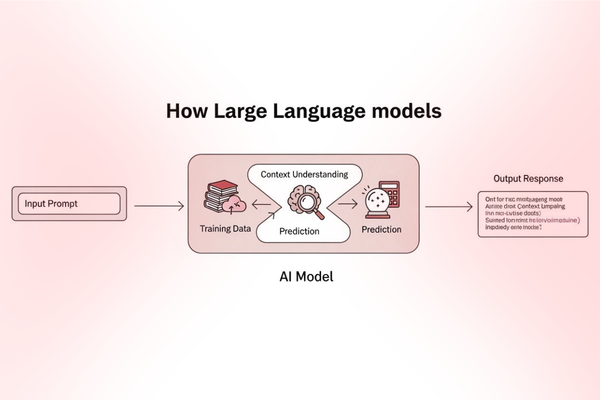
LLMs learn patterns from large datasets. During training, they see billions of examples. Over time, they learn:
- grammar and writing style
- common facts and relationships
- How instructions and questions are usually answered
Then, when a user types a prompt, the model:
- reads the context
- predicts the next best words
- produces a response based on probability
Why quality depends on context
LLMs are much better when you provide:
- clear instructions
- relevant business data
- Examples of the desired output
This is why product teams often combine LLMs with a knowledge base, search, or private documents.
4) LLMs and Generative AI: what it enables
Generative AI refers to tools that create content: text, images, or code. LLMs are the engine behind the text and reasoning side.
Common Generative AI features powered by LLMs
- chat assistants inside apps
- content drafting for marketing or sales
- document summaries and reports
- coding suggestions and test generation
- “smart search” in knowledge bases
This is not just for big companies. Any product team can add value fast if the use case is focused.
5) Top LLM Applications for Mobile Apps (With Examples)
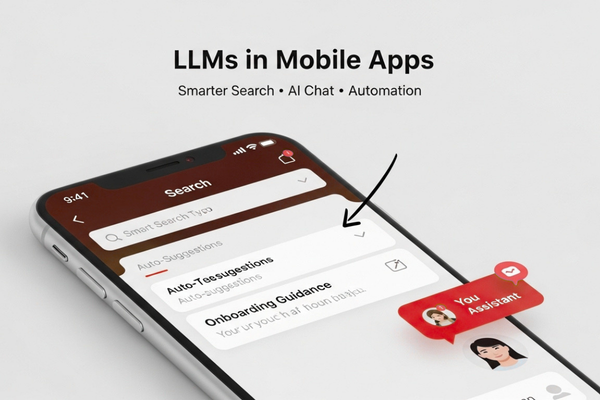
For mobile products, the best LLM applications are the ones that reduce friction. They make the user’s next step obvious and fast.
High-ROI LLM applications in mobile
- In-app support: instant answers, guided troubleshooting
- Smart onboarding: explain features in the user’s own words
- Search and discovery: natural-language search across content
- Forms and workflows: auto-fill, rewrite, validate, and suggest
- Content tools: summaries, captions, translations, tone changes
A few quick examples
- A fitness app: creates a weekly plan based on goals and schedule
- A fintech app: explains a transaction in plain words and flags risk
- A learning app: generates quizzes from lessons and tracks gaps
These features can be shipped as MVPs, then improved based on real usage.
6) LLMs in Business: Real Use Cases and ROI
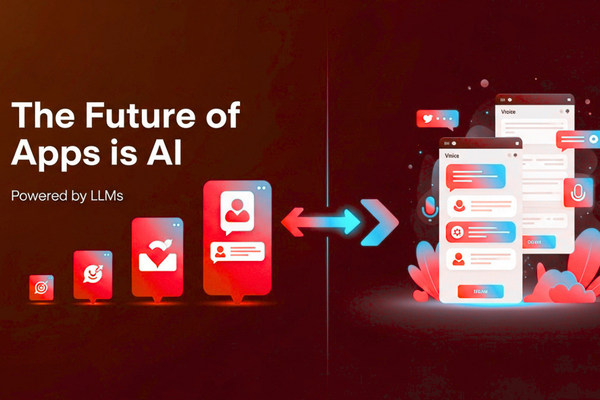
Most companies do not need “AI everywhere.” They need an LLM in Business use cases that save time and money, or drive revenue.
Benefits of AI automation include:
- reduced operational costs
- faster workflows
- improved accuracy
- better customer satisfaction
- more time for high-value work
Strong starting points for LLMs
- customer support deflection
- internal knowledge search
- sales email drafts and call summaries
- HR and policy Q&A
- QA automation and test case generation
When businesses start here, they get clear metrics. They can measure cost per ticket, response time, conversion rate, and retention.
If you want a deeper look at systems that can do more than talk, read our guide on what AI agents are and how they work
7) GPT, Gemini, and Anthropic: model choices that matter
Teams often ask which model to use. In practice, many companies test a few. They pick based on cost, speed, quality, and safety.
Popular model families (examples)
- GPT Models: GPT-4.x, GPT-5.3
- Gemini (Google): Gemini 1.5 / 2.0
- Anthropic: Opus
Our dev teams use these models to improve coding speed. With strong prompts and clear tasks, LLMs can:
- generate boilerplate code
- Suggest cleaner functions
- write unit tests
- explain unfamiliar code
This does not replace engineers. It reduces time spent on repeat work. It also helps reviewers focus on logic and product quality.
For companies building customer-facing features, model choice should also include compliance and privacy needs.
8) Cost overview: what it takes to build with LLMs
Budget depends on the scope. A small pilot can be affordable. An enterprise platform needs more work: security, monitoring, and integration.
Estimated AI development cost table
| AI Development Type | Estimated Cost |
| AI Chatbot | $10k – $50k |
| AI SaaS | $50k – $200k |
| Enterprise AI | $100k+ |
Costs vary based on:
- data sources and integrations
- required accuracy and testing
- user volume and performance goals
- security, roles, and audit logs
If you are planning a build, you can quickly size it using our AI project estimate workflow so the scope matches your goals and timeline.
9) Features to build first (Feature → Benefit table)
The smartest path is to launch a small feature set, then expand. Below are practical LLM features that fit many apps.
| Feature | Benefit |
| In-app AI help widget | Fewer support tickets and faster answers |
| Smart search across content | Users find what they need in seconds |
| Auto-summary for long text | Less reading time, better decisions |
| Draft replies for support teams | Higher throughput and consistent tone |
| Content rewrite (tone, clarity) | Better messaging, fewer edits |
These features are easy to test. They also create clear metrics for ROI.
If you want to see how strong execution looks in real digital products, our NDMS case study shows how structured delivery and clear goals lead to reliable outcomes.
10) Risk, privacy, and quality: how to use LLMs safely
LLMs can produce wrong or sensitive outputs if they are not managed. This is why responsible design matters.
Common risks
- incorrect answers (“hallucinations”)
- data leakage (if prompts contain private info)
- Bias in output
- inconsistent tone or policy violations
Practical safeguards (business-friendly)
- Do not send sensitive data unless protected
- Use role-based access and logging
- Add a “sources” feature for factual answers
- set guardrails for brand tone and compliance
- test with real scenarios before launch
A strong build also includes monitoring. You track failures, user feedback, and edge cases. Then you improve prompts, data, and UI.
For trusted research and safety work, see resources from OpenAI and Google AI. Their updates often shape best practices in the market.
11) AI technology trends and the Future of AI with LLMs
The Future of AI is not just bigger models. It is better to have products built around real tasks.
Key AI technology trends to watch
- Multimodal AI: text + image + voice in one flow
- On-device AI: smaller models running on phones for privacy
- Agents: systems that plan steps and use tools
- Retrieval + reasoning: combining private data with LLMs
- Customization: models tuned for a brand’s domain and style
As these trends mature, LLMs will feel less like a chatbot and more like a built-in product layer.
If you want an example of building an education-focused platform where speed and clarity matter, our Dropship Academy case study highlights how product thinking supports growth.
12) How to start: a simple rollout plan for LLMs
A good rollout keeps scope tight. It focuses on one business problem and one user group.
Step-by-step plan
- Pick one use case with measurable value (support, search, summaries)
- Define success metrics (time saved, ticket deflection, conversion)
- Choose a model and run a small pilot
- Add guardrails: privacy, tone rules, fallback paths
- Launch to a small segment, then expand
- Iterate monthly based on logs and feedback
If you need a partner for strategy and delivery, our team builds production-ready solutions through AI services for modern apps, from pilots to scalable platforms using LLMs.
CTA: Start Your AI Development Project
Build AI-Powered Apps with LLMs, Start Your Project Today
If your company is exploring AI features, our team at Canadian Software Agency can help you plan, design, and build scalable products powered by LLMs. We focus on business outcomes, safe deployment, and clean user experiences. Share your goals, and we will map a practical path from idea to launch.
Future of AI-powered apps with LLMs transforming user experience and automation
Conclusion: LLMs are changing how apps are built and used
LLMs are transforming how modern apps are built, enabling AI-powered experiences, automation, and smarter user interactions across industries. They are a new way for users to interact with software. They turn language into an interface and make apps feel more human. For product leaders, the opportunity is clear: use LLMs to reduce support load, speed up work, improve UX, and create new services. Start with one strong use case, measure results, and scale what works. The companies that move early with LLMs will build faster, serve customers better, and stay ahead as the Future of AI unfolds.
FAQs
1) What is the meaning of LLMs in business?
The LLM’s meaning for business is simple: a tool that automates language-heavy work. It can reduce time spent on support, writing, searching, and reporting.
2) Are LLMs part of Generative AI?
LLMs are a key part of Generative AI. Generative AI is the broader category. It includes tools that generate text, images, audio, and more.
3) How do I pick between GPT, Gemini, and Anthropic models?
Test them on your real tasks. Compare quality, speed, cost, and safety. Many teams run short pilots before standardizing.
4) What are the best LLM applications to start with?
Start with support automation, knowledge search, and document summaries. These use cases are common, measurable, and fast to ship.
5) Can LLMs be used securely with private company data?
Yes, with the right setup. Use strict access control, avoid sending sensitive data when not needed, and add logging plus policy guardrails.