- Engineering Canada's Future Since 2012
Build Intelligent AI Systems Powered by Your Data
Artificial intelligence has become one of the most powerful technologies transforming modern businesses. However, one of the biggest challenges with AI systems is ensuring that responses are accurate, reliable, and grounded in real information rather than generic model knowledge.
This is where Retrieval Augmented Generation (RAG) systems provide a major breakthrough.
Jump Start Your Business
Trusted by Canada's Leading Institutions
What is Retrieval Augmented Generation (RAG)?
Retrieval Augmented Generation is an architecture that enhances large language models by enabling them to retrieve relevant information from external knowledge sources before generating responses.
Traditional AI models rely only on their training data, which can lead to outdated information or incorrect answers.
RAG solves this problem by combining:
- Large Language Models (LLMs) for reasoning and language understanding
- Vector databases for storing and retrieving relevant data
- Embeddings models for semantic search
- Document processing pipelines for organizing enterprise data
When a user asks a question, the system retrieves the most relevant information from the organization’s knowledge base and provides that context to the AI model before generating a response.
This approach ensures that answers are grounded in real company data, dramatically improving reliability and usefulness.
Why RAG
Why Businesses Are Adopting RAG Systems
Organizations today store vast amounts of information across documents, databases, emails, and knowledge systems. However, accessing this information quickly can be difficult for employees and customers. RAG systems allow organizations to transform their data into an intelligent assistant that can answer questions instantly.
Some of the key advantages of RAG architecture include:
- Accurate AI Responses
RAG systems retrieve information from trusted sources before generating responses, reducing the risk of incorrect or hallucinated answers.
- Real-Time Knowledge Access
AI systems can access updated documentation and knowledge bases rather than relying on static training data.
- Enterprise Data Utilization
Organizations can unlock value from internal data that would otherwise remain unused.
- Improved Productivity
Employees can retrieve information instantly without manually searching through documentation.

Toronto HQ
Uniquely Canadian.
Expertise
RAG AI Development Services
CSA provides a full range of RAG development services designed to help organizations build reliable AI systems powered by their data.
Enterprise Knowledge Assistants
Enterprise knowledge assistants allow employees to interact with company documentation using natural language queries.
Instead of searching through documents or internal portals, employees can ask questions such as:
- “How do I configure this product feature?”
- “What are the company compliance requirements?”
- "Where is the documentation for this API?”
AI Customer Support Systems
Customer support teams often rely on extensive documentation and knowledge bases.
RAG systems allow businesses to build AI assistants capable of retrieving support documentation and answering customer questions accurately.
These systems can:
- automate support responses
- assist support agents with answers
- retrieve troubleshooting documentation
- provide onboarding guidance
AI-Powered Document Intelligence
Many organizations manage thousands of documents containing valuable information.
RAG systems can analyze and index these documents to create intelligent document search platforms.
Applications include:
- legal document analysis
- compliance documentation search
- financial report summarization
- contract intelligence systems
Semantic Search Platforms
Traditional search systems rely on keyword matching, which can produce limited results.
RAG systems use semantic search powered by embeddings to understand the meaning behind queries.
This allows users to find relevant information even when the exact keywords are not present.
Semantic search is commonly used for:

- enterprise documentation platforms
- internal knowledge portals
- product documentation systems
- developer documentation assistants
AI Research Assistants
RAG systems can be used to build AI research assistants capable of retrieving and analyzing large volumes of information.
These assistants can help with:
- market research
- competitive intelligence
- internal data analysis
- report generation
Data Ingestion Pipelines
The first step in building a RAG system is ingesting enterprise data into the platform.
This may include:
- documents
- PDFs
- internal knowledge bases
- databases
- website content
- support documentation
Vector Databases
Vector databases store embeddings that represent the semantic meaning of data.
These databases allow systems to retrieve relevant information based on similarity rather than simple keyword matching.
Popular vector database technologies include scalable systems capable of handling millions of data points.
Embeddings and Semantic Search
Embeddings convert text into numerical representations that capture semantic meaning.
This allows the system to understand user queries and retrieve relevant information even when wording differs.
Large Language Model Integration
Once relevant information is retrieved, the LLM generates a response based on the provided context.
This ensures that answers are grounded in reliable data rather than generic model knowledge.
Security and Access Controls
Enterprise RAG systems must enforce strict access controls to ensure that sensitive information is only accessible to authorized users.
Our development approach includes security mechanisms to protect enterprise data.
RAG Architecture and Technology
Building a reliable RAG system requires careful architecture design and integration of several technical components.
Features
Industries Using RAG Systems
SaaS Platforms
SaaS companies integrate RAG systems to power AI copilots that assist users within their software platforms.
Financial Services
Financial institutions use RAG systems for compliance monitoring, documentation retrieval, and financial analysis.
Healthcare
Healthcare organizations use RAG technology to retrieve medical documentation and support clinical decision-making.
Legal Services
Law firms use RAG systems to analyze legal documents and retrieve case information quickly.
Enterprise Organizations
Large organizations use RAG assistants to manage internal knowledge across teams.
The Workflow
Our RAG Development Process
Phase 1
AI Strategy and Use Case Definition
We identify the most valuable applications for RAG technology within your organization.
Phase 2
Data Architecture Design
Our engineers design the data pipelines required to ingest and organize enterprise data.
Phase 3
System Development
We build the RAG architecture including vector databases, retrieval systems, and AI model integration.
Phase 4
Testing and Optimization
We evaluate system performance and refine retrieval accuracy.
Phase 5
Deployment and Scaling
Once deployed, we help organizations scale their AI knowledge systems and monitor performance.
Why Choose Us
Why Choose CSA for RAG AI Development
Organizations across Canada choose CSA for AI development because of our expertise in both artificial intelligence and enterprise software engineering.
- Experienced AI Engineers
Our team has experience designing scalable AI architectures powered by large language models.
- Enterprise-Grade Solutions
We build AI systems that meet enterprise security and reliability standards.
- Custom AI Development
Every RAG system is tailored to the unique data and workflows of each organization.
- End-to-End Development
From architecture design to deployment, we provide complete AI development services.

Toronto HQ
Uniquely Canadian.
Real Results for Real Businesses
Explore how we solved complex technical challenges for industry leaders.
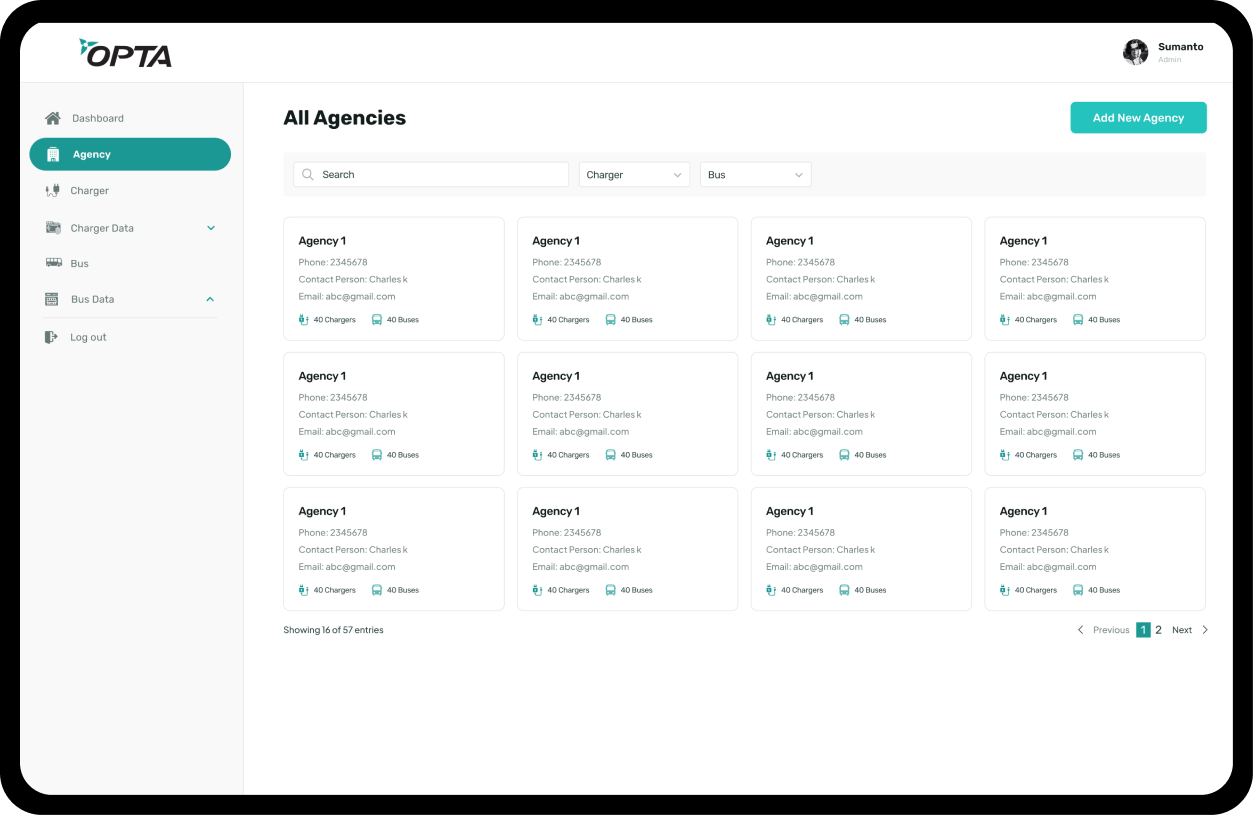
OPTA Dash
Neuro Ascent
Cloud 9
“They were proactive in addressing our needs and promptly responded to any concerns or inquiries we had. With Canadian Software Agency’s help, we increased online visibility, web traffic, and qualified leads.”
Debra Cafaro,
Chairman & CEO, Vintas
“They met expectations, and we’ve seen an increase in downloads and monthly users. Our business doubled from this new product line. Canadian Software Agency was ahead of schedule with deliverables — turnaround time was about 48 hours. They were passionate and efficient about their work and transformed the client’s vision into a viable product. ”
“They met expectations, and we’ve seen an increase in downloads and monthly users. Our business doubled from this new product line. Canadian Software Agency was ahead of schedule with deliverables — turnaround time was about 48 hours. ”
VP of Marketing, OSI Affiliate
“Canadian Software Agency was an excellent partner in bringing our vision to life! They managed to strike the right balance between aesthetics and functionality, ensuring that the end product was not only visually appealing but also practical and usable.”
Director – Nutrition for Lifestyle
Luke Schubert,
Head of Product, Open Forest Protocol
Director of Business Dev, LEFTY PRODUCTION CO.
“They met expectations, and we’ve seen an increase in downloads and monthly users. Our business doubled from this new product line. Canadian Software Agency was ahead of schedule with deliverables — turnaround time was about 48 hours. ”
Tariehk,
VP of Marketing, OSI Affiliate
“They were proactive in addressing our needs and promptly responded to any concerns or inquiries we had. With Canadian Software Agency’s help, we increased online visibility, web traffic, and qualified leads.”
Debra Cafaro,
Chairman & CEO, Vintas
Luke Schubert,
Head of Product, Open Forest Protocol
Director of Business Dev, LEFTY PRODUCTION CO.
“Canadian Software Agency was an excellent partner in bringing our vision to life! They managed to strike the right balance between aesthetics and functionality, ensuring that the end product was not only visually appealing but also practical and usable.”
Director – Nutrition for Lifestyle
Questions
RAG Ai Development FAQ
Transparent answers about our Canadian-first development philosophy.
What is RAG AI?
RAG stands for Retrieval Augmented Generation, an AI architecture that combines language models with data retrieval systems to generate accurate responses.
Why is RAG important for enterprise AI?
RAG systems allow AI to use real company data rather than relying solely on pre-trained model knowledge.
Can RAG integrate with company databases?
Yes. RAG systems can connect to document repositories, databases, APIs, and enterprise knowledge systems.
How long does it take to build a RAG system?
Development timelines depend on the complexity of the data architecture and integrations required.
Final Call
Start Your RAG AI Development Project
If your organization wants to leverage artificial intelligence to unlock insights from internal data, CSA can help.
Our AI engineers specialize in building scalable Retrieval Augmented Generation systems that power intelligent knowledge assistants and enterprise AI platforms.
Contact Canadian Software Agency today to discuss your RAG AI development project and discover how intelligent data retrieval can transform your business operations.
Development Across Canada
Canadian Software Agency provides development services across major Canadian cities including Toronto, Vancouver, Ottawa, Montreal, Calgary, and Edmonton.
Related Development Services
Businesses looking for WordPress development services often also require additional digital solutions to scale their platforms. Canadian Software Agency also provides:
Web Development Services in Toronto
Custom web platforms and scalable applications.
Mobile App Development Services
Native and cross-platform mobile apps for startups and enterprises
Game Development Services
Interactive gaming solutions for mobile and web platforms.
Ecommerce Development Services
Custom ecommerce platforms and WooCommerce solutions.