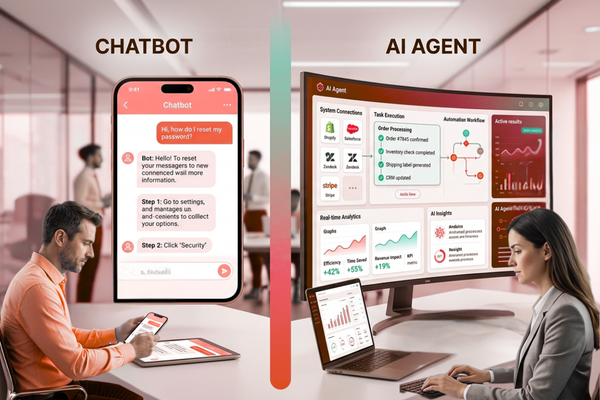
Businesses want faster service, lower costs, and better customer experiences. That is why the topic of AI Agents vs Chatbots matters so much today. Both tools can automate work, answer questions, and support users. But they are not the same. One follows set paths. The other can reason, act, and complete more complex tasks.
In this blog, we will break down the differences between AI agents and chatbots. You will learn how each one works, where each one fits best, and which one delivers stronger business value. We will also cover the AI agents vs chatbots difference, share a clear chatbot vs AI agent comparison, and explain the real benefits of AI agents. Along the way, we will look at practical chatbot use business cases and show where companies can gain the most return.
If you are planning a new mobile app, customer support tool, or workflow platform, this guide will help you make a smarter choice.
AI Agents vs Chatbots: Key Differences Explained
The core difference between these two technologies is simple.
A chatbot is made to talk.
An AI agent is made to act.
What is a chatbot?
A chatbot is a conversational software tool that answers user queries and helps with basic tasks using predefined logic or AI.
What is an AI agent?
An AI agent is a goal-driven software system that can understand context, make decisions, and take actions to complete tasks automatically with minimal human input.
AI Agents vs Chatbots: A Quick Comparison
To understand these tools, it helps to compare them side by side.
| Feature | Chatbot | AI Agent |
| Main role | Answer questions | Complete tasks |
| Input type | User messages | User messages, data, goals |
| Decision-making | Limited | Advanced |
| Workflow ability | Basic | Multi-step |
| Tool use | Rare or simple | Strong |
| Learning ability | Often limited | Often adaptive |
| Best for | Support, FAQs | Operations, automation, sales, support |
| Business impact | Faster replies | Faster outcomes |
This chatbot vs AI agent comparison shows why many firms now invest in agent-based systems.
When a chatbot is enough
A chatbot works well when:
- Questions are common and predictable
- Flows are simple
- Users need quick answers
- actions are limited
When Should You Use an AI Agent?
An AI agent is better when:
- Work involves many steps
- Data comes from several systems
- decisions change by context
- Users expect task completion, not just replies
If your company wants deeper automation, AI agents often come out ahead.
Why Businesses Are Moving Beyond Basic Chatbots
In the early stage of automation, chatbots solved a clear problem. They reduced support load and gave users 24/7 answers. That still matters. But many companies now want more.
They do not just want a tool that says, “Here is the answer.”
They want a tool that says, “I handled it for you.”
That shift is why this comparison has become a key business discussion.
Business value of smarter automation
Benefits of AI automation include:
- reduced operational costs
- faster workflows
- improved accuracy
- fewer manual tasks
- better customer response times
- stronger team productivity
- more scalable support
An AI agent can check systems, update records, send alerts, summarize data, and trigger actions. A chatbot often stops at the conversation layer.
For businesses building custom digital products, this difference matters. Our AI services help companies plan automation that supports real growth, not just simple chat.
AI Agents vs Chatbots: Real Workflow Differences
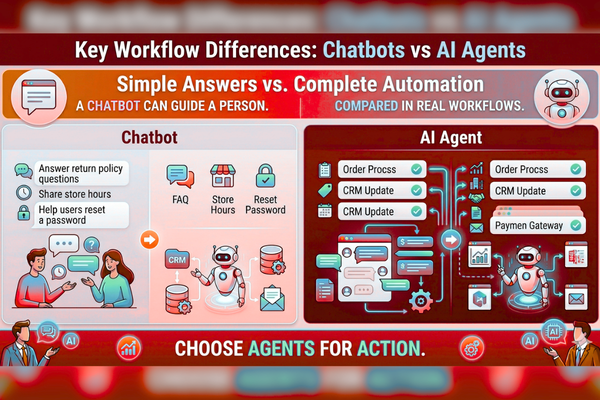
The biggest difference appears in real workflows.
A chatbot can guide a person.
An AI agent can finish the job.
Example: Customer support
A chatbot can:
- Answer return policy questions
- Share store hours
- Help users reset a password
An AI agent can:
- Verify the customer
- Check order status
- process a refund
- Update the CRM
- Send a confirmation message
Example: Sales support
A chatbot can:
- collect lead details
- answer pricing questions
- Book a demo
An AI agent can:
- Score the lead
- Pull company data
- Assign the lead to sales
- Prepare a summary
- trigger follow-up actions
This is why the chatbot vs AI agent comparison matters for business leaders. If the goal is real task automation, AI agents often drive better results.
Benefits of AI Agents for Modern Businesses
The benefits of AI agents are wider than many companies expect. They can improve service, operations, and decision speed.
1. They complete multi-step tasks
AI agents can work through a chain of steps. They do not just respond. They move the process forward.
2. They connect systems
Agents can work across tools like CRM, helpdesk, app databases, and internal dashboards.
3. They save team time
By handling repeat actions, agents reduce manual work and let staff focus on higher-value tasks.
4. They improve response quality
Because they can use more context, agents can provide more accurate and useful outputs.
5. They support scale
As volume grows, AI agents can manage more requests without a matching rise in headcount.
Here is a simple feature and benefit table.
| Feature | Benefit |
| Multi-step reasoning | Better task completion |
| Tool integration | Smoother workflows |
| Context awareness | More accurate responses |
| Goal-based logic | Better outcomes |
| Continuous operation | 24/7 support and action |
The benefits of AI agents are especially strong in mobile app ecosystems where speed and automation shape user experience.
Chatbot Use Business Cases That Still Make Sense
Even though advanced automation often favors AI agents often favors agents for advanced work, chatbots still have strong value.
There are many practical chatbot use cases where a chatbot is the right choice.
Best chatbot use business cases
- FAQ support
- appointment booking
- order tracking
- Basic lead capture
- onboarding guidance
- internal HR help
- store or service information
Why chatbots still work
Chatbots are often:
- faster to launch
- lower in cost
- easier to manage
- ideal for simple user needs
For many companies, a chatbot is a smart first step. It can solve common support pain points before moving into more advanced AI.
A good product example is a solution that focuses on clean user journeys and practical engagement. See how AI-powered mobile apps improve user experience in GreenTag
Cost Comparison: Chatbot vs AI Agent Development
Cost is always part of the decision when choosing between these solutions. In most cases, chatbots cost less to build than AI agents. But lower cost does not always mean better value.
Estimated AI development cost
| AI Development Type | Estimated Cost |
| AI Chatbot | $10k – $50k |
| AI SaaS | $50k – $200k |
| Enterprise AI | $100k+ |
What affects cost?
Several factors change the total cost:
- number of integrations
- workflow complexity
- model choice
- security needs
- data access rules
- testing scope
- app or platform size
Cost vs return
A chatbot may have a lower launch cost.
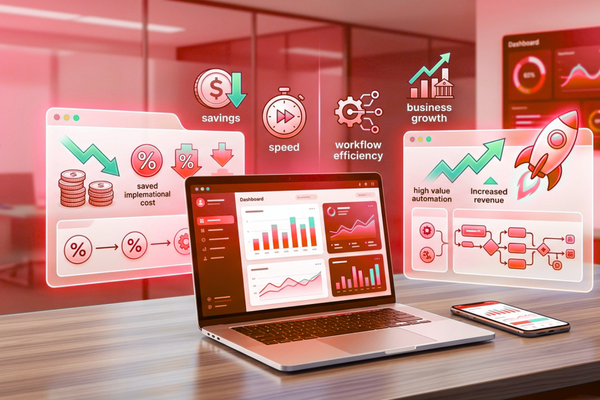
An AI agent may create a higher return by reducing labor and speeding operations.
This is where AI Agents vs Chatbots should be judged by outcomes, not price alone.
For example, platforms with complex user flows often benefit from deeper automation. Explore scalable digital platforms like NDMS
Which Drives Better Results for Mobile Apps?
This comparison is not just a content topic. It is a product strategy question.
Mobile users want fast, easy, and useful experiences. They do not want friction. That makes AI a powerful layer inside apps.
Chatbots in mobile apps
Chatbots work well for:
- in-app help
- onboarding support
- user education
- quick service questions
AI agents in mobile apps
AI agents work well for:
- task automation
- smart recommendations
- account actions
- personalized workflows
- support that connects to backend systems
Better results depend on the app’s goal
Choose a chatbot if your app needs:
- simple assistance
- quick setup
- lower build cost
Choose an AI agent if your app needs:
- deep personalization
- action-based support
- workflow automation
- cross-system intelligence
The best choice depends on the business model, user needs, and system design. A strong mobile product often blends AI with user-centered design. You can see this kind of product thinking in projects like PlayerDex.
How to Choose the Right Option for Your Business
The right choice depends on the problem you want to solve.
Ask these questions first:
1. What is the main goal?
- answer questions
- reduce support volume
- automate workflows
- drive sales
- improve user retention
2. How complex is the task?
If tasks are simple, a chatbot may be enough.
If tasks involve decisions and actions, an AI agent is better.
3. What systems must connect?
If the AI must work with databases, CRMs, internal tools, or app logic, agent-based design is often stronger.
4. What result matters most?
- lower cost
- faster support
- fewer manual steps
- better conversion
- stronger user experience
5. How fast do you need to launch?
Chatbots are often quicker to deploy. AI agents may take more planning but can create greater long-term value.
A careful chatbot vs AI agent comparison should focus on goals, systems, and return on investment.
Risks, Limits, and What to Plan Before You Build
A smart AI strategy also looks at risks.
No AI tool should be launched without planning. Good design, testing, and governance matter.
Common chatbot risks
- poor answers
- limited understanding
- dead-end flows
- user frustration
Common AI agent risks
- wrong actions
- weak system permissions
- data privacy issues
- unclear human oversight
What businesses should plan for
Before launch, define:
- use cases
- success metrics
- data rules
- approval steps
- fallback paths
- monitoring process
Trusted AI providers also follow updates from major AI leaders such as OpenAI and Google AI to stay aligned with modern standards and capabilities.
The stronger your planning, the better the result.
Best Use Cases by Industry
That is why the right solution should always be tied to the business context.
Retail
Chatbots:
- product questions
- shipping info
- return policy
AI agents:
- personalized offers
- refund handling
- order updates across systems
Healthcare
Chatbots:
- appointment reminders
- common service info
AI agents:
- patient routing
- form intake
- admin workflow support
Finance
Chatbots:
- balance FAQs
- branch info
- card support basics
AI agents:
- fraud checks
- onboarding review
- support case handling
Logistics
Chatbots:
- shipment status
- customer updates
AI agents:
- route decisions
- delay alerts
- issue resolution
These examples show practical chatbot use in business cases while also highlighting where agents create a stronger impact.
Start with a Chatbot or Jump to an AI Agent?
This is one of the most common business questions in AI adoption.
The answer depends on maturity.
Start with a chatbot if:
- You want a fast launch
- Your use case is simple
- Your budget is limited
- You want to test user demand
Start with an AI agent if:
- Your workflow is already complex
- Support teams handle many repeat actions
- Systems need to talk to each other
- Automation ROI is clear
A phased approach often works best
Many businesses start with a chatbot, then expand into an AI agent later.
A phased model can look like this:
- Launch the FAQ chatbot
- Add contextual responses
- Connect backend tools
- Enable task execution
- Move into agent-based automation
This approach lowers risk and builds value over time.
Start Your AI Development Project
If your company is exploring AI solutions, our team at Canadian Software Agency can help you design and build scalable AI platforms.
We create practical AI products for real business needs. That includes mobile apps, custom automation, intelligent support systems, and advanced AI tools that connect with your workflows.
Why work with CSA?
- strong product strategy
- custom app development expertise
- scalable AI implementation
- business-first planning
- Focus on measurable value
Want to automate your workflows with AI agents? Explore our AI development services
Conclusion
When it comes to AI Agents vs Chatbots, the better option depends on your goals. Chatbots are useful for simple conversations, quick support, and lower-cost automation. AI agents are better for deeper workflows, task completion, and stronger business impact.
The real AI agents vs chatbots difference is action. Chatbots help users find answers. AI agents help businesses get work done. If your goal is better efficiency, better scale, and better results, AI agents often offer more long-term value.
Still, both tools have a place. A good strategy starts with the business problem, not the technology. When you evaluate these solutions with that mindset, the right path becomes much clearer.
FAQs
1. What are the main AI agents and chatbots?
The main AI agents and chatbots difference is that chatbots focus on conversation, while AI agents focus on completing tasks and making decisions.
2. Which is better for customer support?
For simple support, chatbots work well. For support that needs system actions, updates, or multi-step handling, AI agents are usually better.
3. What are the benefits of AI agents?
The main benefits of AI agents include faster workflows, lower manual effort, better system integration, improved accuracy, and stronger scalability.
4. What are common chatbot use business cases?
Popular chatbot use business cases include FAQs, order tracking, appointment booking, onboarding help, and basic lead capture.
5. Are AI agents more expensive than chatbots?
Yes, in most cases, AI agents cost more to build. But they can also deliver higher value by automating more work and reducing operational load.