

Building Shop Nation Store: A Niche Maker-Focused eCommerce & Digital Product Ecosystem for Workshop Optimization
Canadian Software Agency partnered with Shop Nation Store to build a conversion-focused eCommerce platform designed specifically for DIY makers, woodworking enthusiasts, and workshop builders.
Industry
DIY, Woodworking Tools
Platform
eCommerce Website + Digital Product
Launch
2025
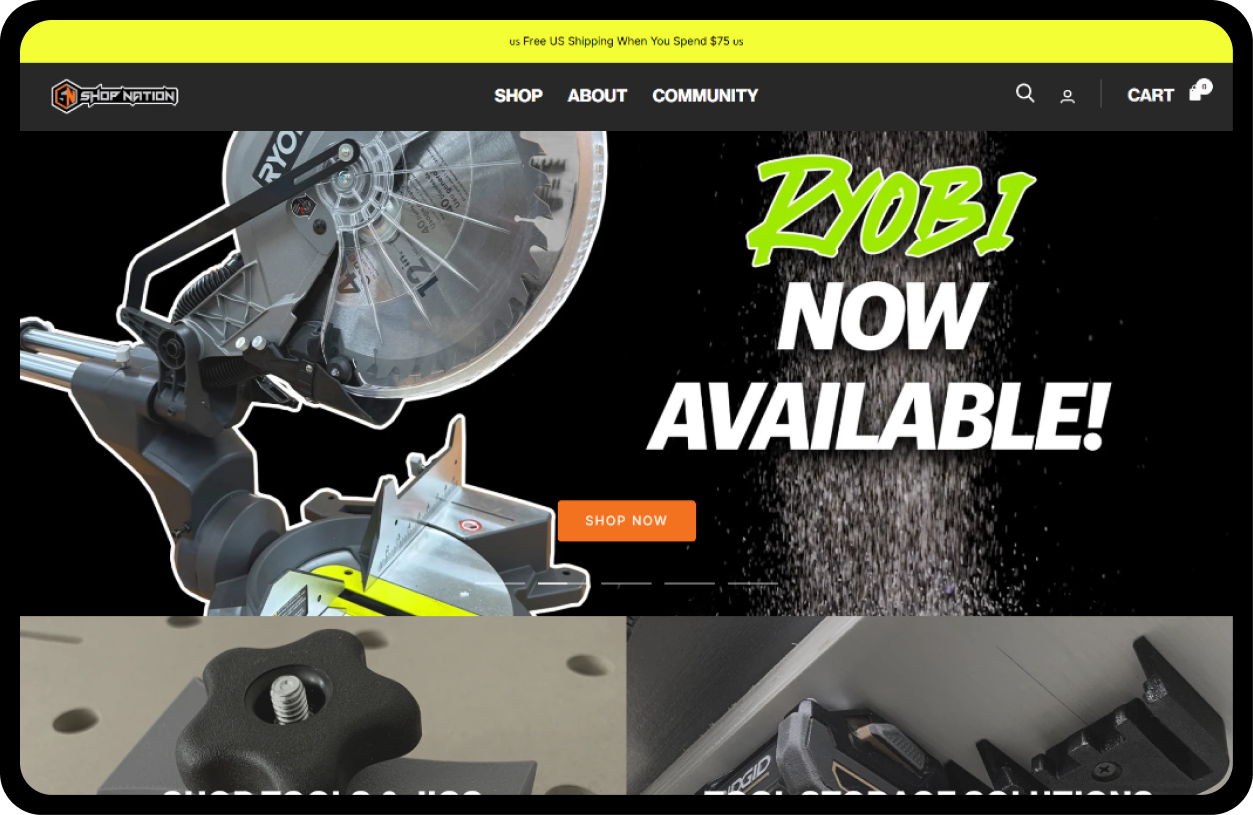
About the Shop Nation Store
The goal was to create a seamless commerce ecosystem that combines physical workshop products, digital woodworking plans, educational content, and compatibility-focused product discovery into a single streamlined shopping experience.
The platform was designed to help users optimize their workshops through better organization, tool management, dust collection systems, and guided DIY project execution.
By blending instructional content with commerce, the platform enables customers not only to purchase products but also to learn how to improve their workshop environments efficiently and confidently.
Timeline
Approximately 5–7 Months
Total Development Effort
320+ Hours across all departments
Team Size
5+ specialists
Key Deliverables
UI/UX Design
Shopify eCommerce
Digital Product Delivery System
The Challenge
Shop Nation Store operates in a highly specialized market where customers require precision, instructional guidance, and compatibility clarity before making purchasing decisions.
Canadian Software Agency identified several core challenges during the discovery phase:
- Structuring a hybrid catalog containing both physical products and digital woodworking plans.
- Simplifying technical product selection across multiple saw brands and workshop setups.
- Supporting both beginner DIY users and experienced woodworking professionals.
- Clearly communicating installation instructions and compatibility information.
- Creating a frictionless experience for both instant digital downloads and shipped products.
- Improving navigation across highly niche workshop use cases.
- Maintaining fast website performance despite media-heavy educational content.
- Building trust through instructional clarity and community-driven maker content.
The Solution
Canadian Software Agency developed a scalable maker-commerce ecosystem focused on usability, instructional clarity, and conversion optimization.
The solution transformed complex workshop requirements into a guided shopping experience optimized for both learning and purchasing.
Key improvements included:
- Clear separation between physical products and digital woodworking plans.
- Compatibility-based product organization for tools and saw brands.
- Enhanced product pages with installation guidance and instructional context.
- Streamlined checkout flows supporting both digital downloads and physical shipping.
- Mobile-first workshop browsing experience.
- Scalable Shopify architecture for future product expansion.
- Integrated educational content supporting purchasing decisions.
- Performance optimization for media-rich instructional pages.
The final platform created a seamless bridge between commerce, workshop education, and maker productivity.
Core Platform Features
Shop Nation Store includes a robust feature set designed to simplify the customer journey from initial research to consultation booking.
Workshop Optimization Product Catalog
The platform includes a structured catalog of woodworking tools, workshop accessories, dust collection systems, and organizational products designed for efficiency and compatibility.
Features include:
- Compatibility-focused browsing
- Tool-specific product filtering
- Organized workshop solution categories
- Fast product discovery workflows

Digital Build Plans Marketplace
Shop Nation Store supports instant digital product delivery for woodworking plans and workshop builds.
Users can:
- Purchase downloadable DIY plans
- Access instant digital downloads
- Browse categorized workshop builds
- Follow the guided construction instructions

Tool Compatibility System
A compatibility-focused product structure helps customers identify the correct solutions for specific tool brands and saw models.
Supported compatibility organizations include:
- DeWalt tools
- Makita systems
- Bosch tools
- Workshop-specific configurations

Instructional Product Integratio
The platform integrates educational content directly into the product experience.
Instructional features include:
- Installation guides
- Embedded instructional videos
- Setup walkthroughs
- Usage recommendations
- Product education layers

Dual Commerce Model
The system supports both physical product sales and digital downloads within a unified commerce experience.
Capabilities include:
- Mixed-cart checkout support
- Instant digital fulfillment
- Shipping workflows for physical goods
- Unified order management

Community-Driven Content Layer
The ecosystem includes community-focused content designed to build engagement and trust within the woodworking audience.
This includes:
- User-generated workshop builds
- DIY project inspiration
- Community content submissions
- Educational workshop examples

Mobile-Optimized Maker Experience
Canadian Software Agency designed the platform with a mobile-first approach optimized for workshop environments.
Mobile UX improvements included:
- Fast mobile browsing
- Simplified navigation
- Responsive instructional content
- Optimized touch interactions

Scalable Shopify Architecture
The Shopify infrastructure was designed to support long-term scalability across product categories and digital content expansion.
The architecture supports:
- New workshop product additions
- Digital product expansion
- Seasonal collections
- SEO scalability
- High-performance content delivery

The Modern Stack Behind the Software.
A modern, production-ready stack was selected to support real-time interactions, cross-platform mobile delivery, and scalable deployment.
Core Technologies
Shopify
Liquid
JavaScript
Responsive Frontend Development
Digital Download Systems
Custom Product Structuring
Supporting Infrastructure & Services
Hybrid eCommerce System
Compatibility-Based Cataloging
SEO Optimization
Performance Optimization
CMS Architecture
Instructional Content Integration
Mobile Optimization
Product Taxonomy System
See Shop Nation Store in Action
Shop Nation Store is now live and serving woodworking enthusiasts, DIY makers, and workshop builders across the United States with a scalable hybrid commerce experience built by Canadian Software Agency.
Project Timeline
Shop Nation Store launched with a modern, high-performance digital experience designed to improve customer trust, lead generation, and long-term SEO scalability.
- Early 2024

Discovery & Research Phase
Canadian Software Agency conducted detailed research into woodworking communities, DIY workflows, and maker purchasing behavior.
Key activities included:
- Workshop user journey mapping
- Tool compatibility planning
- Digital product structure definition
- Information architecture planning
- Mobile behavior analysis
- Mid 2024
UX/UI Design & Platform Architecture
The team designed a utility-focused interface centered around workshop problem-solving and instructional clarity.
During this stage:
- Product taxonomy was finalized
- Compatibility logic was structured
- Mobile-first layouts were created
- Product content architecture was developed
- Late 2024
Shopify Development & Hybrid Commerce Implementation
Development focused on building a scalable Shopify ecosystem supporting both physical and digital products.
Major implementations included:
- Digital download automation
- Compatibility-focused collections
- Optimized checkout workflows
- Instructional product pages
- CMS integration
- Responsive frontend development
- Early 2025
Testing, Optimization & Launch
The final phase emphasized quality assurance, usability testing, and performance optimization.
Testing included:
- Digital delivery validation
- Mobile responsiveness testing
- Compatibility flow usability testing
- Cross-browser QA
- Performance optimization
- Checkout testing
The platform was successfully launched for the United States woodworking and DIY market.
- Results
Delivered a Scalable Maker-Commerce Ecosystem
Canadian Software Agency successfully delivered a hybrid eCommerce platform that combines physical products, digital downloads, and instructional content into a unified maker-focused shopping experience.
Key Outcomes
HoopFind launched on schedule and is now available to basketball players across Canada. The project successfully delivered a complete multi-platform product within a compressed timeline.
Shopify-Based eCommerce Website + Digital Product Delivery System
0
Month comprehensive engagement from kickoff to live production
0
Core feature modules built, integrated, and tested
0
+
QA pass rate with zero blocking issues at launch
0
%
Responsive experience across desktop and mobile devices
0
%
Related Case Studies

Cloud 9
Cloud9 is a platform designed for music playlist management and collaboration. It allows users to create, organize, and share playlists across various music streaming services. Cloud9 aims to simplify playlist curation and facilitate collaborative listening experiences. We collaborated with them to develop the MERN Stack-based website that provides tools for managing large music libraries.
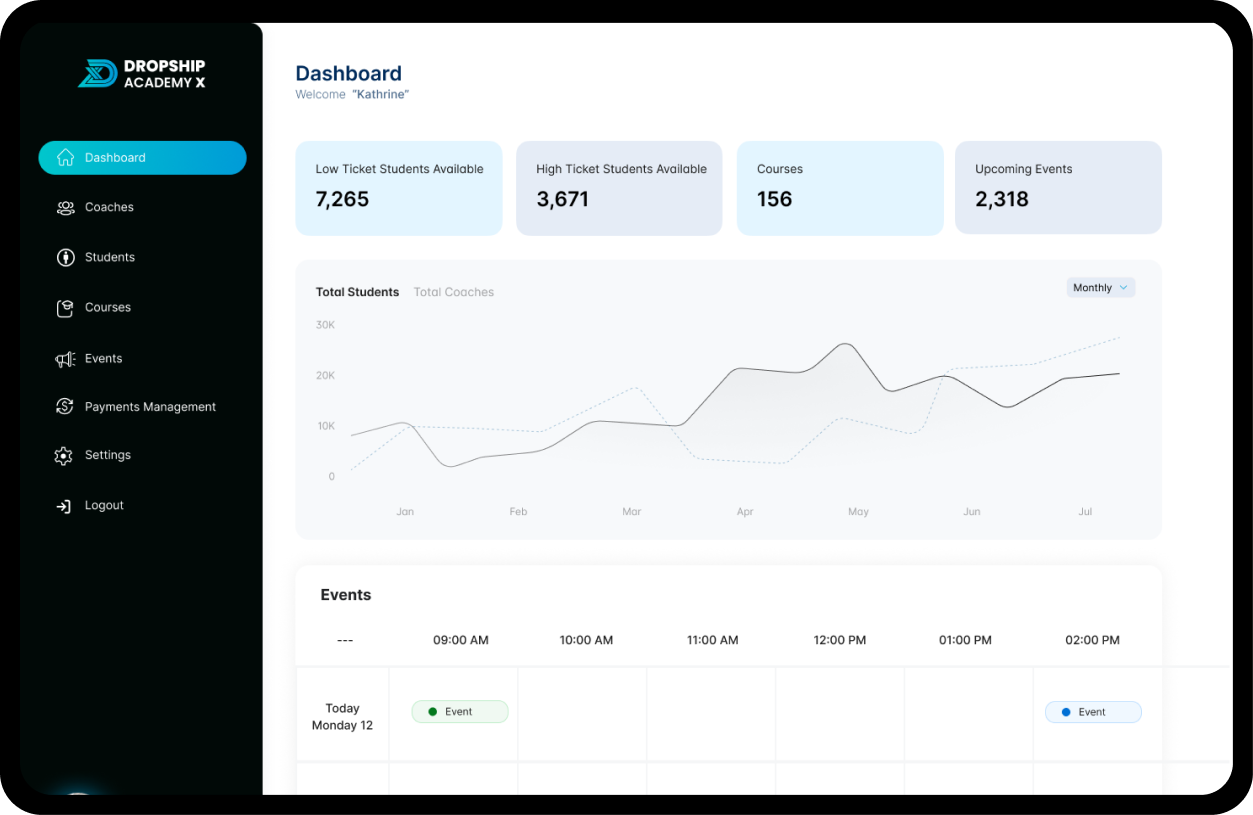
Dropship Academy
Dropship Academy is an advanced online learning platform designed to streamline e-commerce education. Built with the MERN Stack, it offers intuitive dashboards for admins, coaches, and students, including course and management, event scheduling, and real-time performance tracking. With secure role-based access and automated payment logs, it empowers both coaches and students to thrive in a dynamic, digital environment.
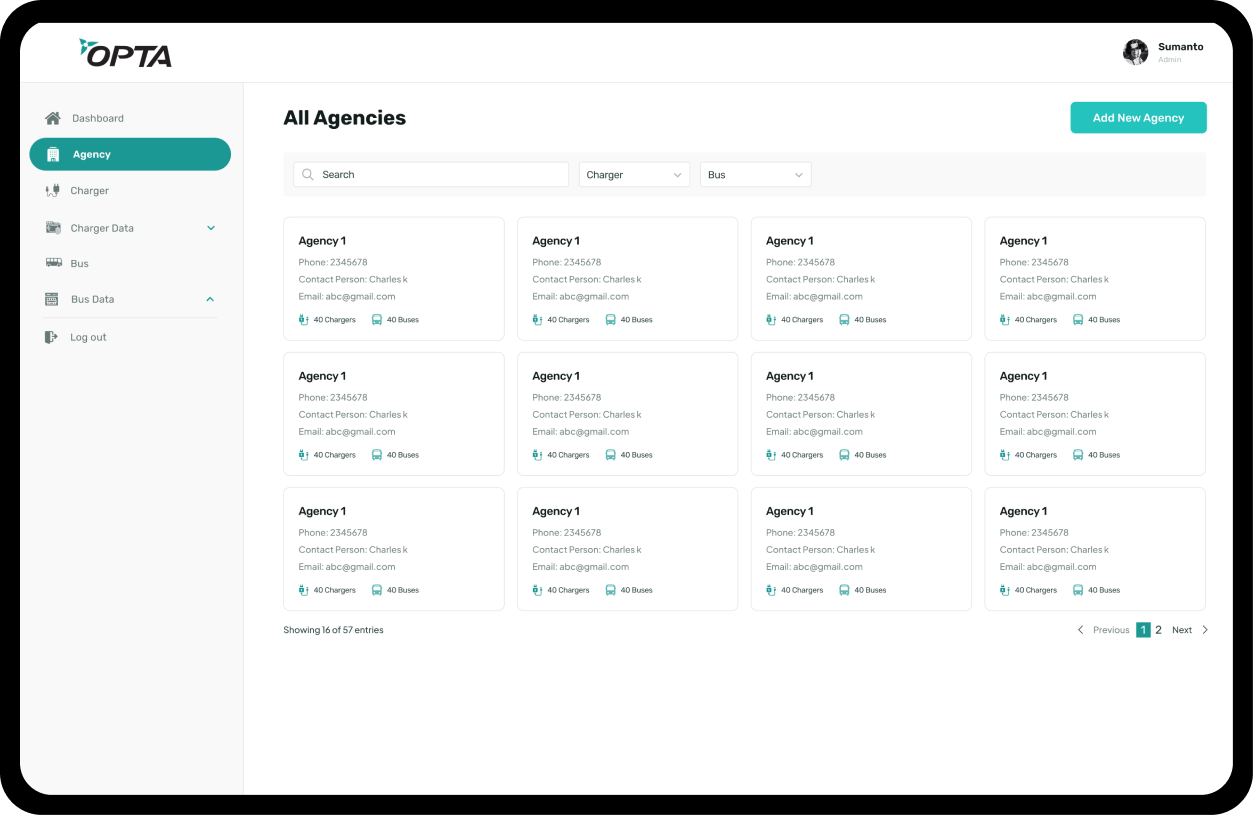
OPTA Dash
Built with cybersecurity, scalability, and data privacy at its core, OPTA provides participating transit agencies with a centralized dashboard to monitor fleet performance, energy efficiency, infrastructure reliability, and operational KPIs in real time.
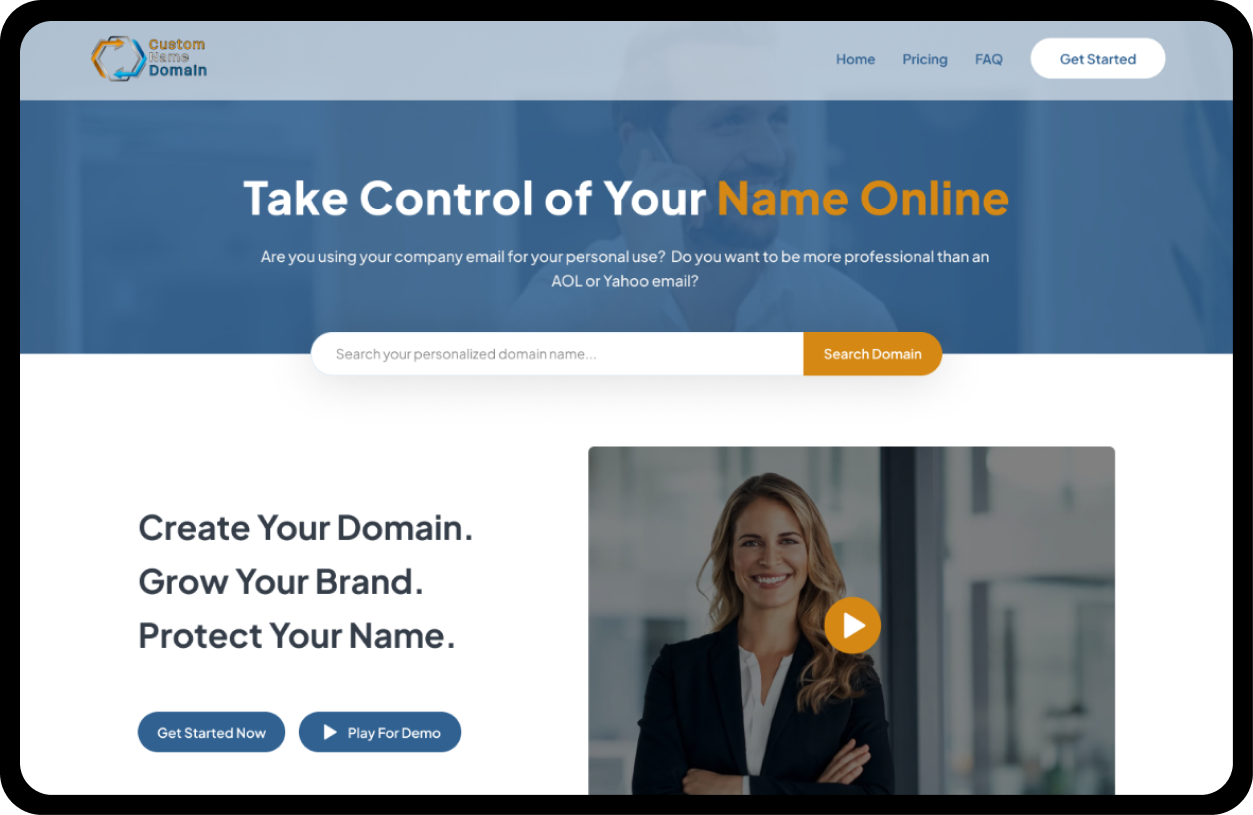
CDP
Custom Name Domain is a modern web platform designed to simplify how individuals and professionals establish a credible online identity. The platform allows users to easily secure personalized domain names and create custom email addresses—helping them move beyond generic email providers and build a stronger personal or professional brand. With an intuitive domain search, effortless email setup (including 5GB storage per inbox), and a centralized dashboard, users can manage everything from one place. The pricing is transparent, featuring a $99 startup fee with monthly or annual subscription options, and includes a free first domain to help users get started quickly.
Frequently Asked Questions
How much does mobile app development cost in Canada?
The cost of mobile app development in Canada typically ranges from $10,000 to $150,000+, depending on the complexity, features, and platforms involved. A basic MVP app may cost between $10,000–$25,000, while more advanced applications with integrations, real-time features, or AI capabilities can exceed $100,000.
Factors affecting cost include UI/UX design, backend infrastructure, APIs, scalability requirements, and whether the app is built natively or cross-platform
How long does it take to build a mobile app?
The timeline for mobile app development usually ranges from 8 weeks to 6 months. A simple MVP can be completed in 6–10 weeks, while complex applications with advanced features, integrations, or AI components may take 4–6 months or longer.
Proper planning, clear requirements, and an experienced development team significantly reduce timelines.
What is the difference between native and cross-platform app development?
Native apps are built specifically for iOS (Swift) or Android (Kotlin), offering maximum performance and full access to device features. Cross-platform apps (React Native, Flutter) allow faster development and lower costs by using a shared codebase.
The choice depends on your budget, performance needs, and time-to-market requirements.
What industries benefit the most from AI development?
AI development is widely used across industries including:
- Healthcare (diagnostics, patient management)
- Fintech (fraud detection, analytics)
- E-commerce (recommendation engines)
- Logistics (route optimization)
- Education (adaptive learning)
Businesses that rely on data, automation, or personalization benefit the most from AI integration.
What is an AI agent and how does it work?
An AI agent is a system that can perform tasks autonomously using artificial intelligence. It can analyze data, make decisions, and execute actions without constant human input.
Examples include chatbots, workflow automation tools, and AI assistants integrated into business systems.
What is RAG (Retrieval-Augmented Generation) in AI?
RAG (Retrieval-Augmented Generation) is an AI approach that combines large language models with real-time data retrieval. It allows AI systems to generate more accurate and context-aware responses using external knowledge sources.
It is commonly used in chatbots, enterprise search systems, and AI assistants.
Do you build SaaS platforms?
Yes, we specialize in SaaS (Software as a Service) development, building scalable cloud-based platforms for startups and enterprises. Our SaaS solutions include subscription systems, dashboards, user management, and integrations.
What technologies do you use for development?
We use modern technologies including:
- React, Next.js (frontend)
- Nodejs, Python (backend)
- MongoDB, PostgreSQL (databases)
- AWS, Azure (cloud)
- React Native, Flutter (mobile)
Do you offer post-launch support and maintenance?
Yes, we provide ongoing support, maintenance, and scaling services. This includes bug fixes, performance optimization, feature updates, and infrastructure management.
Can you scale an existing application?
Yes, we specialize in scaling existing applications by improving performance, optimizing architecture, and adding new features to support growth.
What is the cost of custom software development in Canada?
Custom software development typically ranges from $20,000 to $200,000+, depending on the complexity, integrations, and scalability requirements.
Do you work with startups or only enterprises?
We work with both startups and enterprises. For startups, we focus on MVP development and rapid deployment. For enterprises, we build scalable, secure, and integrated systems.
What is the best tech stack for mobile app development?
The best tech stack depends on your goals. Native development (Swift/Kotlin) offers performance, while React Native and Flutter offer faster development and cost efficiency.
Do you provide UI/UX design services?
Yes, we provide full UI/UX design services including wireframes, prototypes, and user experience optimization.
What is included in your AI development services?
Our AI services include AI agents, LLM integration, RAG systems, chatbots, predictive analytics, and automation solutions.
How do you ensure security in software development?
We follow best practices including encryption, secure authentication, compliance standards, and regular security audits.
Do you develop enterprise software?
Yes, we build enterprise-grade applications including CRM, ERP, dashboards, and workflow automation systems.
What is your development process?
Our process includes discovery, design, development, testing, deployment, and ongoing support.
Can you integrate third-party APIs?
Yes, we integrate APIs including payment gateways, CRMs, AI services, and more.
What is AI automation?
AI automation uses artificial intelligence to automate repetitive tasks, improve workflows, and reduce manual effort.
Do you build e-commerce platforms?
Yes, we build scalable e-commerce platforms with payment integrations, inventory systems, and AI-driven personalization.
What makes your company different from competitors?
We combine AI expertise, mobile app development, and custom software capabilities under one roof, allowing us to deliver complete digital solutions.
Do you provide cloud deployment services?
Yes, we deploy applications on AWS, Azure, and other cloud platforms for scalability and reliability.
Can you modernize legacy systems?
Yes, we help businesses modernize outdated systems by upgrading technology and improving performance.
How do I get started with your development services?
You can contact us through our website to schedule a consultation where we discuss your project requirements and provide a tailored solution.


-

- Posted by Canadian Agency Web Development Team

September 29, 2026
17 min read
Webflow Website Development: How to Build a Website That Drives Real Results
-
- Posted by Canadian Agency Web Development Team
September 23, 2026
15 min read
AI in Ecommerce: 10 Powerful Ways It's Transforming Online Stores
Ready to work together?
Let's get in touch