

Every successful app starts with a strong foundation. That foundation is your software architecture. Picking the right software architecture can save you time, money, and stress down the road. The wrong choice can lead to slow performance, high costs, and constant bugs.
In this guide, we will walk you through the most common architecture types. We will explain when each one works best. You will learn how to match your business goals with the best Software Architecture for your unique needs. Whether you are a start up or an enterprise, this post will help you make smart choices.
By the end, you will know exactly what to ask your development team. Let us dive in.
What Is Software Architecture and Why It Matters
Software architecture is the high-level structure of a software system. It defines how components connect, communicate, and scale over time.
Think of it like building a house. You need a blueprint before you lay bricks. The best software architecture acts as that blueprint for your app.
A good architecture makes your app:
- Easy to update
- Fast to load
- Simple to scale
- Cheap to maintain
Without a clear plan, your app can become messy and slow. This is why the best software architecture is not optional. It is essential for long-term success.
Why Choosing the Right Software Architecture Is Critical for Business Growth
Your architecture choice affects your bottom line. The best software architecture helps you launch faster and grow without limits.
Here are the key business benefits:
- Lower development costs over time
- Faster time to market for new features
- Better user experience and retention
- Easier team collaboration across departments
- Reduced risk of system failures
When you invest in the best software architecture early, you avoid expensive rewrites later. Many companies waste thousands of dollars fixing poor design choices. Do not let that happen to your project.
The software architecture also makes it easier to adopt new technologies. For example, if you plan to add AI features later, your system must support it. Our team at Canadian Software Agency helps clients explore AI-powered solutions that integrate smoothly into modern architectures.
Common Software Architecture Patterns Explained
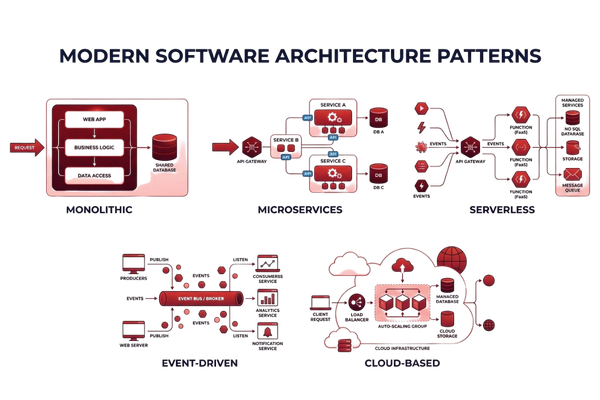
There is no single “best” architecture. The right software architecture depends on your project size, budget, and goals. Let us look at the most popular software architecture patterns used today.
Each pattern has strengths and weaknesses. Understanding them helps you pick the best software architecture with confidence.
| Architecture Type | Best For | Estimated Cost |
| Monolithic | Small apps, MVPs | $10k – $50k |
| Microservices | Large, complex apps | $50k – $200k |
| Serverless | Event-based, low-traffic apps | $5k – $40k |
| Event-Driven | Real-time platforms | $40k – $150k |
| Cloud-Based | Scalable SaaS products | $30k – $100k+ |
This table gives you a rough idea. Actual costs vary based on your needs. You can get a detailed project estimate to plan your budget accurately.
Monolithic Architecture: Simple but Limited
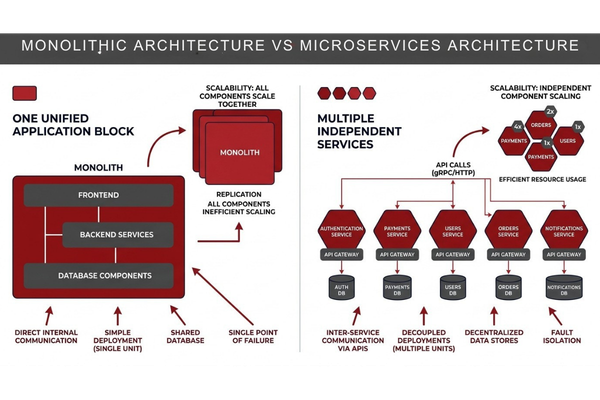
Monolithic architecture is the simplest type. All parts of your app live in one codebase. This makes it easy to build and test.
When to use it:
- You are building a small app
- You have a tight budget
- You need a fast MVP launch
When to avoid it:
- Your app will grow quickly
- You have a large development team
- You need high availability
Monolithic architecture can be the Suitable Software Architecture for start ups testing an idea. But it becomes a problem as your user base grows. Scaling a monolith is hard and costly.
If you start with a monolith, plan for a future migration. The Suitable Software Architecture should grow with your business, not hold it back.
Microservices Architecture: Built for Scale
Microservices architecture breaks your app into small, independent services. Each service handles one task. They talk to each other through APIs.
This is often the Suitable Software Architecture for large, complex platforms. Companies like Netflix and Amazon use this model.
Key benefits of microservices:
- Each part scales on its own
- Teams can work in parallel
- Failures do not crash the whole app
- Easy to update individual features
Challenges to consider:
- More complex to set up
- Requires skilled DevOps teams
- Higher initial development cost
Microservices can be the Suitable Software Architecture if you plan to serve millions of users. For example, our work on the Cloud9 platform used a modular approach to handle complex workflows and heavy traffic loads.
Serverless and Cloud-Based Architecture Options
Serverless architecture lets you run code without managing servers. A cloud provider handles all the infrastructure for you. This is a popular choice for modern apps.
Cloud-based architecture is similar but gives you more control. You still use cloud services, but you manage some parts yourself.
When serverless is the best software architecture:
- Your app has unpredictable traffic
- You want to pay only for usage
- You need fast deployment
When cloud-based is the best software architecture:
- You need full control over resources
- Your app handles sensitive data
- You require custom configurations
Both options reduce server management headaches. The best software architecture in this category depends on your compliance needs and traffic patterns.
Major providers like Google Cloud AI and AWS offer robust tools for both approaches. Choose based on your team’s expertise and long-term goals.
Event-Driven Architecture for Real-Time Apps
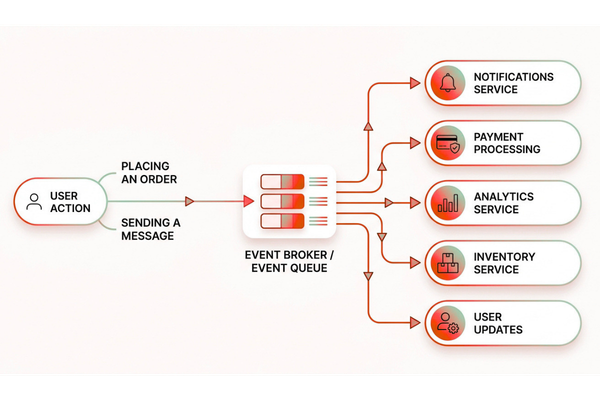
Event-driven architecture responds to events as they happen. Think of notifications, live chats, or stock trading platforms.
This can be the Suitable Software Architecture if your app needs real-time data processing. It is highly responsive and scalable.
How it works:
- A user action triggers an event
- The system processes that event instantly
- Other parts of the app react automatically
Best use cases:
- Financial trading platforms
- IoT device management
- Live streaming services
- E-commerce order processing
Event-driven systems are complex but powerful. The best software architecture for real-time needs often combines event-driven patterns with microservices. This gives you speed and flexibility at the same time.
How to Match Architecture to Your Business Goals
Picking the Suitable Software Architecture starts with your business goals. Ask yourself these questions:
- How many users do I expect in year one?
- Will my app need to handle spikes in traffic?
- Do I plan to add new features often?
- What is my budget for development and maintenance?
- Do I need to comply with data regulations?
Your answers will point you toward the right software architecture. A small e-commerce store does not need the same setup as a global SaaS platform.
For instance, when we built the ReadilyHome platform, we chose an architecture that balanced speed, security, and scalability. The best software architecture made it possible to launch on time and grow without major rewrites.
Key Factors That Influence Your Architecture Decision
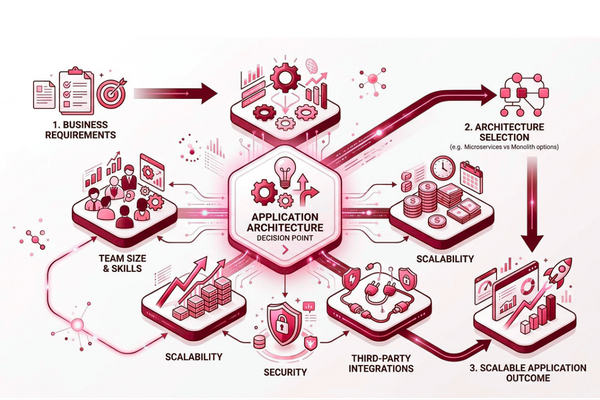
Several factors shape your software architecture decisions. Understanding them helps you avoid costly mistakes.
Team size and skills:
- Small teams work better with simpler setups
- Large teams benefit from modular designs
Budget and timeline:
- Tight budgets favor monolithic or serverless
- Longer timelines allow for microservices
Scalability needs:
- Low growth means simple architecture
- High growth demands scalable software design
Security requirements:
- Healthcare and finance need strict controls
- Consumer apps can use standard security
Third-party integrations:
- Many APIs favor microservices
- Few integrations work fine with monoliths
The Suitable Software Architecture balances all these factors. Do not focus on just one. Look at the full picture before you decide.
Feature and Benefit Breakdown
Here is a quick look at how different features relate to business outcomes when you choose the best software architecture.
| Feature | Business Benefit |
| Modular design | Faster feature updates |
| Auto-scaling | Handles traffic spikes smoothly |
| API-first approach | Easy third-party integrations |
| Cloud deployment | Lower infrastructure costs |
| Real-time processing | Better user engagement |
| Containerization | Consistent performance across environments |
Each feature adds value when aligned with your goals. The best software architecture delivers these features in a way that supports your growth strategy.
Common Mistakes to Avoid When Picking an Architecture
Even experienced teams make mistakes. Here are the most common ones to avoid when selecting the best software architecture.
- Over-engineering from day one: Do not build for millions of users if you have ten. Start simple.
- Ignoring future growth: The Suitable Software Architecture should handle at least 3x your current load.
- Copying big tech blindly: Netflix’s setup will not work for a local delivery app. Context matters.
- Skipping documentation: Poor documentation makes future changes painful and expensive.
- Neglecting security: Security must be part of your app architecture design from the start.
Avoiding these mistakes saves time and money. The best software architecture is practical, not perfect. Focus on what your project actually needs today and tomorrow.
Real-World Examples of Smart Architecture Choices
E-commerce platforms often start with a monolith and move to microservices as they grow. This phased approach keeps costs low early on.
Healthcare apps need strict data controls. The best software architecture for these projects uses secure cloud hosting and encrypted data flows.
SaaS products benefit from multi-tenant cloud-based architecture. This lets them serve many clients from one codebase.
Our work on the Zwilling project is a great example. We designed a scalable system that handled complex product catalogs and high user traffic. Choosing the Suitable Software Architecture made the platform fast, reliable, and easy to update.
These examples show that the right software architecture is always tied to real business needs, not trends.
The Role of AI in Modern Software Architecture
AI is changing how we build apps. The Suitable Software Architecture today often includes AI-ready components. This means your system can support machine learning models, chatbots, and smart automation.
Benefits of AI automation include:
- Reduced operational costs
- Faster workflows
- Improved accuracy in data processing
- Better customer experiences through personalization
If you plan to use AI, your architecture must handle large data sets and real-time processing. The Suitable Software Architecture for AI projects often uses event-driven patterns and cloud-based storage.
Research from OpenAI shows that AI integration is growing fast across industries. Planning for AI now ensures your app stays competitive later. The Suitable Software Architecture gives you the flexibility to add AI features without rebuilding your entire system.
Conclusion
Choosing the right software architecture is one of the most important decisions you will make for your project. It shapes how your app performs, scales, and evolves over time. A poor choice can lead to slow load times, high maintenance costs, and frustrated users. A smart choice sets you up for long-term success and steady growth.
Throughout this guide, we explored the most common architecture types. We looked at monolithic, microservices, serverless, event-driven, and cloud-based options. Each one has a clear place in the development world. The Suitable Software Architecture depends on your budget, team size, user goals, and growth plans. There is no universal answer that fits every project. There is only the best answer for your specific situation and business needs.
We also discussed common mistakes to avoid along the way. Over-engineering, ignoring security, and copying big tech without context are traps that waste time and money. The right software architecture is practical and focused on real outcomes. It solves real problems for real users. It does not chase trends just for the sake of looking modern or impressive.
Remember that your architecture is not set in stone forever. The software architecture allows room for change and adaptation. As your business grows, your system should grow with it naturally. Plan for flexibility from day one. Use modular designs, clear documentation, and scalable infrastructure to keep your options open for the future.
Finally, do not make this critical decision alone. Work with an experienced development team that understands your industry and goals. The Suitable Software Architecture comes from deep conversations about your vision, your users, and your budget. When you get it right, everything else falls into place. Your app launches faster, runs smoother, and grows without limits.
Start Your Software Development Project
If your company is exploring new app solutions, our team at Canadian Software Agency can help you design and build scalable, future-proof platforms. We guide you through every step of the right software architecture selection process to ensure your project succeeds from day one.
Get a free project estimate today and let us help you build something great.
Frequently Asked Questions
- What is the Suitable Software Architecture for a startup?
The Suitable Software Architecture for most startups is a monolithic or simple cloud-based setup. It keeps costs low and lets you launch fast. You can migrate to microservices later as you grow.
- How do I know if my architecture is scalable?
Your architecture is scalable if it can handle 3x to 10x your current user load without major changes. The Suitable Software Architecture uses auto-scaling, load balancing, and modular design to support growth.
- Can I change my software architecture later?
Yes, but it is expensive and time-consuming. That is why choosing the Suitable Software Architecture from the start is so important. Plan for growth even if you start small.
- What is the most cost-effective architecture?
For small projects, monolithic or serverless architecture is the most affordable. The Suitable Software Architecture balances cost with your long-term needs. Do not pick the cheapest option if it limits your growth.
- How long does it take to design a software architecture?
A basic architecture plan takes 2 to 4 weeks. Complex systems may take 6 to 8 weeks. The Suitable Software Architecture requires careful planning, so do not rush this phase.