
Every business wants happy customers. But how you greet them matters more than you think. Today, two tools lead the way in modern customer service. One is web chat. The other is an AI Receptionist. Both promise faster replies, lower costs, and better experiences. But they work in very different ways.
Web chat lives on your website and types answers in real time. The voice option goes much further. It can answer phone calls, book meetings, and handle complex tasks on its own. Choosing the wrong tool can hurt your brand and waste money. Choosing the right one can boost sales, save time, and delight your customers.
In this article, we break down each option in simple terms. We compare cost, speed, ease of use, and real business value. Whether you run a small shop or a large firm, this guide will help you decide which tool fits your company best.
What Is an AI Receptionist?
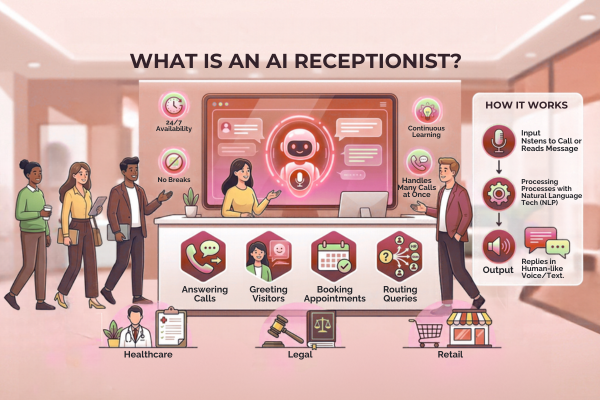
An AI Receptionist is a smart software tool that acts like a virtual front desk agent. It answers calls, greets visitors, books appointments, and routes queries all without human help.
This tool uses language models to understand speech and text. Think of it as a digital employee that never takes a break. It can handle many calls at once. It learns from past chats to get better over time.
How It Works
- It listens to a call or reads a message.
- It processes the words with natural language tech.
- It replies in a clear, human-like voice or text.
Businesses in healthcare, legal, and retail use this tech daily. It cuts wait times and keeps customers happy. If you want to see how it works in your field, explore our AI-powered solutions for your business to see real-world use cases.
What Is Web Chat and How Does It Work?
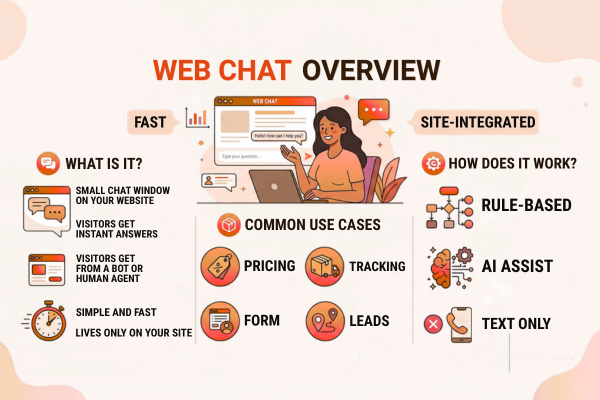
Web chat is a small chat window on your website that lets visitors type questions and get instant answers from a bot or human agent.
Web chat is simple and fast. It lives only on your site.
Common Use Cases
- Answering FAQs about pricing or hours
- Tracking orders and delivery status
- Collecting leads and contact details
- Guiding users to the right page
Most web chat tools use rule-based answers. Newer versions use AI for smarter replies. But they still work only in text. They cannot pick up a phone call.
Key Differences at a Glance
Here is a simple side-by-side view to help you compare.
| Feature | Virtual Voice Agent | Web Chat |
| Channel | Voice and text | Text only |
| Availability | 24/7 | 24/7 on website |
| Handles Phone Calls | Yes | No |
| Books Appointments | Yes, with calendar sync | Limited |
| Setup Cost | Moderate | Low |
| Learning Ability | High | Medium |
| Best For | Full front desk tasks | Quick website questions |
The voice-based option covers more channels. Web chat is simpler but more limited.
How Each Tool Handles Customer Queries
Voice vs. Text Support
Web chat is great for typed questions. A visitor asks about pricing. The bot sends a link. It is quick and easy.
But what if a customer calls at 9 PM? Web chat cannot help. This is where an AI Receptionist shines. It picks up the call, greets the caller, and solves the issue right away.
Many customers still prefer to talk to a real voice. Voice support fills that gap and keeps your brand professional.
Cost Comparison for Small and Large Businesses
Long-Term Savings and ROI
Cost matters for every company. Web chat is often cheaper to start. Many plans cost $20 to $50 per month.
A voice agent costs more upfront. But it replaces tasks that would need a full-time employee. Over time, savings add up fast.
Here is a quick cost view:
- Web chat: Low setup, low monthly fee
- Voice agent: Moderate setup, higher monthly fee, high savings
- Human front desk: High salary, benefits, training
For small firms, web chat may be enough at first. As you grow, the voice option pays for itself. One well-trained AI Receptionist can handle the work of an entire front desk team.
Speed and Availability: Why 24/7 Matters
Never Miss a Lead Again
Speed wins customers. Studies show most buyers expect help in under five minutes. Both tools reply fast. But only one works off your website.
Web chat needs a website visit. If a customer calls after hours, they hear voicemail. That is a lost lead.
Your AI Receptionist never sleeps. It answers every call, day or night. It works on holidays, weekends, and across time zones. According to Google AI research, always-on service can boost retention by up to 25%. That is a huge edge for any growing business.
Personalization and Customer Experience
Making Every Interaction Feel Human
Customers love to feel valued. Generic replies frustrate them. Both tools can personalize, but in different ways.
Web chat uses cookies and past visits. It might say, “Welcome back, Sarah!” That is nice but basic.
A voice agent goes deeper. It recalls past calls, notes, and preferences. It can say, “Hi John, do you want to reschedule your cleaning?” That feels human and caring. Better personal care builds trust. Trust drives more sales. An AI Receptionist makes that level of care possible at scale.
Integration, Scalability, and Security
Connecting to Your Current Tools
No tool works alone. It must link to your CRM, calendar, and email. Web chat often links to HubSpot or Salesforce.
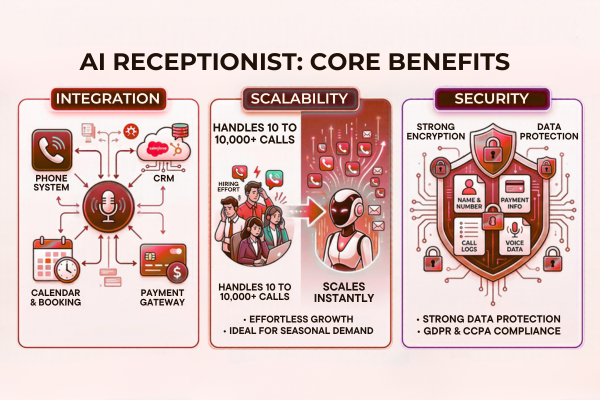
A voice agent offers deeper links. You can connect it to your phone system, booking app, and payment gateway. This creates a smooth flow from call to sale.
Growing Without Hiring
Web chat scales by adding server power. That is easy. Scaling voice with staff is hard. You must hire and train more people.
A smart voice agent scales instantly. It can handle 10 or 10,000 calls with the same quality. This helps seasonal firms like tax offices or retail stores.
Keeping Data Safe
Data safety is a must. Customers share names, numbers, and payment info. Both tools must guard this data.
Web chat stores text logs. Voice tools store call logs and voice data. Both need strong encryption and compliance with GDPR and CCPA. Your AI Receptionist should follow strict safety rules. Always check your vendor’s policy. See OpenAI’s safety guidelines for best practices on handling user data.
Business Value of AI Automation
Adding smart tools is not just a trend. It is a smart business move. It saves time and money.
Benefits of AI automation include:
- reduced operational costs by up to 40%
- faster workflows and shorter wait times
- improved accuracy in booking and data entry
- higher customer satisfaction and loyalty
- more leads captured after business hours
These gains apply to any field. Law firms, clinics, shops, and startups all benefit. The key is picking the right tool for your needs. If you want to compare options first, browse a curated directory of AI tools on All Things AI to see what fits your goals.
Start Your AI Development Project
If your company is exploring AI solutions, our team at Canadian Software Agency can help you design and build scalable AI platforms.
Whether you need a voice agent, a chatbot, or a full system, we have the skills to deliver. We focus on real business value, not just tech.
Ready to move forward? Get a free project estimate and let us show you how smart tech can transform your service. Our team will walk you through options and pick the best path for your budget.
Conclusion: Which Tool Should You Choose?
Choosing the right support tool is a big choice. Both web chat and voice AI have clear strengths. Web chat is simple, low-cost, and great for quick site questions. It works well for firms that mostly chat online. But if your firm gets many calls, books appointments, and needs full front desk help, a voice tool is the smarter long-term pick.
An AI Receptionist handles both voice and text. It works 24/7, grows with you, and cuts routine work. It replaces tasks that once needed a full-time person. This saves money and frees your team for high-value work that drives growth.
The future of service is fast, smart, and always on. Customers expect instant replies, personal care, and zero wait time. The tools you pick today shape your brand for years. Do not settle for a half fix. A partial tool gives partial results.
We suggest you audit your touchpoints first. Where do customers reach you most? Is it phone, email, or website? Map each channel and match the right tool. In many cases, the best setup is both tools working together. Use web chat for site visitors and a voice agent for phone lines. This combo covers all bases and boosts satisfaction.
At Canadian Software Agency, we build and deploy these tools with care. Our team has great skill in custom solutions that bring real results. If you are ready to upgrade, reach out today. The right AI Receptionist can turn every call into a growth opportunity. Start smart, scale fast, and watch loyalty soar.
Frequently Asked Questions
Q1: Can a virtual agent fully replace a human front desk?
It can handle most routine tasks like answering calls and booking. For complex or sensitive cases, a human is still best. Many firms use both.
Q2: Is web chat enough for a small business?
Yes, if most customers contact you via your website. If you get many phone calls, you may miss leads without voice support.
Q3: How long does setup take?
Web chat can go live in hours. A custom voice agent may take a few weeks to build, test, and integrate with your tools.
Q4: Are these tools safe for customer data?
Yes, when built by a trusted provider. Look for encryption, access controls, and compliance with privacy laws.