
The world of apps is changing fast. Today, Mobile App Development relies more on artificial intelligence than ever before. AI helps businesses build smarter, faster, and more personal apps. It cuts costs, speeds up work, and keeps users happy.
But what does AI really mean for your next app project? How can it help your business grow? Many leaders feel unsure about how to bring AI into their app plans. The options seem endless, and the technical details can feel overwhelming.
This guide breaks down everything you need to know. We will cover key AI tools, real benefits, common challenges, and future trends. You will learn how companies use AI to create apps that stand out in crowded markets.
Whether you run a startup or a large firm, this post will give you clear, practical insights. By the end, you will understand how AI can shape your app strategy and drive real business results.
What Is AI in Mobile App Development?
AI in app building refers to the use of machine learning, natural language processing, and smart algorithms to create apps that can learn, adapt, and respond to user behavior without manual input.
AI gives apps the ability to think and act on their own. Instead of following fixed rules, AI-powered apps learn from data. They get better over time. This means your app can offer personal suggestions, predict user needs, and automate routine tasks.
For example, a fitness app can learn your workout habits. A shopping app can suggest products you will likely buy. These smart features were hard to build just a few years ago. Now, they are becoming standard across every industry.
Why AI Matters for Modern Apps
The field of Mobile App Development has shifted in major ways. Users now expect apps to be fast, smart, and deeply personal. A basic app that just displays static information is no longer enough to compete.
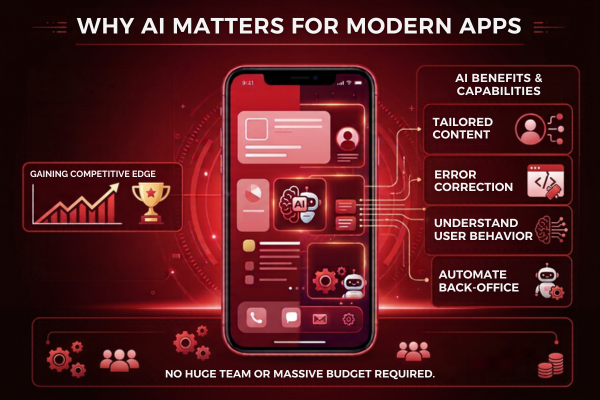
AI helps you meet these rising expectations. It allows your app to:
- Understand user behavior in real time
- Offer tailored content and smart suggestions
- Automate repetitive back-office tasks
- Detect and fix errors on its own
Businesses that ignore AI risk falling behind. Competitors are already using smart features to win over users and increase revenue. The good news is that AI tools are more accessible than ever. You do not need a huge team or a massive budget to get started.
For companies exploring smart solutions, working with experts in AI-driven app services can make the entire process smoother, faster, and far more effective.
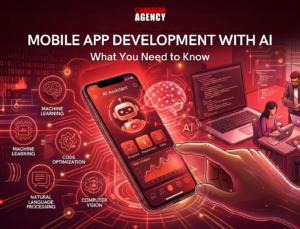
Key AI Technologies Used in Apps
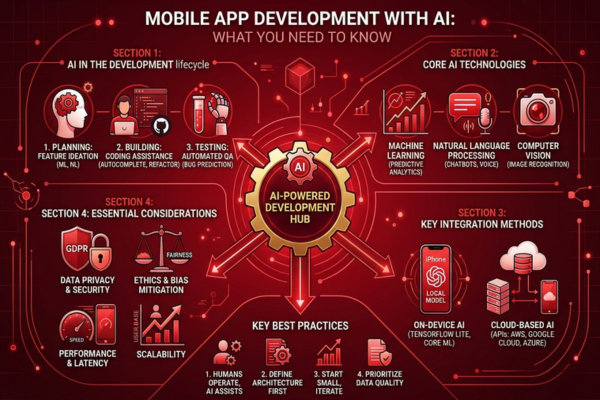
Modern Mobile App Development projects now use a wide range of AI technologies. Each one serves a different purpose. Understanding these tools will help you choose the right ones for your app.
Machine Learning (ML)
ML helps apps learn from user data over time. It finds hidden patterns and makes smart predictions. For example, a music app uses ML to suggest songs you might enjoy based on your listening history.
Natural Language Processing (NLP)
NLP lets apps understand human language in a natural way. Chatbots and voice assistants rely heavily on NLP. This technology helps users interact with apps using plain speech or everyday text.
Computer Vision
Computer vision allows apps to “see” and interpret images or video. Retail apps use it for visual product search. Health apps use it to scan documents or detect skin conditions from a photo.
Predictive Analytics
This technology uses past data to forecast future behavior. It helps apps anticipate what users will do next. This leads to better engagement, higher conversion rates, and increased sales.
Real-World Benefits of AI Automation
When it comes to Mobile App Development, AI brings clear and measurable value. It is not just a trendy buzzword. It solves real problems for real businesses every single day.
Benefits of AI automation include:
- Reduced operational costs — AI handles tasks that once needed human effort
- Faster workflows — Smart tools speed up design, testing, and deployment
- Improved accuracy — AI reduces human error in data processing and analysis
- Better decision-making — Data-driven insights lead to smarter business choices
- Higher user retention — Personal experiences keep users coming back daily
These benefits add up quickly. A retail app with AI recommendations can see a 20–30% boost in sales. A customer support app with AI chatbots can cut response times in half.
For instance, our team built Player DEX, a platform that uses smart data features to deliver a seamless and engaging user experience in a highly competitive market.
How AI Improves User Experience
User experience is everything in Mobile App Development today. If your app is hard to use or feels generic, people will delete it within days. AI changes this by making every interaction feel personal, smooth, and intuitive.
Here is how AI boosts user experience:
- Smart search — AI understands what users mean, not just what they type
- Personal feeds — Content adapts to each user’s unique interests and habits
- Voice commands — Users can control the app hands-free with their voice
- Instant support — AI chatbots answer questions 24/7 without any wait times
- Accessibility — AI can read text aloud or translate content in real time
These features make users feel valued and understood. They spend more time in the app. They are far more likely to leave positive reviews and recommend the app to friends and colleagues.
AI Tools and Frameworks to Know
The right tools make a big difference in your project’s success. Here are some of the top AI platforms used in Mobile App Development today:
| Tool | Best For | Key Feature |
| TensorFlow | Machine learning models | Open-source and highly flexible |
| Dialogflow | Chatbots and voice apps | Natural language understanding |
| IBM Watson | Enterprise AI solutions | Deep data analysis at scale |
| Core ML | iOS app intelligence | On-device machine learning |
| Firebase ML | Quick AI integration | Easy setup for mobile apps |
Many of these tools connect with powerful platforms from OpenAI, which offers advanced language models for text and code generation. Google AI also provides a wide range of APIs for vision, speech, and translation tasks.
Choosing the right tool depends on your app’s goals. A simple chatbot may only need Dialogflow. A complex data-driven app may require TensorFlow or IBM Watson for deeper capabilities.
Common Challenges and How to Solve Them
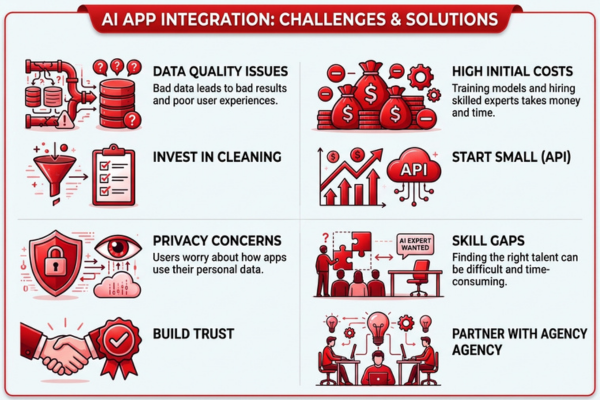
Adding AI to your app is not always easy. There are real challenges in Mobile App Development with AI that you should plan for early. Being prepared will save you time and money.
Data Quality Issues
AI needs clean, accurate data to work well. Bad data leads to bad results and poor user experiences.
- Solution: Invest in data cleaning tools. Set clear data standards from day one. Audit your data regularly.
High Initial Costs
AI projects can be expensive at the start. Training models and hiring skilled experts takes money and time.
- Solution: Start small. Use pre-built AI APIs before building custom models. This keeps early costs low while you test what works.
Privacy Concerns
Users worry about how apps use their personal data. AI apps collect a lot of sensitive information.
- Solution: Follow data privacy laws like GDPR and CCPA. Be transparent about data use. Build trust with clear, simple privacy policies.
Skill Gaps
Not every team has AI experts on staff. Finding the right talent can be difficult and time-consuming.
- Solution: Partner with an experienced agency. This gives you access to skilled developers without long hiring delays or training costs.
Cost and Timeline Considerations
Budget is a top concern for any Mobile App Development project. AI adds new costs, but it also saves significant money over time through automation and efficiency gains.
Here is a rough breakdown of what to expect:
| AI Feature Level | Example | Estimated Cost |
| Simple AI Feature | Chatbot | $5,000 – $15,000 |
| Medium AI Integration | Recommendations | $15,000 – $50,000 |
| Advanced AI System | Predictive Models | $50,000 – $150,000+ |
Timelines vary too. A basic AI feature may take 2–4 weeks to implement. A full AI-powered app can take 4–8 months depending on scope and complexity.
The key is to plan wisely. Define your goals early. Focus on the AI features that will bring the most value first. You can always add more advanced features later as your app grows.
To get a clear picture of costs for your specific project, you can request a detailed project estimate from our team. This helps you plan your budget with confidence and avoid surprises.
Future Trends in AI-Powered Apps
The future of smart apps is exciting and moving fast. New trends are shaping the industry in bold ways. Here is what to watch in the coming years:
- Generative AI — Apps will create content, images, and even code on their own
- Edge AI — AI will run directly on devices, not just in the cloud, making apps faster
- Emotion AI — Apps will detect user emotions through voice tone and facial cues
- AI-powered testing — Smart tools will find and fix bugs automatically before launch
- Hyper-personalization — Every single user will get a fully unique app experience
These trends will make apps more powerful and intuitive than ever before. Businesses that adopt them early will gain a strong edge over competitors who wait.
We saw this firsthand when building GreenTag, a project that leveraged intelligent features to solve real-world sustainability challenges for everyday users.
Conclusion
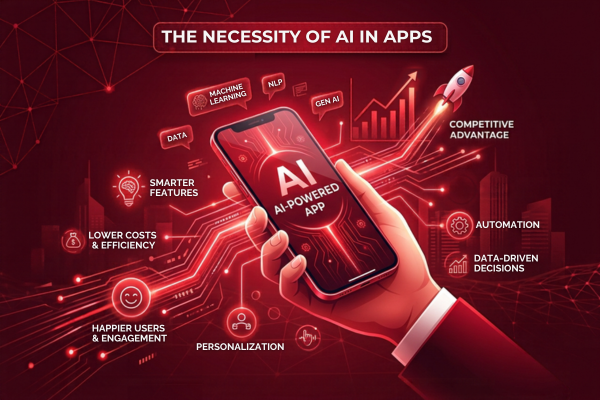
AI is no longer a luxury in the app world. It is a clear necessity for any business that wants to stay competitive. As we have explored throughout this guide, Mobile App Development with AI opens the door to smarter features, lower costs, and significantly happier users. From machine learning to natural language processing, the tools available today make it easier than ever to build apps that truly understand and serve their users.
The benefits are clear and well-proven across industries. AI automation reduces operational costs and speeds up workflows dramatically. It improves accuracy and helps teams make better, data-driven decisions. Most importantly, it creates deeply personal experiences that keep users engaged and loyal over time. These are not abstract ideas or future promises. They are real, measurable results that businesses of all sizes see every single day.
Of course, challenges do exist. Data quality issues, privacy concerns, and skill gaps can slow you down if you are not prepared. But with the right plan and the right partners, these hurdles are straightforward to overcome. Start small, focus on high-impact features, and scale up as you learn what works best for your unique audience.
Looking ahead, the pace of change will only accelerate. Generative AI, edge computing, and emotion detection will reshape what apps can do and how users interact with them. Companies that act now will lead their markets for years to come. Those that wait will struggle to catch up in an increasingly crowded digital landscape.
The bottom line is simple. AI makes apps better for users and more profitable for businesses. If you have not started thinking about AI for your app, now is the time. The tools are ready. The market is waiting. The opportunity is yours to seize. Take the first step today, evaluate your options, and build something truly remarkable that sets your brand apart.
Start Your AI Development Project
If your company is exploring AI solutions, our team at Canadian Software Agency can help you design and build scalable AI platforms. From smart chatbots to predictive analytics, we turn complex ideas into user-friendly apps that drive real growth.
Get in touch with us today to discuss your project and discover how AI can transform your business.
Frequently Asked Questions
Q1: How much does it cost to add AI to a mobile app?
The cost depends on the complexity of the AI feature. A simple chatbot may cost 5,000–15,000. Advanced systems with predictive models can cost $50,000 or more. Start with a clear scope to control costs effectively.
Q2: How long does it take to build an AI-powered app?
A basic AI feature can be added in 2–4 weeks. A full AI-powered app typically takes 4–8 months. The timeline depends on your goals, data readiness, and team size.
Q3: Do I need a large team to build an AI app?
Not necessarily. Many AI tools and APIs are easy to integrate with small teams. You can also partner with an experienced agency to access expert talent without building a large in-house team.
Q4: Is AI safe for user data?
AI can be safe if you follow best practices. Use strong encryption, comply with privacy laws like GDPR, and be fully transparent with users about how their data is collected and used.
Q5: Can AI work offline in mobile apps?
Yes. Edge AI and on-device machine learning allow apps to run AI features without an internet connection. This is especially useful for apps that need to work reliably in remote or low-connectivity areas.