

AI vs Machine Learning vs Deep Learning are powerful tools, but they are also widely misunderstood. Many companies plan an “AI app” without knowing what type of AI they need, what data is required, or what success should look like. The result is often wasted spend, slow delivery, and features that do not improve business metrics.
In this blog, we explain AI, Machine Learning, and Deep Learning. You will learn the real differences, the best mobile app use cases, how to pick the right approach, and what it typically costs. We also cover risks, data needs, and a clear path to rollout. The goal is practical value: reduce support load, speed up workflows, improve retention, and protect users with smarter security. By the end, you will have a clear way to talk about AI internally and a smarter way to plan AI features that deliver ROI.
AI (Artificial Intelligence) is software that can perform tasks that normally need human thinking, such as understanding text, spotting patterns, or making decisions.
Machine Learning (ML) is a type of AI where a model learns from data to predict or classify.
Deep Learning (DL) is a type of machine learning that uses neural networks and works best for complex inputs like images, voice, and large text.
1) What AI vs Machine Learning vs Deep Learning mean in mobile apps
In mobile app development, AI is not “one feature.” It is a set of options.
- AI is the big goal: make the app smarter.
- Machine learning helps the app learn from data.
- Deep learning helps the app handle complex data, like photos or speech.
The business value comes from choosing the simplest tool that solves the problem. That is the truth many teams miss when they talk about AI, Machine Learning, and Deep Learning.
2) Business value: where AI improves profit and performance
AI works best when it improves a measurable business goal. AI chatbots can reduce support costs by 30–40%
Benefits of AI automation include:
- reduced operational costs
- faster workflows
- improved accuracy
- fewer manual reviews
- better customer response time
In mobile apps, these gains often show up quickly in support, onboarding, and security. For a broader digital view, the guide on role of AI in web development shows how AI can support both web and app journeys.
3) AI vs Machine Learning vs Deep Learning: Key Differences
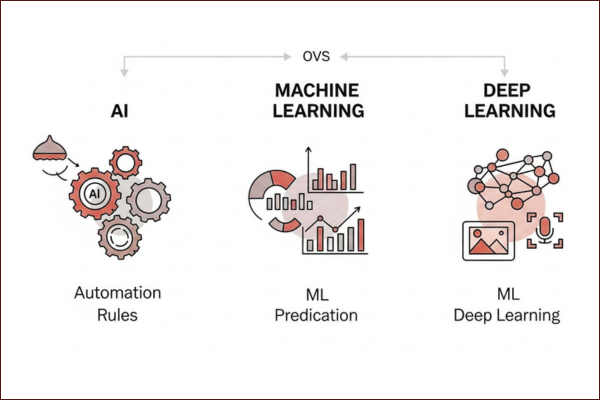
AI (rules + automation)
AI can be as simple as smart rules.
Best when:
- steps are clear
- outcomes must be predictable
- You need fast delivery
Examples:
- ticket routing
- onboarding flows
- alerts and triggers
Machine learning (data-based predictions)
ML is best when patterns are not easy to write as rules.
Best when:
- You have historical data
- You need scoring or prediction
- Behavior changes over time
Examples:
- churn prediction
- demand forecasting
- risk scoring
Deep learning (neural networks)
Deep learning is powerful, but it is not always needed.
Best when:
- You process images, audio, or large text
- The accuracy requirements are high
- Pre-trained models can be used
Examples:
- OCR document scans
- image recognition
- speech-to-text
This clarity helps teams scope AI, Machine Learning, and Deep Learning projects without overbuilding.
| Type | Best For | Example |
| AI | Rules & automation | Chatbots |
| ML | Predictions | Churn prediction |
| DL | Complex data | Image recognition |
4) Mobile app use cases that deliver ROI
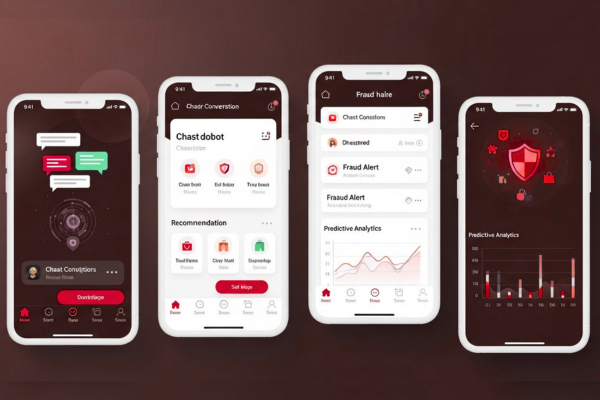
Below are real, common use cases that work in production.
AI chatbots for support
AI chatbots can handle routine questions.
They help by:
- reducing ticket volume
- improving response time
- offering 24/7 support
Recommendation systems for engagement
Recommendation systems increase retention and sales. Recommendation engines can increase conversions by 10–25%
Common placements:
- home feed
- “recommended for you.”
- upsell bundles
Predictive analytics for growth
Predictive analytics helps you act early.
Typical outputs:
- churn risk scores
- user lifetime value estimates
- campaign targeting signals
Fraud detection for trust and safety
Fraud detection helps protect users and revenue.
Common signals:
- unusual login patterns
- device and location mismatch
- abnormal payment behavior
Want the simplest explanation of the tech behind modern chat and content tools? This blog on LLMs in mobile apps and AI tools is a helpful add-on.
5) Natural language processing (NLP): what it does in apps
Natural language processing helps your app understand and generate text.
NLP can power:
- smart search
- message classification
- auto-replies for support
- text summaries
Many of today’s chat and text features are powered by large language models. If you want to see the source behind many of these capabilities, OpenAI shares product and research updates. In plain terms, NLP helps apps work with words the way users naturally write and speak. Many AI, Machine Learning, and Deep Learning features now depend on NLP because mobile users prefer fast, conversational flows.
6) Computer vision: image-based AI for mobile apps
Computer vision helps apps understand images.
Common mobile app uses:
- OCR for IDs and documents
- receipt scanning
- product recognition
- damage detection
Computer vision is a good fit when users already take photos in the app. That makes data capture natural and keeps the UX smooth. For teams exploring vision, speech, and on-device AI building blocks, Google provides practical tools and research through Google AI, which is useful for understanding what’s possible in mobile experiences.
7) AI integration: what you must plan before you build
AI often fails because teams skip integration planning.
Key AI integration needs:
- mobile UI changes (how the AI result is shown)
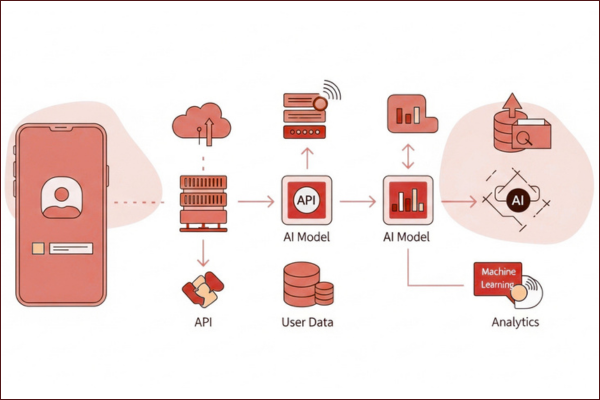
- backend APIs (where AI runs)
- analytics tracking (to measure value)
- fallback flows (what happens when AI is unsure)
A practical way to reduce risk is to ship AI in phases:
- Phase 1: limited rollout for one use case
- Phase 2: expand once metrics improve
- Phase 3: optimize and automate more steps
That phased approach is how AI, Machine Learning, and Deep Learning become reliable product features.
8) Data readiness: the real truth behind AI success
Data is the fuel. But you do not always need “big data.”
What you do need:
- clean events and logs
- consistent tracking
- basic data governance
- user consent and privacy controls
If you have limited data, start with:
- pre-trained models
- rule-based automation
- one narrow ML model
- better tracking for future training
This approach keeps AI, Machine Learning, and Deep Learning realistic and cost-effective.
9) Estimated costs: what AI app development typically costs
Use these ranges for early planning.
| AI Development Type | Estimated Cost |
| AI Chatbot | $10k – $50k |
| AI SaaS | $50k – $200k |
| Enterprise AI | $100k+ |
Cost drivers include:
- number of integrations
- privacy and compliance needs
- custom model training
- monitoring and maintenance
10) Feature vs benefit table (fast approval for stakeholders)
This table is useful in planning meetings.
| Feature | Benefit |
| AI chatbot | Lower support cost and faster replies |
| Smart search (NLP) | Better discovery and conversion |
| Recommendation systems | Higher retention and revenue |
| Fraud detection | Reduced losses and safer user accounts |
| OCR onboarding (computer vision) | Faster sign-up and fewer manual checks |
| Predictive analytics | Better planning and campaign results |
These are practical ways to apply AI, Machine Learning, and Deep Learning to real KPIs.
11) Proof matters: examples of real product delivery
Many companies want to see real delivery work before starting AI projects. Good engineering process matters as much as the model. Our team has built AI-powered mobile apps across industries, including GreenTag case study on product execution and delivery structure, and the Kangrooo project showing how complex digital features are built and shipped. These references help you plan scope, timeline, and phased rollout.
12) Start with the right partner
If you want AI, Machine Learning, and Deep Learning features that are practical and measurable, CSA can help. We design and build AI-powered mobile apps with a focus on ROI, security, and smooth user experience through our AI services for mobile and digital products.
Want to estimate your AI app cost? Get a quick AI project estimate in 24 hours.
Conclusion: The real truth about AI vs Machine Learning vs Deep Learning
The truth is simple. AI, Machine Learning, and Deep Learning are not the same thing. They are tools that solve different problems. The best mobile teams start with one clear business goal, choose the simplest approach that can work, and measure results after launch.
When done right, AI can:
- Cut support costs
- speed up workflows
- increase retention
- improve personalization
- Reduce fraud and risk
If you want AI that delivers, keep it focused, measurable, and phased.
FAQs
1) Is AI the same as machine learning?
No. AI is the broad goal. Machine learning is a method that learns from data.
2) Do all apps need deep learning?
No. Many apps get strong ROI from AI automation and machine learning without deep learning.
3) What is the best first AI feature for a mobile app?
Often, an AI chatbot, smart search, OCR onboarding, or a recommendation system. The best choice depends on your KPI.
4) How do we measure AI ROI?
Track metrics like tickets reduced, time saved, churn reduction, higher conversion, or fraud losses prevented.
5) How do we keep AI accurate over time?
Monitor outputs, log results, review edge cases, and retrain models or update rules when patterns change.