
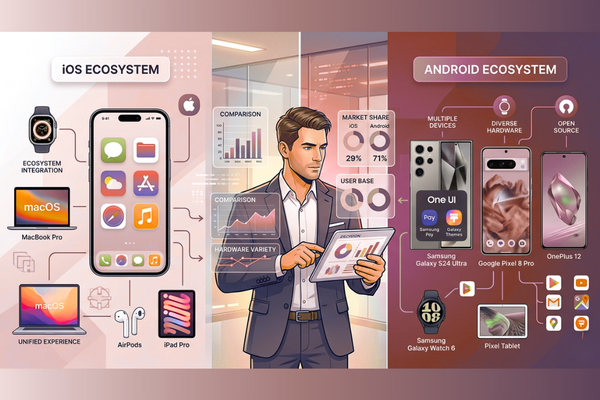
Choosing between iOS and Android app development is not just a technical decision. It is a business strategy decision that affects cost, user growth, monetization, and long-term scalability.
It is a business choice. In iOS vs Android app development, the “better” option depends on your users, your budget, your timeline, and your growth plan. A startup that needs fast market testing may choose one path. A larger company that needs reach and scale may choose another.
In this guide, we compare mobile app development for the two major platforms. You will learn the key differences in cost, speed, design, security, testing, and monetization. You will also see what makes sense for common business goals like getting more users, increasing sales, or launching faster.
iOS and Android App Development:
iOS is usually better for premium users, subscriptions, and faster development and testing due to Apple’s controlled ecosystem. Android is better for global reach, high install volume, and broader device accessibility. The best choice depends on your business goals, target audience, monetization model, and launch strategy.
If you are planning a mobile product, this blog gives a clear way to decide. It is written for business leaders, product owners, and founders who want real value, not technical noise.
What does iOS vs Android app development mean?
Many businesses also compare iPhone app development vs Android app development when deciding which platform to launch first. iOS and Android app development means comparing how apps are planned, designed, built, tested, and launched for Apple devices (iPhone, iPad) versus Android devices (Samsung, Pixel, and many others).
In plain words:
- iOS = fewer devices, tighter rules, strong buying power
- Android = more devices, wider reach, more variety to support
Why this decision matters for business
Your decision impacts:
- How fast can you launch
- How much do you spend on development and testing
- How many users can you reach
- how you make money (subscriptions, ads, purchases)
- How much work does it take to maintain the app long-term
A good platform choice reduces risk. It also helps you focus your time and budget where it creates the most return.
iOS vs Android App Development Comparison
| Factor | iOS | Android |
| Revenue Potential | Higher | Medium |
| Global Reach | Medium | Higher |
| Testing Complexity | Lower | Higher |
| Device Variety | Lower | Higher |
| App Store Approval | Stricter | Faster |
| Monetization | Subscriptions | Ads/Freemium |
Business value section
Even though this blog is about mobile, many mobile apps now include AI features like smart search, chat support, and personalization. These can increase value on both iOS and Android.
Benefits of AI automation include:
- reduced operational costs
- faster workflows
- improved accuracy
- better customer support response times
- more personalized user experiences
If AI is part of your app roadmap, it helps to plan early so your app is ready for future features.
iOS vs Android: market reach and user behavior
Android offers a broader reach
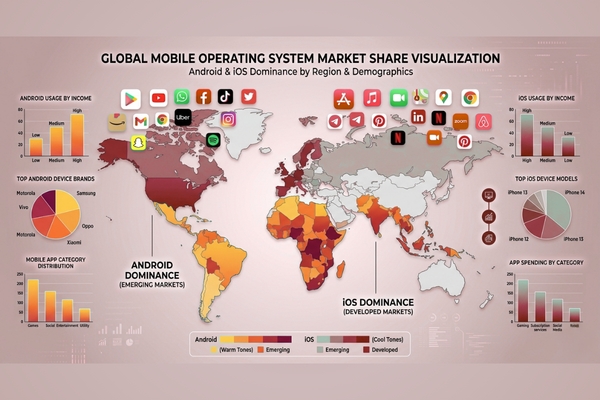
Android has a larger global market share. It is often the best choice when your goal is maximum reach, especially outside North America.
Android is strong in:
- India, Southeast Asia, Africa
- budget and mid-range devices
- high volume user acquisition
iOS often brings higher revenue per user
iOS users often spend more on apps and subscriptions. That matters for premium products.
iOS is strong in:
- US and Canada markets
- premium users
- subscriptions and in-app purchases
If you are building an app where revenue per user matters more than total installs, starting with iOS often makes more sense.
iOS or Android app development: cost and timeline
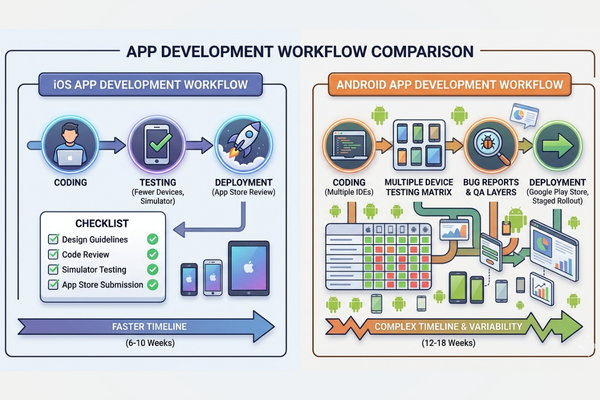
Cost is not only about coding. It includes design, QA testing, device coverage, store compliance, and ongoing updates.
What can change the cost
- number of screens and user flows
- complexity (payments, maps, chat, video)
- third-party tools and APIs
- security and compliance needs
- testing scope (especially for Android devices)
Typical cost reality: Android testing often takes longer because there are more devices, brands, and screen sizes.
If you want to map your scope to a realistic budget and timeline, use a structured planning step like this project estimation process. It helps define features before you commit to one side in iOS or Android app development.
iOS vs Android App Design: Consistency vs Flexibility
iOS design is more consistent
Apple has clear design patterns. Apps often feel similar across iPhones, which reduces design risk.
iOS design benefits:
- consistent screen sizes compared to Android
- predictable UI patterns
- smoother visual polish
Android design is more flexible
Android supports more device layouts and customization. That is a benefit, but it can increase design and QA work.
Android design benefits:
- more freedom in UI
- easier to support different device styles
- strong integration with Google services
iOS usually wins for consistency, while Android stands out for flexibility.
iOS vs Android Development Complexity and Testing
Many startups choose iOS-first MVP development because testing across fewer Apple devices can significantly reduce early QA cycles and launch delays.
Android often requires more testing
Android runs on many devices, with different screen sizes, chipsets, and OS versions.
This can mean:
- more QA time
- more “edge case” bugs
- more time spent on device-specific issues
iOS is more controlled
Apple devices are fewer. OS adoption is faster. This usually makes testing simpler.
Practical takeaway:
If speed and fewer testing surprises matter, iOS is often the better choice. For wider reach, Android may be worth the extra QA effort.
App store review and publishing: speed and rules
Apple App Store
- stricter review process
- more policy checks
- sometimes longer review time
- strong focus on privacy and user consent
Google Play Store
- usually faster publishing
- more flexible in some areas
- still has rules, but reviews are often quicker
If your business needs rapid iteration, Android can be faster to publish updates. But iOS often brings a stronger trust signal for users.
iOS vs Android Security and Privacy Comparison
Security matters for:
- fintech apps
- healthcare apps
- apps with user identity and payments
- B2B tools with sensitive data
iOS security strengths
- tighter ecosystem control
- strong permission design
- fast OS updates across devices
Android security strengths
- strong tools available
- good permission controls (improving each year)
- flexibility for enterprise device management
iOS is often considered easier to secure at scale due to its controlled ecosystem. Android can also be highly secure, but it requires a stronger device and version planning.
Monetization: subscriptions, ads, and buyer intent
Many SaaS and subscription-based mobile apps prioritize iOS first because iPhone users historically show stronger in-app purchase behavior and subscription conversion rates.

iOS often wins on subscriptions
If you sell:
- premium services
- memberships
- paid productivity tools
- coaching, learning, or wellness plans
iOS users often convert better.
Android often wins on an ad-based scale
If you plan to monetize via:
- ads
- high user volume
- freemium installs
Android’s reach can be a strong advantage.
A smart approach is to match platform choice to your revenue model, not personal preference.
Using AI in mobile apps
Many mobile apps now include AI features like:
- chat support
- content generation
- smart search
- recommendations
- fraud detection
For reliable AI foundations, companies often reference platforms like OpenAI and Google AI. These sources also help teams stay aligned with best practices.
Here is a simple cost guide (example ranges):
| AI Development Type | Estimated Cost |
| AI Chatbot | $10k – $50k |
| AI SaaS | $50k – $200k |
| Enterprise AI | $100k+ |
If your mobile roadmap includes AI, it helps to work with a team that can deliver both mobile and AI under one plan, such as these AI development services for product teams.
Feature planning: choose based on business outcome
Features should drive outcomes. Here is a simple way to think about it.
Feature vs Benefit table (business-focused)
| Feature | Benefit |
| Push notifications | Brings users back and increases retention |
| In-app payments | Reduces friction and increases revenue |
| Social login | Faster sign-ups and higher conversion |
| Analytics dashboards | Better product decisions with real data |
| Offline mode | Better experience in low-network areas |
When platform choice is unclear, define the features first. Then check which platform gives the best path to deliver them on time and within budget.
Real-world delivery: what successful apps often do
Many successful teams start with one platform, prove the idea, then expand.
A good example is when companies ship a focused product, learn from real users, then scale features. You can see how this kind of build-to-learn approach works in practice through projects like the SLO mobile product case study and the HoopFind app delivery story.
These kinds of launches show a key truth: the best choice is the one that reduces risk while proving business value quickly.
Which platform should you choose?
For startups, choosing Android or iOS first often depends on budget, target users, and speed to market.
Choose iOS first if you need:
- faster testing across fewer devices
- stronger subscription revenue potential
- premium market focus (US/Canada)
- tighter design consistency
Choose Android first if you need:
- maximum global reach
- fast publishing cycles
- growth through installs and volume
- better access to diverse price segments
Choose both if:
- Your business needs broad coverage from day one
- You already have product-market fit
- You have enough budget for parallel builds and QA
- Your brand promise requires “available everywhere.”
For many businesses, the best answer in iOS vs Android app development is “start with one, then expand.” It keeps the first launch simpler and helps you learn faster.
Start Your AI Development Project
Start Your AI Development Project
If your company is exploring AI solutions inside a mobile app like smarter support, content tools, or personalization, our team at Canadian Software Agency can help you design and build scalable AI platforms. You can also align your mobile plan, scope, and budget early using a clear mobile and AI project estimate framework.
Conclusion
The best choice in iOS vs Android app development depends on what “better” means for your business. If your goal is premium users, strong subscription potential, and a more controlled device ecosystem, iOS can be the smarter first move. You often get faster testing, more consistent design, and a smoother rollout process. For many companies, that means a quicker path from idea to revenue.
If your goal is to reach global growth and high install volume, Android can deliver more scale. It helps you access more device types and more regions. That is a major advantage for apps that rely on large audiences, ad revenue, or wide market access. The tradeoff is that Android can demand more testing effort and support planning.
In real projects, this is rarely a debate about which platform is “best” in general. It is a decision about risk and return. The best teams tie platform choice to business outcomes like customer acquisition, conversion rate, retention, and long-term maintainability. They also plan features first, then choose the platform path that fits the timeline and budget.
A common and practical approach is to launch on one platform, learn from real users, then expand. This reduces uncertainty and helps you invest in the right features. If your app roadmap includes modern AI features like chat support, smart search, or a personalization plan for it, consider it early so you can avoid rework later. With the right strategy, both platforms can deliver strong results.
In the end, iOS or Android app development is not about picking sides. It is about choosing the fastest and safest route to business value and building an app your users trust, enjoy, and keep using. Whether you choose native iOS development, Android app development, or a phased mobile launch strategy, the right decision is the one that aligns with your users, revenue goals, and product roadmap.
FAQs
1)Is Android more expensive than iOS for app development?
Android can cost more in QA and support because of more devices and screen sizes. The core build cost can be similar, but testing often raises the total effort.
2) Which platform is better for startups?
Many startups pick one platform first to launch faster. If your target users are premium buyers, iOS can be a strong first step. If you need to reach fast, Android may be better.
3) Can I build one app for both iOS and Android?
Yes, many teams do. But you still need solid testing and platform-specific checks. Also, your feature scope should be clear before you commit.
4) Which is better for subscriptions?
iOS often performs better for paid subscriptions and in-app purchases because users tend to spend more.
5) How do I decide if my app should include AI features?
If AI reduces support load, improves search, or boosts conversion, it can bring fast ROI. Plan AI early so it fits your product flow and privacy needs.